
**6,000-Year-Old Mega-Structure Discovered in Romania**
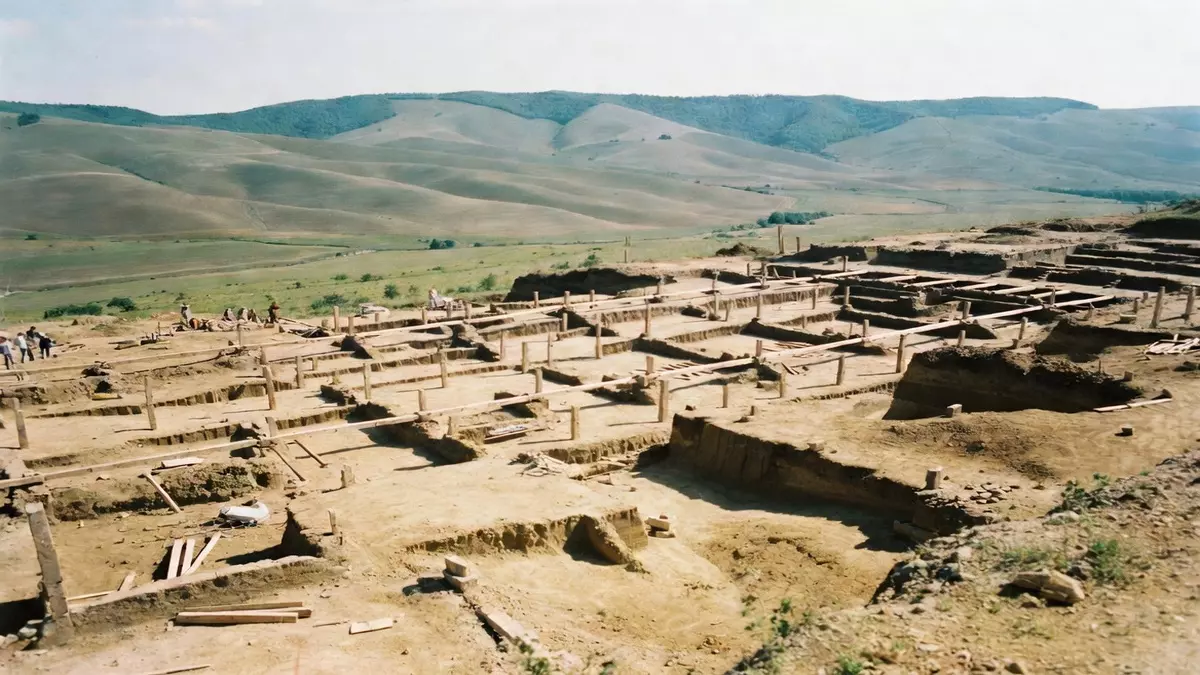
Archaeologists have uncovered a massive 6,000-year-old public building at a prehistoric settlement in northeastern Romania, shedding new light on one of Europe’s most mysterious ancient cultures. The enormous structure, linked to the Cucuteni-Trypillia society, measures around 350 square meters and likely served as a communal gathering place for meetings, ceremonies, or collective decision-making.
This remarkable find at Stăuceni-Holm challenges long-held assumptions about how early large-scale communities organized themselves thousands of years before cities or written records existed. The discovery highlights the sophisticated social structures of these Neolithic farmers and offers fresh clues about governance in prehistoric Europe.
6,000-Year-Old Mega-Structure Discovered in Romania
### The Exciting Discovery at Stăuceni-Holm
During excavation seasons in 2023 and 2024, a joint Romanian-German research team uncovered the foundations of an exceptionally large building within the ancient settlement. Initial geomagnetic surveys revealed buried features across the site, with one particularly large anomaly standing out near the settlement’s boundary ditch.

Careful digging exposed foundation trenches filled with postholes from massive wooden supports and sections of a thick clay floor. The building’s scale immediately set it apart from ordinary dwellings. While typical homes in Cucuteni-Trypillia settlements were much smaller, this mega-structure covered an area far exceeding residential needs.
Remarkably, archaeologists found almost no traces of everyday domestic activities such as cooking or food storage inside the building. This absence of household evidence strongly suggests the structure served a public or communal purpose rather than functioning as a private home.
### Understanding the Cucuteni-Trypillia Culture
The Cucuteni-Trypillia culture flourished between approximately 5000 and 3500 BCE across parts of modern-day Romania, Moldova, and Ukraine. Known for creating some of the largest settlements in prehistoric Europe, these communities sometimes housed thousands of people in well-planned layouts.
What makes this culture particularly fascinating is the lack of clear evidence for strong social hierarchies. Unlike many early societies that developed clear elite classes and rulers, Cucuteni-Trypillia sites show relatively uniform house sizes and few lavish burials. This has led archaeologists to debate how such large populations coordinated activities, resolved disputes, and managed resources without obvious centralized authority.
The newly discovered mega-structure at Stăuceni-Holm adds important evidence to this ongoing discussion. Similar large public buildings have been identified at other Cucuteni-Trypillia sites, though few have received detailed excavation. Their repeated appearance across the culture suggests they played a vital role in community life.
### Key Features of the Mega-Structure
The building at Stăuceni-Holm featured robust wooden construction covered with thick layers of loam and clay. When parts of the floor burned in antiquity, the heat preserved detailed imprints of the wooden logs beneath, allowing researchers to study ancient building techniques with remarkable clarity.
Its strategic location near the settlement’s edge may have held symbolic importance, possibly marking a transition between domestic and communal spaces. The size and design indicate it could accommodate large groups for important gatherings, seasonal rituals, or administrative functions.
Unlike typical houses, which contained hearths, storage pits, and tools for daily life, this structure showed minimal signs of such activities. This distinction supports the interpretation that it functioned as a communal hall where residents came together for shared purposes.
### Life in Prehistoric Mega-Settlements
Cucuteni-Trypillia communities built impressive settlements with hundreds of houses arranged in concentric circles or rows. Some sites covered dozens of hectares and may have supported populations of several thousand. Maintaining social cohesion in such large groups without strong kings or nobles required innovative solutions.
Public buildings like the one at Stăuceni-Holm likely served as venues for collective decision-making. Residents may have gathered there to discuss planting schedules, resolve conflicts, organize trade, or conduct religious ceremonies. These spaces would have helped foster unity and shared identity across large populations.
The culture is also famous for its distinctive pottery, often decorated with intricate spiral designs, and small clay figurines that may represent deities or ancestors. Agricultural practices focused on wheat, barley, and livestock, while trade networks extended across significant distances.
Periodic burning of entire settlements appears to have been a cultural practice, possibly linked to renewal rituals or practical reasons. This custom has helped preserve architectural details, as seen in the burned clay floors at Stăuceni-Holm.
### Implications for Prehistoric Governance
The presence of mega-structures supports theories that Cucuteni-Trypillia societies relied on consensus-based or collective governance rather than top-down rule by elites. Large public buildings would have facilitated broad participation in community affairs, allowing voices from different households to contribute to important decisions.
This model of social organization contrasts with developments in other parts of Europe and the Near East, where hereditary leadership and clear class divisions emerged earlier. Studying these Romanian sites helps archaeologists understand alternative paths to complexity in human societies.
The Stăuceni-Holm discovery strengthens the idea that communal architecture played a central role in maintaining balance and cooperation within large prehistoric populations. Future excavations may reveal additional evidence of how these structures were used and maintained over generations.
### Modern Techniques Reveal Ancient Secrets
Advanced geophysical methods played a crucial role in locating the mega-structure. Magnetometry surveys allowed researchers to map buried features without extensive digging, guiding targeted excavations that maximized results while minimizing site disturbance.
Drone photography and digital surface modeling further enhanced documentation efforts. These technologies create detailed records that researchers worldwide can study, preserving information for future analysis even as physical excavation continues.
The project demonstrates the value of international collaboration in archaeology. Romanian and German specialists combined local expertise with advanced scientific approaches to uncover and interpret this significant find.
### Why This Discovery Matters Today
Findings like the Stăuceni-Holm mega-structure remind us that complex social organization existed long before the rise of classical civilizations. These prehistoric Europeans developed sophisticated ways to live together peacefully in large groups, offering valuable lessons about human cooperation and community building.
The site also contributes to broader discussions about sustainability and settlement patterns. Cucuteni-Trypillia communities thrived for over 1,500 years, showing remarkable resilience and adaptability. Understanding their success can inform modern conversations about balanced growth and social equity.
As excavation work continues at Stăuceni-Holm, researchers hope to uncover more details about the building’s exact functions and how it fit into daily settlement life. Each new discovery adds depth to our picture of Europe’s prehistoric past.
### Connections to Other European Prehistoric Sites
Similar large structures appear in other Neolithic cultures across Europe, though the Cucuteni-Trypillia examples stand out for their scale and consistency. Comparing these buildings helps trace the spread of ideas about communal spaces and collective identity.
The culture’s location at the crossroads of Eastern Europe made it an important bridge between different prehistoric traditions. Influences from both steppe nomads and Balkan farming communities appear in their material culture, creating a unique synthesis.
Ongoing research across Romania, Moldova, and Ukraine continues to reveal the richness and complexity of these early societies. Each mega-structure excavation brings us closer to understanding how they maintained stability across vast territories without relying on coercive power structures.
**Conclusion**
The 6,000-year-old mega-structure unearthed at Stăuceni-Holm in Romania represents a major contribution to our knowledge of the Cucuteni-Trypillia culture and prehistoric social organization in Europe. This large communal building demonstrates that early farming communities developed innovative ways to coordinate large populations through shared spaces and collective practices rather than hierarchical rule.
As researchers continue investigating the site, we can expect even richer insights into daily life, governance, and cultural traditions from this fascinating period. The discovery not only deepens appreciation for Europe’s ancient heritage but also highlights universal human needs for community gathering places and cooperative decision-making that remain relevant today.
From its robust wooden construction to its likely role in public life, the mega-structure stands as powerful evidence of human ingenuity in the distant past. It reminds us that sophisticated societies existed long before recorded history, building foundations for the complex world we inhabit today.
**FAQ**
**Q: How old is the mega-structure found in Romania?**
A: The building dates back approximately 6,000 years to the Cucuteni-Trypillia culture, which existed between 5000 and 3500 BCE.
**Q: How large is the prehistoric mega-structure?**
A: The communal building covers about 350 square meters, significantly larger than typical houses in the same settlement.
**Q: What was the purpose of the mega-structure?**
A: Researchers believe it served as a public gathering space for meetings, ceremonies, or community decision-making rather than as a private residence.
**Q: Where is Stăuceni-Holm located?**
A: The site is in northeastern Romania in Botoșani county, within the heartland of the ancient Cucuteni-Trypillia culture.
**Q: How was the mega-structure discovered?**
A: Geomagnetic surveys first detected the large buried feature, followed by targeted excavations during the 2023 and 2024 seasons.
**Q: What does this discovery tell us about prehistoric society?**
A: It supports the idea that Cucuteni-Trypillia communities used collective governance and public architecture instead of relying on strong social hierarchies or elite rulers.
**Q: Will more excavation happen at the site?**
A: Yes. Large sections of the building remain unexcavated, and future work is expected to provide additional details about its function and use.