
Table of Contents
**60,000-Year-Old Drilled Tooth Reveals Neanderthals Practiced Dentistry**
Archaeologists have uncovered the oldest known evidence of intentional dentistry — a carefully drilled hole in a 60,000-year-old Neanderthal tooth found in Siberia. This groundbreaking discovery shows that our ancient relatives possessed advanced knowledge of oral health and the technical skill to treat severe tooth decay, pushing back the timeline of dental care by tens of thousands of years.
The find challenges long-held assumptions about Neanderthal intelligence and healthcare practices, revealing a level of sophistication once thought unique to modern humans.
60,000-Year-Old Drilled Tooth Reveals Neanderthals Practiced Dentistry

### Extraordinary Dental Treatment in Chagyrskaya Cave
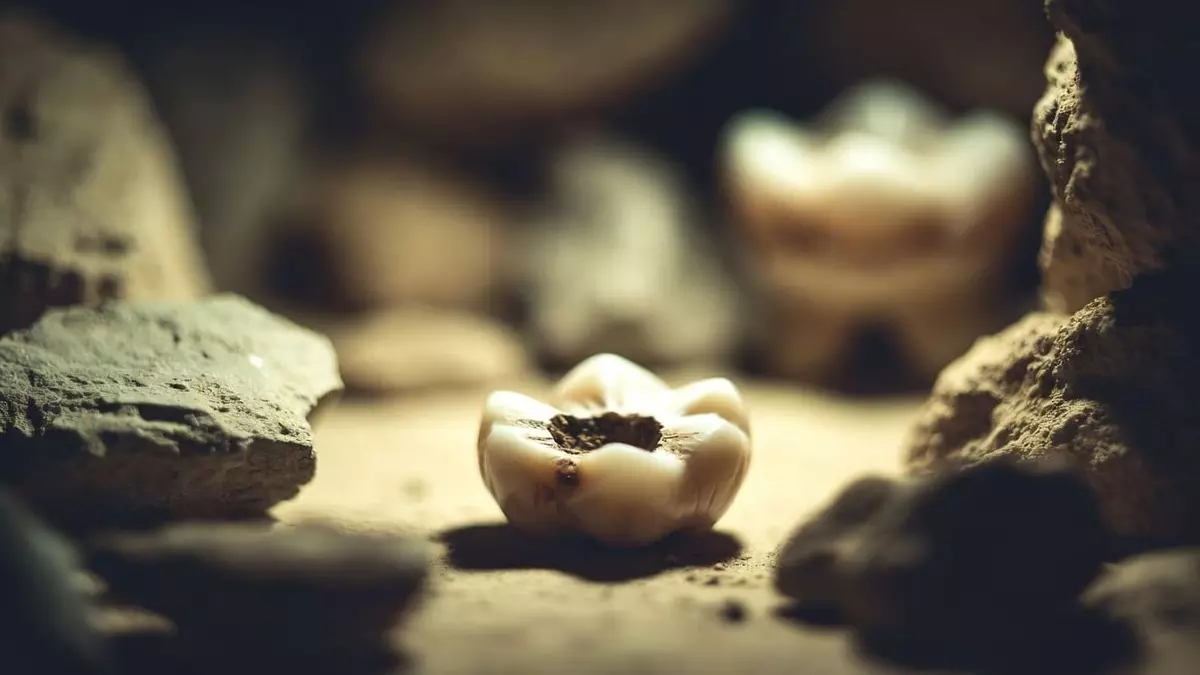
The roughly 59,000-year-old lower molar belonged to an adult Neanderthal who lived in what is now southwestern Siberia. Discovered in 2016 during excavations at Chagyrskaya Cave, a known Neanderthal campsite, the tooth initially puzzled researchers due to a deep, precise hole on its surface.
A new study published in the journal *PLOS One* confirms the cavity was created deliberately using a small stone drill. Microscopic analysis revealed straight grooves and tiny markings consistent with a twisting motion from fine stone tools made of local jasper — materials already found in abundance at the site.
The procedure targeted severe tooth decay near the gumline. One area showed signs of tooth picking, while the main cavity measured about 0.17 inches long, 0.11 inches wide, and 0.10 inches deep. Researchers believe the goal was to remove rotten tissue and alleviate pain from what would have been an extremely uncomfortable infection.
“The fact that this invasive treatment took place and the person survived lends me to believe that this is another example of the really very sophisticated Neanderthal understanding of human biology,” said study co-author John W. Olsen, professor emeritus of anthropology at the University of Arizona.
### Experimental Evidence Confirms Ancient Dentistry
To verify their findings, the research team conducted experiments on modern human teeth using replica stone tools. They successfully replicated the exact markings on the Neanderthal tooth only when using a precise twisting motion with pointed jasper implements.
Chew marks overlaying the drilled area prove the individual lived for a significant time after the procedure. This survival indicates the treatment provided real relief and that the person could continue normal activities like eating.
The precision required for such a procedure highlights impressive fine motor skills and anatomical knowledge. Neanderthals clearly recognized when intervention was necessary and had the capability to carry it out effectively.
### Context of Neanderthal Healthcare
This discovery adds to growing evidence that Neanderthals practiced sophisticated healthcare. Previous finds from Spain show they cared for vulnerable group members, including a child with Down syndrome, and used medicinal plants to treat illnesses.
Despite generally low rates of tooth decay due to their meat-heavy, low-carbohydrate diets, this case demonstrates they could respond to uncommon dental pathologies with targeted solutions. The procedure’s complexity suggests it may have been performed by another individual rather than self-treatment, though both scenarios remain possible.
“This intricate procedure shows Neanderthals had the brains to recognize this painful tooth cavity could be treated,” researchers noted. It fundamentally reshapes our understanding of the evolution of human healthcare.
For comparison, the oldest known dental treatment in *Homo sapiens* dates to about 14,000 years ago in Italy — making the Siberian find roughly 45,000 years older.
### Life in a Siberian Neanderthal Camp
Chagyrskaya Cave provided shelter for Neanderthals during a harsh period in Ice Age Siberia. The group hunted large animals, gathered plants, and maintained complex social structures. Dental issues, while less common than in later agricultural societies, would have caused significant pain and potential life-threatening infections if left untreated.
The successful drilling and subsequent survival of this individual point to strong community support. Even if self-performed, the person demonstrated remarkable pain tolerance and technical ability. Group members may have offered emotional support during what was undoubtedly a difficult experience.
This case fits with broader evidence of Neanderthal compassion and problem-solving abilities. They buried their dead with care, created symbolic art, and adapted to diverse environments across Eurasia for hundreds of thousands of years.
### Implications for Human Evolution
The discovery has profound implications for how we view Neanderthals. Once dismissed as primitive brutes, they are increasingly recognized as intelligent, adaptable, and capable of complex behaviors once considered exclusive to modern humans.
“The roots of invasive medicine and surgery do not belong exclusively to *Homo sapiens*, but are part of a broader legacy shared with our closest relatives,” said Gregorio Oxilia, an associate professor of human anatomy.
This finding suggests that the cognitive abilities necessary for medical intervention — observation, planning, tool use, and risk assessment — were present in the common ancestor of Neanderthals and modern humans, or developed independently in both lineages.
It also raises questions about other potential healthcare practices that may have left no trace in the archaeological record. If Neanderthals could drill teeth, what other treatments might they have developed?
### Technical Achievement in Stone Age Dentistry
Creating the drill and performing the procedure required several advanced skills:
– Selection and shaping of appropriate stone tools
– Understanding of tooth anatomy
– Steady hands for precise work inside a living person’s mouth
– Knowledge of when and how deeply to drill
The localized nature of the markings rules out post-mortem damage or natural causes, making intentional human intervention the most likely explanation.
Rebecca Wragg Sykes, author of *Kindred: Neanderthal Life, Love, Death and Art*, noted that the procedure probably didn’t require assistance, though group support would have been beneficial during such a painful experience.
### Comparison With Later Dental Practices
Ancient dentistry continued to evolve slowly. Evidence from various cultures shows tooth extraction, fillings made from beeswax or other materials, and herbal treatments for pain. However, the Siberian Neanderthal case stands out for its extreme age and technical precision.
By the time modern humans arrived in Europe around 45,000 years ago, Neanderthals had already developed solutions for dental problems that would remain challenging for millennia.
This discovery joins other remarkable Neanderthal achievements, including the world’s oldest known cave paintings (debated but possibly theirs), sophisticated tool technologies, and evidence of symbolic thinking.
### Why This Matters Today
Understanding Neanderthal capabilities helps us appreciate the deep roots of human medicine and innovation. It also challenges outdated views of evolutionary superiority and highlights the shared heritage between Neanderthals and modern humans — most people of European and Asian descent carry small percentages of Neanderthal DNA.
The find encourages further research into ancient healthcare practices. As new analytical techniques emerge, scientists may uncover additional examples of prehistoric medical interventions that have gone unnoticed.
For the general public, this story humanizes our extinct relatives. Neanderthals weren’t just survivors — they were problem-solvers who cared enough about pain and quality of life to develop creative solutions.
### The Enduring Legacy of Neanderthal Ingenuity
The drilled tooth from Chagyrskaya Cave represents far more than an interesting dental anomaly. It stands as powerful evidence of Neanderthal intelligence, compassion, and technical skill during one of the harshest periods in human prehistory.
This 60,000-year-old individual endured a painful procedure but gained relief and lived long enough afterward for chewing to wear down the evidence of the work. Their story connects us to deep time and reminds us that the drive to alleviate suffering is ancient and universal.
As researchers continue studying Neanderthal remains with modern scientific methods, we can expect more revelations about their lives, capabilities, and contributions to human evolution. The roots of dentistry — and perhaps medicine itself — may extend much deeper into our shared past than previously imagined.
The next time you visit the dentist, remember that the impulse to fix a bad tooth goes back at least 60,000 years, to a cold Siberian cave where a Neanderthal made medical history with nothing but stone tools and determination.
## FAQ
**How old is the drilled Neanderthal tooth from Siberia?**
The tooth dates to approximately 60,000 years ago, making it the oldest known evidence of intentional dentistry.
**What tool was used to drill the Neanderthal tooth?**
Researchers believe a small stone drill made from local jasper was used, based on experimental recreations and microscopic markings.
**Did the Neanderthal survive the dental procedure?**
Yes. Chew marks over the drilled area show the individual lived for a significant period afterward and continued normal eating activities.
**Where was the Neanderthal tooth discovered?**
It was found in Chagyrskaya Cave in southwestern Siberia, Russia, a site used as a Neanderthal campsite.
**How does this compare to modern human dental care?**
The oldest known *Homo sapiens* dental treatment is about 14,000 years old — roughly 45,000 years younger than the Neanderthal example.
**Why is this discovery significant for understanding Neanderthals?**
It demonstrates advanced problem-solving, fine motor skills, and medical knowledge previously thought unique to modern humans.
**Could other Neanderthal dental treatments exist?**
Possibly. This find encourages re-examination of other Neanderthal remains for signs of medical intervention that may have been overlooked.