
Table of Contents
**Rare Wendel Rings Discovered in 3,000-Year-Old Swedish Burial**
Archaeologists working east of Norrköping, Sweden, have made a remarkable find that sheds new light on Bronze Age rituals and daily life. While preparing land for new housing, researchers uncovered a complex ancient landscape filled with graves, rock carvings, and settlement traces dating back to the late Bronze Age (1100–500 BCE). What stands out most is the discovery of two rare Wendel neck rings placed deliberately within a stone burial setting—an unusual find that offers fresh insights into status, identity, and ceremonial practices from nearly 3,000 years ago.
Rare Wendel Rings Discovered in 3,000-Year-Old Swedish Burial
### A Coastal Bronze Age Landscape Full of Surprises

During the late Bronze Age, this area near Norrköping wasn’t the inland location it is today. The site sat close to a coastal inlet linked to the sea, making it an important hub for movement, trade, and ritual activities. This strategic position likely influenced how communities used the land for both living and honoring their dead.
The excavation revealed multiple layers of human activity. Stone settings, rock carvings, and house remains paint a picture of a vibrant community where domestic life intertwined with ceremonial practices. Among these features, one particular stone burial structure has captured attention due to its unusual contents and construction.
### Inside the Stone Burial: Complex Cremation Rituals
At the center of the discovery lies a carefully built stone setting containing cremated human remains treated in several distinct ways. Some bones were carefully placed inside an urn, while others rested in small pits dug into the ground. Additional fragments were scattered throughout the stone structure and surrounding soil, suggesting multiple stages or participants in the burial process.
This variety in bone placement indicates sophisticated funeral rites rather than a simple single-event burial. Osteological analysis is still underway to determine exactly how many individuals were laid to rest here, but the evidence already points to thoughtful, repeated ceremonial actions over time.
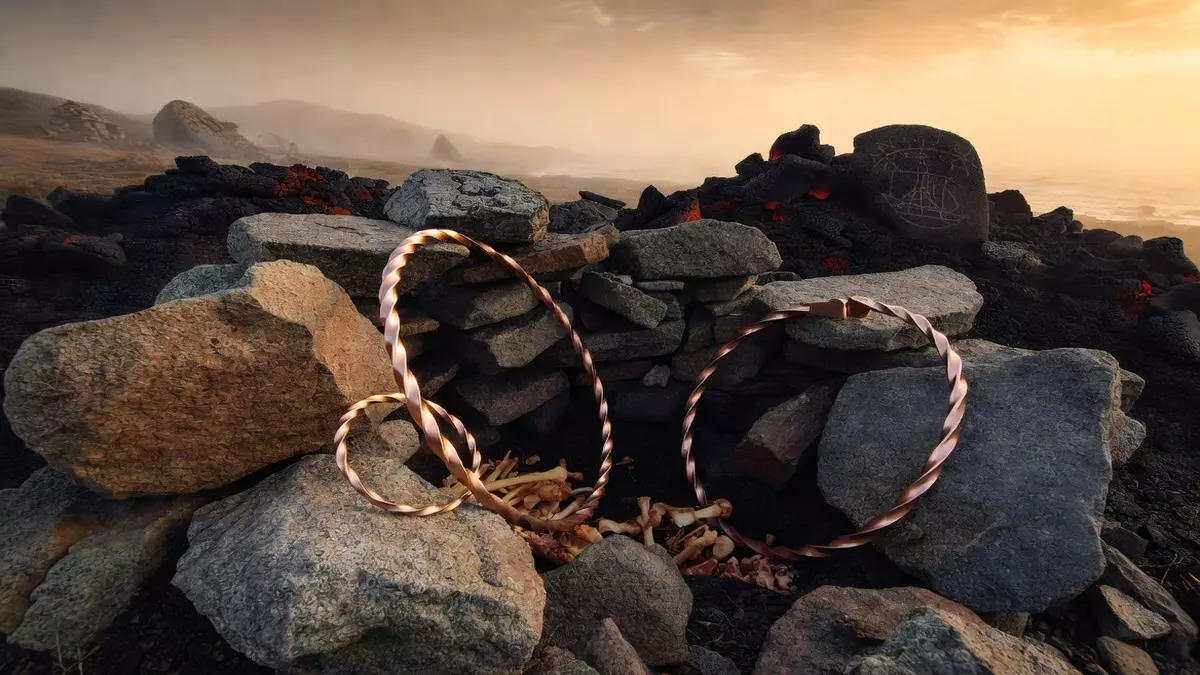
**Two stunning Wendel neck rings** were found pressed between stones at the eastern edge of the burial, deliberately separated from the cremated remains. These bronze ornaments represent a significant find in Scandinavian archaeology.
### Understanding Wendel Neck Rings: Symbols of Status
Wendel rings, named after their distinctive twisted design, were crafted from cast bronze rods twisted in alternating directions. The pair from this site includes one larger, thinner ring and one smaller, thicker example with a more pronounced profile. Such ornaments were typically worn by women and likely served as markers of social status, wealth, or group identity within Bronze Age communities.
What makes this discovery particularly special is its context. Wendel rings are rarely found in burials across Scandinavia. Most examples come from hoards deposited in wetlands—bogs and marshes—suggesting ritual offerings to deities or the landscape itself. A similar pair was previously recovered from a bog at Häradshammar in Östergötland, making this burial find even more noteworthy.
Fewer than ten Wendel rings have been recorded in the entire Östergötland region. Their presence inside a formal stone monument rather than a wetland deposit provides archaeologists with valuable new data about how these prestigious items were used in funerary contexts.
### Burnt Stone Mounds and Evolving Ritual Practices
The burial site is part of a much larger ritual landscape. Excavations nearby uncovered traces of houses along with two distinctive burnt stone mounds constructed from fire-cracked stones.
For years, archaeologists interpreted these burnt mounds primarily as piles of cooking waste. However, recent research across Sweden shows they served broader purposes, including ritual activities and secondary burials. Some mounds contain human remains and bronze objects, indicating their role evolved over time.
At this Marby site, one burnt stone mound was later repurposed as a burial monument, demonstrating how Bronze Age people adapted existing landscape features for new ceremonial needs. Another mound yielded large quantities of heat-affected stones, pottery fragments, and clay daub from a house that had been destroyed by fire. At its base, researchers found two concentric stone circles—a feature commonly associated with burial monuments from the same period.
### Life, Fire, and Death in Bronze Age Sweden
These findings reveal a dynamic picture of late Bronze Age society in eastern Sweden. Domestic activities, dramatic destruction events (like house fires), and elaborate burial practices overlapped in the same spaces. The coastal setting likely amplified the symbolic importance of the location, where land met sea and the living interacted with the spiritual world.
The discovery highlights how Bronze Age communities in Scandinavia maintained deep connections to their environment. Rock carvings in the area, often depicting ships, warriors, and solar symbols, further emphasize the importance of maritime connections and ritual storytelling.
This site offers a rare window into how people 3,000 years ago processed grief, displayed status, and created meaning through both everyday actions and grand ceremonies. The careful placement of the Wendel rings—valuable objects set apart from the bones—suggests they held special significance, possibly as final gifts or symbols connecting the deceased to the community’s values.
### Why This Discovery Matters Today
Finds like this help modern audiences connect with our shared human past. The Bronze Age was a time of technological innovation, long-distance trade in metals, and complex social hierarchies. Discoveries in Sweden continue to reshape our understanding of how these early European societies functioned.
As housing development continues in the region, rescue archaeology projects like this one play a crucial role in preserving history before it’s lost forever. The Marby site demonstrates how even routine construction projects can yield extraordinary insights when careful excavation methods are applied.
### Conclusion
The unearthing of two rare Wendel neck rings within a complex Bronze Age burial near Norrköping represents more than just another archaeological find. It reveals a sophisticated ritual landscape where status symbols, cremation practices, and landscape features came together in meaningful ways. As analysis continues, this site promises to deepen our knowledge of late Bronze Age life in Scandinavia and the enduring human desire to honor the dead with beauty and ceremony.
The rings, the stone settings, and the burnt mounds together tell a compelling story of a community that thrived along ancient coastlines, navigating both practical challenges and spiritual beliefs that still resonate across millennia.
**FAQ**
**What are Wendel neck rings?**
Wendel rings are distinctive Bronze Age ornaments made from twisted bronze rods. They were primarily worn by women as symbols of status and identity during the late Bronze Age (1100–500 BCE).
**Why is this Swedish discovery considered rare?**
While Wendel rings appear in wetland hoards, finding a pair deliberately placed inside a burial monument is highly unusual. Most examples come from bogs rather than graves, making this Norrköping find significant for understanding funerary customs.
**Where was the Bronze Age site located?**
The site lies east of Norrköping in Östergötland, Sweden. During the Bronze Age, it was situated near a coastal inlet, which influenced settlement patterns and ritual activities.
**What other features were found at the Marby site?**
Archaeologists discovered house remains, rock carvings, burnt stone mounds, and evidence of complex burial practices including cremated remains placed in urns, pits, and scattered throughout stone structures.
**How do burnt stone mounds relate to Bronze Age rituals?**
Originally thought to be cooking waste piles, these mounds are now understood to have served multiple purposes, including ritual activities and burials. Some contain human remains and artifacts, showing their evolving role in the landscape.
**Will more information be released about the human remains?**
Yes. Osteological analysis is ongoing to determine the number of individuals buried at the site. Further studies on the rings and other artifacts will provide additional context in coming months.
This remarkable Swedish discovery continues to captivate historians and archaeology enthusiasts, offering a vivid glimpse into Europe’s ancient past.