
Table of Contents
- 1. The Scladina Cave Excavations: A Paleolithic Treasure Trove
- 2. Crafting the Prehistoric Swiss Army Knife
- 2.1. The Mechanics of Bone Retouching
- 2.2. Sequential Reuse and Design Integration
- 3. Overturning the “Primitive Neanderthal” Myth
- 3.1. Deliberate Material Selection
- 3.2. The Mastery of Chaîne Opérationnelle
- 4. Deepening Our Understanding of Ancient Human Adaptability
- 5. Frequently Asked Questions (FAQ)
- 5.1. What makes the Scladina Cave discovery unique?
- 5.2. How old are the tools found in Scladina Cave?
- 5.3. What is a bone retoucher and how was it used?
- 5.4. Did Neanderthals hunt cave lions?
- 5.5. What technology did scientists use to study these artifacts?
130,000-Year-Old Discovery Shows Neanderthals Made Complex Tools Today
A revolutionary archaeological discovery in Europe has shattered long-held misconceptions about our closest extinct relatives, proving that Neanderthals possessed an extraordinary level of ingenuity, material expertise, and cognitive sophistication. Deep within a renowned cave system in Belgium, researchers have unearthed the oldest known multi-purpose implements crafted from the remains of a apex predator: the extinct cave lion (Panthera spelaea).
Dating back an astonishing 130,000 years, these versatile implements functioned much like a prehistoric Swiss Army knife. The discovery provides the earliest direct evidence of Neanderthals intentionally selecting, fracturing, and modifying large carnivore bones to create a highly specialized toolkit, fundamentally changing our understanding of ancient human intelligence and survival strategies.
130,000-Year-Old Discovery Shows Neanderthals Made Complex Tools Today

The Scladina Cave Excavations: A Paleolithic Treasure Trove
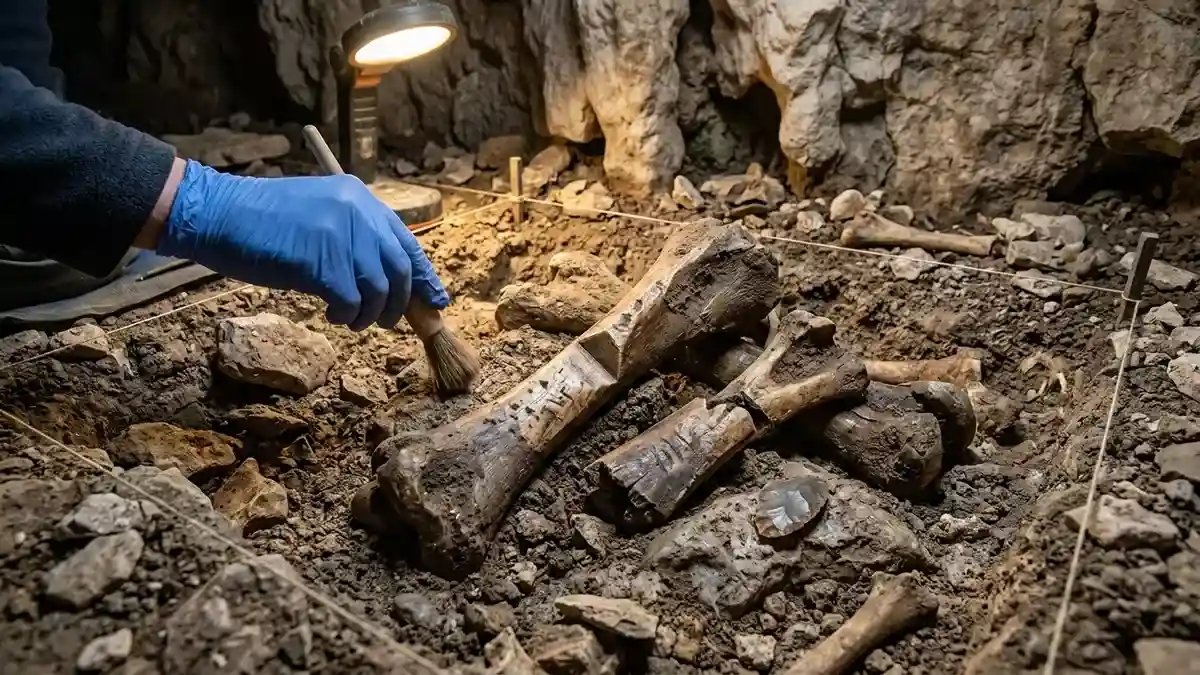
The historic find occurred inside Scladina Cave, an internationally significant Paleolithic site located in Belgium. The cave has long been recognized by anthropologists as one of Europe’s most critical repositories of hominin history. Previous excavations at Scladina have yielded monumental discoveries, including the remarkably intact skeletal remains of an eight-year-old Neanderthal child, alongside thousands of primitive animal bones and meticulously knapped flint tools.
The latest study, spearheaded by an international team of researchers from the University of Ghent, focused on organic remains dating to the tail end of the Saalian glaciation—a period characterized by harsh, fluctuating environmental conditions. Amidst the subterranean layers of sediment, scientists identified a highly unusual artifact: the modified tibia (shinbone) of a fully grown adult cave lion.
While archaeologists have occasionally found signs of early human interaction with large predators—such as 300,000-year-old butchery marks at the Gran Dolina site in Spain—the Scladina discovery marks an unprecedented milestone. It represents the first time in the global archaeological record that cave lion bones have been found explicitly transformed into functional, multi-purpose tools.

Crafting the Prehistoric Swiss Army Knife
What makes the Scladina find truly extraordinary is the complex lifecycle of the artifact. Rather than utilizing the lion bone for a single, disposable task, ancient craftsmen extracted four distinct, specialized tools from a single limb bone. The bone fragments display clear, undeniable signs of deliberate structural modification, systematic reuse, and ongoing refinement to meet changing immediate needs.
The Mechanics of Bone Retouching
The primary function of these bone fragments was to serve as “retouchers.” In Paleolithic technology, a retoucher is a tool used to reshape, sharpen, and maintain the edges of stone implements. When a flint knife or scraper became dull from processing meat, hide, or wood, a Neanderthal would strike the stone edge with a dense bone tool to flake away tiny imperfections and restore a razor-sharp edge.
The Scladina lion bone features distinct scoring marks, impact pits, and micro-wear patterns that align perfectly with heavy stone-shaping activities. To confirm this interaction, scientists utilized advanced energy-dispersive X-ray (EDX) spectroscopy analysis on the primary use areas of the bone. The high-tech scans revealed microscopic lithic inclusions—tiny flecks of stone material—deeply embedded within the scores of the bone, proving beyond a doubt that it had been repeatedly smashed against flint tools.

Sequential Reuse and Design Integration
As the lion bone tool wore down or broke through repeated use, the Neanderthals did not discard it. Instead, they adapted its shape for entirely new mechanical tasks. One of the recovered fragments features a precisely carved, beveled end. This angled edge suggests the tool was redirected for tasks requiring wedging, scraping, or prying, demonstrating a fluid, highly adaptive approach to tool utilization.
Overturning the “Primitive Neanderthal” Myth
For over a century, popular culture and early scientific literature frequently depicted Neanderthals as primitive, clumsy, and cognitively inferior to anatomically modern humans (Homo sapiens). The Scladina Cave discovery directly refutes this outdated narrative, offering definitive proof of advanced abstract thought and strategic planning.
Deliberate Material Selection
The authors of the study emphasized that the choice to use a cave lion tibia was a deeply calculated decision. A lion’s leg bone is incredibly dense, thick-walled, and structurally resilient—capable of absorbing massive amounts of kinetic energy without shattering.
The research team noted that this selection process reflects deliberate choices rooted in practical concerns rather than species-specific preferences. The Neanderthals were not selecting bones based on random convenience or spiritual mysticism; they possessed a profound, empirical understanding of the physical properties of different skeletal elements, identifying exactly which bones could withstand the immense mechanical stress of flint knapping.
The Mastery of Chaîne Opérationnelle
Anthropologists use the French term chaîne opératoire (operational chain) to describe the deliberate, step-by-step sequence of mental concepts and physical actions required to transform a raw material into a finished product. The production steps documented on the Scladina cave lion tibia mirror the exact operational chains Neanderthals applied to bear bones found at other contemporary sites.
This standardized methodology indicates that Neanderthals possessed a culturally transmitted, highly organized technological tradition. They didn’t just stumble upon carcass remains; they actively harvested and processed specific animal parts, likely hunting these dangerous apex predators with a clear, premeditated plan to utilize their skeletal anatomy for technological advancement.
Deepening Our Understanding of Ancient Human Adaptability
The intentional transformation of formidable predator bones into highly specialized, multifunctional implements highlights a level of cognitive flexibility and resource utilization that extended far beyond basic daily survival. It reveals a society capable of innovation, long-term material management, and an intimate ecological relationship with the dangerous carnivores sharing their geography.
As laboratory research continues on the Scladina Cave collections, international teams are optimistic that further microscopic wear analysis and digital reconstructions will unlock additional details regarding the exact tasks these bone tools performed. For now, this landmark discovery stands as a powerful testament to the resilience, intelligence, and unexpected technological sophistication of the Neanderthal world.
Frequently Asked Questions (FAQ)
What makes the Scladina Cave discovery unique?
The Scladina Cave find is unique because it represents the earliest direct evidence of Neanderthals transforming the bones of an extinct apex predator—the cave lion—into specialized, multi-purpose tools. It is the first documented instance of lion bones being utilized for tool manufacturing in the Paleolithic record.
How old are the tools found in Scladina Cave?
The modified cave lion tibia dates back approximately 130,000 years, aligning with the end of the Saalian glaciation. This puts the creation of these tools firmly within the Middle Paleolithic era, long before modern humans arrived in Western Europe.
What is a bone retoucher and how was it used?
A bone retoucher is a prehistoric tool used to maintain and sharpen stone weapons and implements. Neanderthals used the dense, durable bone to precisely strike the edges of flint tools, chipping away dull sections to create fresh, razor-sharp edges.
Did Neanderthals hunt cave lions?
While early hominins were known to occasionally clash with large predators, the systematic processing steps (chaîne opératoire) observed on the Scladina bones suggest that Neanderthals intentionally targeted specific animals, potentially hunting them not just for meat or hides, but for the highly practical, heavy-duty mechanical utility of their dense skeletal structures.
What technology did scientists use to study these artifacts?
Researchers used advanced microscopic wear analysis to study impact marks, along with energy-dispersive X-ray (EDX) spectroscopy. The EDX analysis allowed scientists to identify microscopic stone fragments embedded inside the grooves of the bone, proving it was used directly to shape flint tools.