
Table of Contents
- 1. The Flawed Narrative of the “Inbred” Hominin
- 2. A Massive Breakthrough in Northwestern Europe
- 3. The Dynamic Structure of Late Neanderthal Society
- 4. The Mystifying One-Way Street of Interbreeding
- 4.1. 1. Biological and Pregnancy Incompatibilities
- 4.2. 2. Social Acceptance and Cultural Bias
- 5. The Preservation Crisis in Ancient DNA Research
- 6. Conclusion
- 7. Frequently Asked Questions
- 7.1. Did all Neanderthals die out because of inbreeding?
- 7.2. How old are the Neanderthal samples analyzed in this new study?
- 7.3. Why do modern humans have Neanderthal DNA, but these Neanderthals had no human DNA?
- 7.4. Where were these diverse Neanderthal communities located?
- 7.5. How does climate change link to Neanderthal diversity?
New DNA Discovery Shatters Neanderthal Extinction Myth
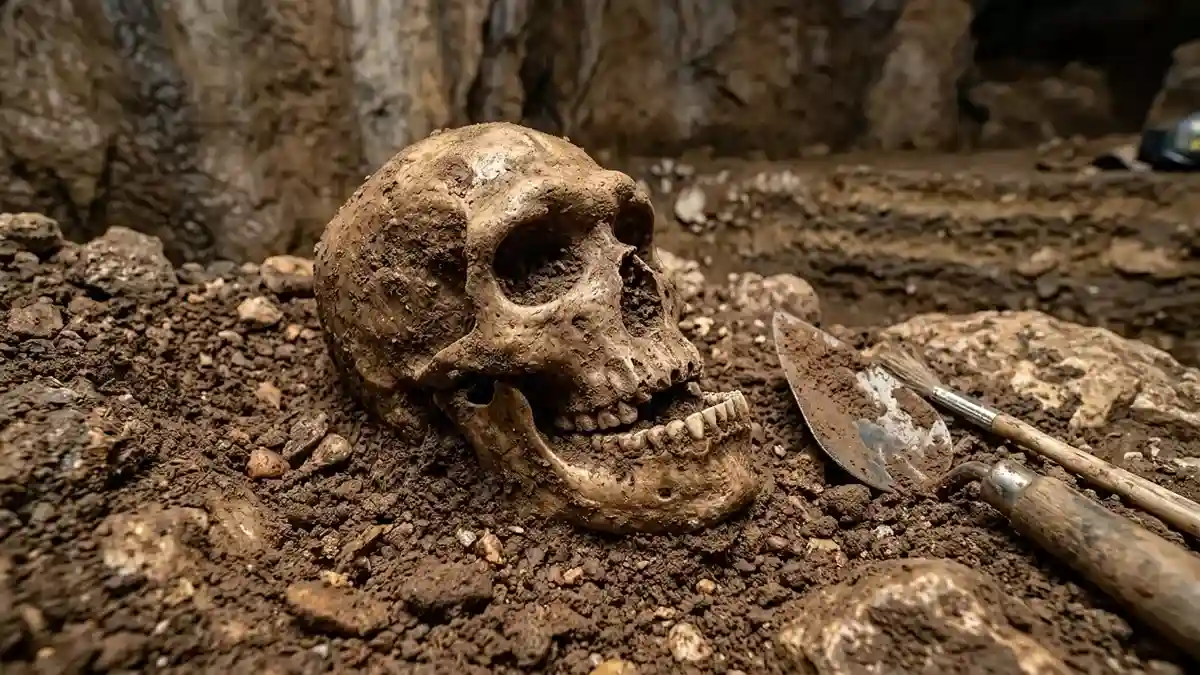
For decades, one of the most enduring mysteries in anthropology has been the sudden disappearance of Neanderthals. Our closest evolutionary relatives vanished from the fossil record roughly 40,000 years ago, leaving behind a trail of stone tools, enigmatic cave art, and lingering questions. A dominant theory among scientists suggested that these ancient hominins were doomed by their own biology—trapped in small, isolated pockets of the world and suffering from severe inbreeding that led to genetic decline and ultimate collapse.
However, a groundbreaking genetic study has completely upended this narrative. By extracting and analyzing ancient DNA from late-surviving Neanderthals in northwestern Europe, an international team of scientists has revealed a population that was surprisingly vibrant, interconnected, and genetically diverse. This discovery strongly challenges the notion that a genetic dead-end caused their extinction, forcing historians to reconsider what truly happened during the final days of the Neanderthal world.
New DNA Discovery Shatters Neanderthal Extinction Myth

The Flawed Narrative of the “Inbred” Hominin
To understand why this new evidence is causing such a stir in the scientific community, it is necessary to examine how the previous consensus was formed. Neanderthals and modern humans (Homo sapiens) shared a common ancestor before their lineages diverged roughly 500,000 years ago. While Homo sapiens evolved in Africa, Neanderthals claimed Eurasia as their home, enduring severe ice ages and changing landscapes for hundreds of thousands of years.
When scientists first began sequencing Neanderthal DNA, high-quality genomes were exceptionally rare. Until recently, researchers had access to only four highly detailed Neanderthal genomes. Crucially, three of these samples originated from remote sites in Siberia, located at the extreme geographic margin of the Neanderthal range.
The genetic profiles of these Siberian individuals revealed unmistakable signs of long-term isolation. They lived in tiny, disconnected family bands where mating between close relatives was common, resulting in low genetic diversity and accumulated health mutations. Because these were the only detailed genomes available, the scientific community broadly generalized these findings, assuming that all Neanderthals across the entire globe were similarly inbred and biologically vulnerable.

A Massive Breakthrough in Northwestern Europe
The new study, published in the journal Nature, shatters this geographical bias by shifting the focus to northwestern Europe. Rather than relying on a handful of specimens, an international research team successfully recovered and examined genetic data from 27 additional Neanderthals across 10 distinct archaeological sites in modern-day France and Belgium.
This massive influx of new data includes a pristine, ultra-high-quality genome, providing enough uncorrupted DNA for scientists to run repetitive analyses and guarantee absolute statistical precision. Experts in the field of paleogenomics have hailed the achievement as an extraordinary technical milestone, noting that extracting pristine genetic blueprints from ancient bones remains incredibly complex and far from routine.
The majority of the newly studied remains were excavated from the Meuse Basin in Belgium, a geography known for its dense concentration of “late Neanderthals”—those who managed to survive past 70,000 years ago. Among the excavated sites was the famous Goyet cave system, a location that has previously fascinated anthropologists due to controversial evidence suggesting complex mortuary practices, including potential cannibalism. Another key site was Spy Cave, which provided crucial specimens for this genetic reassessment.
The Dynamic Structure of Late Neanderthal Society
When the researchers mapped the newly recovered European genomes, the results were entirely unexpected. The genetic data revealed that these late Neanderthals of northwestern Europe had separated from a common ancestor shared with other known Neanderthals approximately 54,000 years ago.
More importantly, the data proved that these individuals were not living in lonely, dying family units. Instead, they belonged to a large, highly integrated, and collaborative network of communities. Unlike their Siberian counterparts, the European Neanderthals showed remarkably little evidence of recent inbreeding. The high-quality genome demonstrated that genetic diversity had remained stable and strong compared to much earlier generations of the species.
“We can finally dispel the widespread misconception that all Neanderthals went extinct because they were too inbred. It is a mistake to view them as a single monolithic population. They lived across massive regions for millennia, and we must respect their inherent diversity.” — Paleogenomics Research Team
The study further revealed that this European population was dynamic enough to split into at least four separate, genetically distinct sub-groups. Interestingly, the timelines for these population splits match up precisely with documented historical periods of regional climate warming. Favorable environmental conditions likely triggered periods of resource abundance, allowing local populations to expand, migrate, and establish new branches while still maintaining a broader regional network.
The Mystifying One-Way Street of Interbreeding
The revised timeline shows that these diverse European Neanderthals lived alongside migrating populations of modern humans for up to 500 generations. We already know that these two distinct human lineages crossed paths and interbred; the proof is written plainly inside our own bodies, as nearly all modern humans of non-African descent carry between one and two percent Neanderthal DNA.
However, the European study uncovered a baffling genetic puzzle: while the team found plenty of evidence of overlapping territories, the genomes of these late European Neanderthals contained absolutely zero traces of recent Homo sapiens DNA. This creates a striking genetic asymmetry that has left scientists searching for answers.
| Hominin Group | Evidence of Recent Intermixing in This Study | Historical Significance |
| Early Modern Humans (Homo sapiens) | Yes — Multiple fossils show Neanderthal ancestors just a few generations back. | Proves successful integration of Neanderthal genes into the modern human pool. |
| Late European Neanderthals | No — Zero recent modern human DNA found in the Belgian and French samples. | Suggests a severe biological or social barrier to reciprocal gene flow. |
Anthropologists have proposed two primary hypotheses to explain why modern human genes did not flow back into Neanderthal communities:
1. Biological and Pregnancy Incompatibilities
Some scientists suspect that profound genetic differences between the two species may have compromised hybrid pregnancies. For instance, recent evolutionary research suggests that differing variants of crucial genes responsible for red blood cell function could have triggered an immune response in pregnant Neanderthal women carrying hybrid fetuses. This incompatibility could have resulted in high rates of spontaneous miscarriage, effectively blocking Homo sapiens DNA from successfully integrating into the Neanderthal line.
2. Social Acceptance and Cultural Bias
An alternative theory focuses on ancient social dynamics rather than biology. It is highly possible that early Homo sapiens communities were perfectly willing to accept and raise children born from human-Neanderthal pairings, allowing those hybrid individuals to pass their genes down through the human lineage. Conversely, Neanderthal groups may have excluded hybrid children or rejected inter-species unions entirely. If hybrid offspring were raised exclusively within modern human tribes, modern human DNA would never appear in Neanderthal family trees.
The Preservation Crisis in Ancient DNA Research
While this study marks a massive leap forward, researchers emphasize that our map of the ancient world remains incomplete. The current breakthrough was heavily favored by geography; the stable, freezing temperatures of northwestern Europe act as a natural refrigerator, slowing down the decay of organic material and preserving delicate double-helix DNA strands within fossilized bone.
Attempting to replicate this success in warmer climates presents an uphill battle. Crucial late-Neanderthal sites located throughout the Iberian or Italian peninsulas are far more difficult to analyze because heat and humidity rapidly accelerate the destruction of ancient biological matter.
Conclusion
The revelation that European Neanderthals maintained a diverse, interconnected, and healthy population up until their final millennia effectively destroys the idea that they simply withered away due to a broken genetic pool. They were resilient, adaptable, and far more complex than early science ever gave them credit for. As genetic mapping technology continues to improve, the focus of anthropology must shift away from outdated biological biases and look closer at ecological competition, changing climates, and cultural friction to discover why Homo sapiens inherited the Earth alone.
Frequently Asked Questions
Did all Neanderthals die out because of inbreeding?
No. While older studies of isolated Siberian remains showed heavy signs of inbreeding, this new large-scale European study proves that late-surviving Neanderthals in northwestern Europe possessed high genetic diversity and lived in large, interconnected social networks.
How old are the Neanderthal samples analyzed in this new study?
The study focused on late Neanderthals who lived after 70,000 years ago, with significant population diversifications and lineages tracking down to after 52,500 and 40,000 years ago.
Why do modern humans have Neanderthal DNA, but these Neanderthals had no human DNA?
While early modern humans frequently integrated hybrid children into their tribes, creating the Neanderthal percentages seen in modern populations, these European Neanderthals show no reciprocal human DNA. This points to either social exclusion of hybrids by Neanderthals or biological incompatibilities that caused hybrid pregnancies in Neanderthal women to fail.
Where were these diverse Neanderthal communities located?
The genetic material used in this study was recovered from 10 different archaeological sites spread across northwestern Europe, with a major concentration located within the Meuse Basin of present-day Belgium and France.
How does climate change link to Neanderthal diversity?
The study discovered that the northwestern European Neanderthals split into at least four distinct genetic sub-groups. These splits line up with ancient periods of regional climate warming, which likely created rich environments that allowed populations to expand and branch out safely.