
Table of Contents
- 1. The Iconography of the Rising Sun and Srivatsa
- 2. Mapping a First-Millennium Economic Superhighway
- 3. The Die Match Breakthrough: A Single Artisan Across Thousands of Miles
- 4. A New Weapon Against Illicit Antiquities Trafficking
- 5. Conclusion: Elevating Southeast Asian Numismatics
- 6. Frequently Asked Questions
- 6.1. 1. What are “Rising Sun” and “Srivatsa” coins?
- 6.2. 2. Who originally minted these ancient silver coins?
- 6.3. 3. What is a “die study” and how does it help archaeologists?
- 6.4. 4. How far did this ancient Southeast Asian trade network extend?
- 6.5. 5. Why is this coin research important for stopping modern art smuggling?
Ancient ‘Rising Sun’ Coins Reveal Vast Trade Networks Across Southeast Asia
For generations, mainstream historical education has focused heavily on the economic systems of the Mediterranean and Western Europe, mapping out every maritime route utilized by the Roman Empire. Meanwhile, the complex financial structures of early Southeast Asia were frequently treated as localized or secondary. However, an exhaustive new archaeological study of ancient silver currency is fundamentally reshaping our understanding of the first millennium.
By analyzing the physical stamps on coins dating as far back as the fourth century CE, researchers have uncovered evidence of an astonishingly vast, highly integrated commercial network. This ancient trading web stretched thousands of miles across national borders, linking early civilizations from the borders of Bangladesh all the way to the coastlines of Vietnam.
Ancient ‘Rising Sun’ Coins Reveal Vast Trade Networks Across Southeast Asia
The Iconography of the Rising Sun and Srivatsa
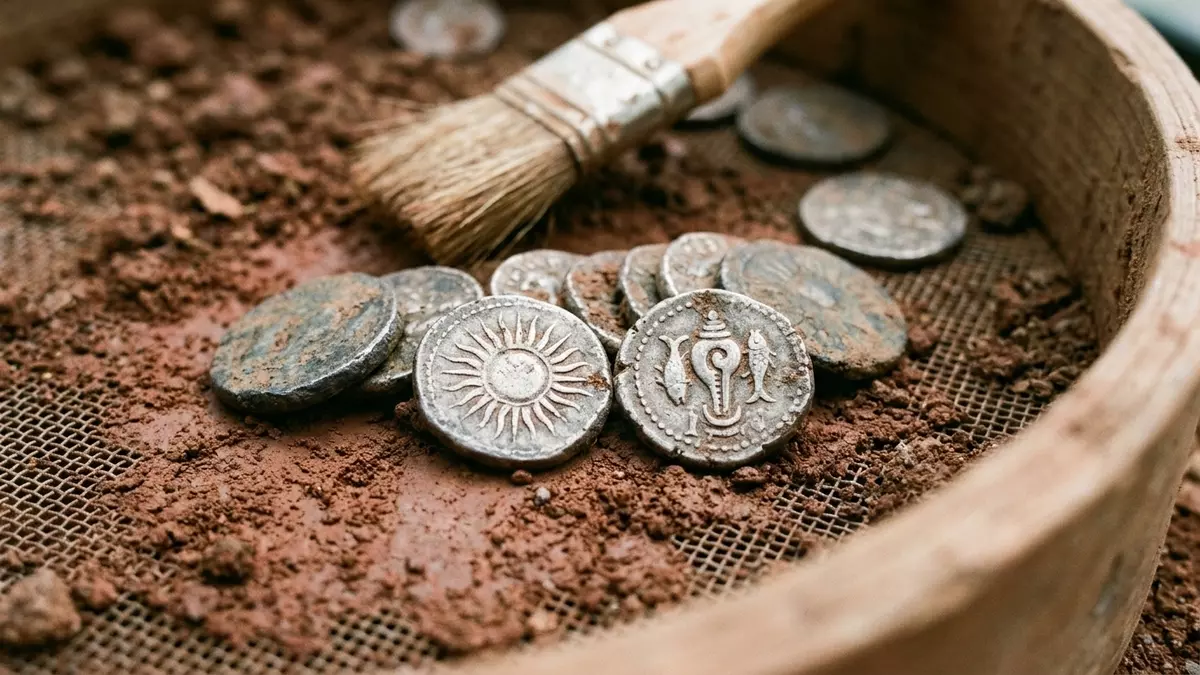
The focus of this groundbreaking historical revelation is a class of specialized silver currency known to numismatists—coin experts—as the Rising Sun/Srivatsa coinage. Initially struck by the advanced Pyu-Mon polities of north-central Myanmar, these coins represent a high point in early regional metallurgy.
[Rising Sun Motif (Obverse)] ➔ Represents vitality, cosmic order, and political authority
[Srivatsa Emblem (Reverse)] ➔ Ancient South Asian symbol of wealth, good fortune, and divinity
The coins were manufactured using specialized metal dies, which are engraved iron or bronze molds used to stamp intricate designs onto both faces of a blank silver disc. The obverse (front) side features a distinctive radiating rising sun motif, while the reverse (back) side displays the Srivatsa, an ancient auspicious symbol associated with divinity, abundance, and good fortune.
While historical excavations have noted minor variations in the total diameter, exact weight, and localized imagery of individual specimens, their overall uniformity is remarkable. This strict aesthetic and physical standardization indicates the existence of shared economic guidelines and cultural value systems that successfully transcended local political boundaries and regional languages during the first millennium.
Mapping a First-Millennium Economic Superhighway
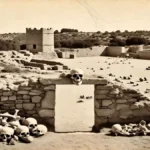
The exceptional geographic spread of these artifacts proves that Southeast Asia was not a collection of isolated kingdoms, but rather a thriving economic superhighway. Ancient Chinese imperial chronicles dating as far back as the late Han Dynasty (second century CE) frequently highlighted Southeast Asia’s vital role in facilitating both overland and maritime trade routes. These transit channels connected the Near East and the Indian subcontinent directly to mainland China via the Persian Gulf, the Indian Ocean, and the South China Sea.
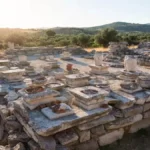
Modern archaeological excavations have consistently validated these ancient written records. Dig sites across the region routinely turn up exotic luxury imports, including:
Roman Glassware: High-status decorative vessels carried across maritime channels.
Persian and South Asian Ceramics: Heavy storage jars and finely glazed pottery.
Indian Jewelry: Specialized beads, semi-precious stones, and gold work.
Early Chinese Ceramics: Trade porcelain and earthenware dating to early dynasties.
Among all these recovered commodities, the Rising Sun/Srivatsa coins stand out for their unparalleled distribution. Archaeologists have recovered these identical silver denominations within the Irrawaddy River basin of Myanmar, the prominent Dvaravati culture centers of central Thailand, the Funanese maritime capitals scattered across the Mekong Delta of southern Vietnam, and throughout small riverine settlements dotting the Malay Peninsula.
The Die Match Breakthrough: A Single Artisan Across Thousands of Miles
To map out the exact flow of this ancient currency, Dr. Andrew Harris of the National University of Singapore, alongside an international team of researchers, launched a massive numismatic investigation. The team conducted a comprehensive “die study,” meticulously examining 245 individual silver coins preserved in major national museums across Myanmar, Cambodia, Vietnam, and Thailand.
A die study acts like a forensic fingerprinting process for ancient currency. Because each manufacturing die was carved entirely by hand, it contained microscopic flaws, unique spacing, and distinct tool marks. When a coin is struck, these exact physical quirks are transferred directly to the metal. If two coins found in different parts of the world display identical microscopic imperfections, it proves they were stamped using the exact same physical mold.
[Hand-Carved Metallic Die] ➔ Imprints Unique Microscopic Flaws ➔ Matches Discovered Across 1,000+ Miles
The results of the study were nothing short of spectacular. The research team discovered multiple direct die matches between coins recovered thousands of kilometers apart. In one truly extraordinary case, researchers matched the obverse side of a coin recovered in Bangladesh with a coin unearthed in coastal Vietnam.
This means that despite being deposited thousands of miles apart in completely different cultural zones, these two silver discs were minted by the exact same political authority or even struck by the very same artisan in a single workshop. This finding provides undeniable physical proof of direct, long-distance economic connectivity operating across the Bay of Bengal and the South China Sea.
A New Weapon Against Illicit Antiquities Trafficking
Beyond rewriting textbook narratives of economic history, the researchers emphasize that this comprehensive die mapping provides a vital modern benefit: it serves as a powerful scientific shield against the black-market antiquities trade.
Due to ongoing civil conflicts and political instability in parts of mainland Southeast Asia, particularly in Myanmar, ancient archaeological sites are highly vulnerable to illicit looting. Valuable cultural artifacts are frequently ripped from the ground without documentation, smuggled across borders, and sold into anonymous private collections or melted down entirely for raw bullion value.
By creating an international database of recognized die matches and manufacturing traits, scientists can establish an ironclad method for coin provenance tracing. If a previously unknown coin surfaces on the private art market, experts can compare its surface markers to the database. This allows them to instantly identify its geographic source, flag potential forgeries, and help law enforcement agencies combat the looting of global cultural heritage.
Conclusion: Elevating Southeast Asian Numismatics
This landmark study, published in the prestigious archaeological journal Antiquity, marks a massive leap forward for global historical research. By providing rigorous physical proof of standardized, widespread monetary circulation, the research places the early currency systems of Southeast Asia on equal academic footing with the heavily documented monetary histories of the Roman Empire, the Mauryan Empire of India, and the nomadic silk road empires of Central Asia. The discovery opens up exciting new pathways for future research, ensuring that Southeast Asia is recognized as a core pillar of the ancient global economy.
Frequently Asked Questions
1. What are “Rising Sun” and “Srivatsa” coins?
These are ancient standardized silver coins minted in Southeast Asia during the first millennium CE, starting around the fourth century. The front (obverse) features a radiating rising sun design symbolizing political and cosmic vitality, while the back (reverse) features the Srivatsa, a historical South Asian symbol representing wealth, good fortune, and auspicious beginnings.
2. Who originally minted these ancient silver coins?
The initial production of Rising Sun/Srivatsa currency is attributed to the Pyu-Mon polities, an advanced network of early urban civilizations that thrived in the north-central river valleys of modern-day Myanmar. Over time, the style and use of this currency spread extensively to neighboring cultural zones.
3. What is a “die study” and how does it help archaeologists?
A die study is a forensic method where researchers examine coins under high magnification to find matches from the same manufacturing mold (die). Because every hand-carved die has unique microscopic flaws and tool marks, finding identical marks on coins discovered thousands of miles apart proves they were produced in the exact same mint or workshop.
4. How far did this ancient Southeast Asian trade network extend?
The trade network was remarkably vast, spanning from modern-day Bangladesh across the Irrawaddy basin in Myanmar, through the Dvaravati centers of Thailand, down the river valleys of the Malay Peninsula, and all the way into the ancient Funan trade capitals located in the Mekong Delta of Vietnam.
5. Why is this coin research important for stopping modern art smuggling?
Looting during regional conflicts often destroys the historical context of ancient artifacts. By mapping out the unique stamps and chemical signatures of authentic coins, a die study creates a reference database. This allows experts to identify the true origin of smuggled items, spot modern fakes, and assist international agencies in protecting endangered cultural heritage.