
Table of Contents
- 1. Decoding Ancient Metal with Multi-Proxy Isotopic Analysis
- 2. The Birth of a Statuette: Local Foundations and Iberian Imports
- 2.1. The Copper Supply
- 2.2. The Tin Mystery
- 3. Re-casting and Recycling: The Fabrication Biographies
- 4. Prehistoric Cultural Echoes from Sardinia to Scandinavia
- 5. Frequently Asked Questions
- 5.1. What are Nuragic bronzetti?
- 5.2. How did scientists track the origins of the metals?
- 5.3. Where did the Nuragic people get their metal?
- 5.4. What is the historical significance of the osmium isotope testing used in the study?
- 5.5. What do these findings tell us about Bronze Age society?
Advanced Geochemical Study Reveals Far-Reaching Bronze Age Metallurgy Networks in Sardinia
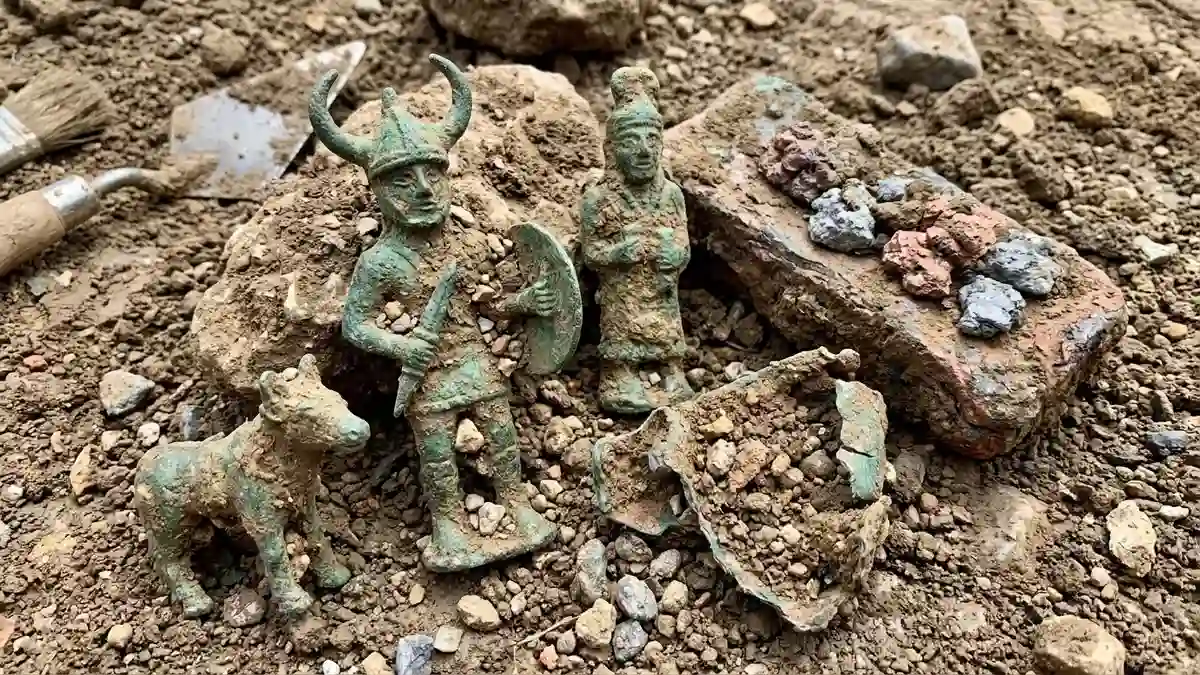
Sardinia’s iconic bronzetti—intricate bronze statuettes depicting horned warriors, local chieftains, revered deities, and native animals—have long captivated historians. Created by the enigmatic Nuragic civilization during the early first millennium BCE, these miniature sculptures offer a rare window into the spiritual and daily lives of an ancient Mediterranean people. Yet, the literal building blocks of these artifacts have historically been shrouded in mystery.
Now, a pioneering international study has mapped the exact geological fingerprints of the metals used to craft these figurines. By employing cutting-edge isotope testing, an interdisciplinary research team has proven that the Nuragic people were not isolated islanders, but rather master metallurgists at the center of an expansive, long-distance trade network that stretched across Europe and the Mediterranean.
Advanced Geochemical Study Reveals Far-Reaching Bronze Age Metallurgy Networks in Sardinia
Decoding Ancient Metal with Multi-Proxy Isotopic Analysis
The Nuragic civilization is famous for constructing nuraghi—more than 7,000 massive stone towers that still dot the Sardinian landscape today. While their architecture is highly visible, tracking the origin of the raw metals used in their specialized bronze casting required a deeper, microscopic approach.
To solve the long-standing debate over where the Nuragic artisans sourced their materials, researchers at the Curt-Engelhorn Center for Archaeometry in Germany utilized a “multi-proxy” scientific method. The team combined standard chemical analyses with highly precise isotopic tracking of four distinct elements:
Copper
Tin
Lead
Osmium
This study marked the first time that osmium isotope analysis was applied to this specific field of Mediterranean archaeology. Because osmium provides an incredibly distinct geological signature, its inclusion allowed scientists to definitively rule out specific regions—such as the famous Levantine mining operations in Timna (Israel) or Faynan (Jordan)—that previous researchers hypothesized were major suppliers.
The Birth of a Statuette: Local Foundations and Iberian Imports
By analyzing 48 individual bronzetti recovered from major Sardinian sanctuaries like Santa Vittoria, Su Monte, and Abini, the geochemical data revealed a fascinating, multi-layered supply chain.
The Copper Supply
The overwhelming majority of the copper used to cast the statuettes was found to be local, sourced directly from southwest Sardinia’s rich Iglesiente-Sulcis district, specifically the Sa Duchessa mine. However, local supply wasn’t the only source. The tests also detected significant amounts of copper imported from the Iberian Peninsula, tracking back to the Linares and Alcudia Valley mining districts in modern-day Spain.
The Tin Mystery
While Sardinia boasts its own natural deposits of lead and tin, the isotopic data yielded a stunning revelation: none of the analyzed figurines contained local Sardinian tin. Because bronze requires mixing copper with tin, Nuragic metalworkers were entirely dependent on foreign trade routes to procure this crucial ingredient.
The imported tin used to forge the bronzetti traveled immense distances, likely originating from the Iberian Peninsula, Cornwall in Great Britain, the Saxon-Bohemian Erzgebirge region of Central Europe, or potentially even ancient Egyptian deposits.
| Artifact Component | Primary Geological Source | Trade Range |
| Copper | Southwest Sardinia (Sa Duchessa Mine) & Iberian Peninsula | Local to Western Mediterranean |
| Tin | Cornwall, Central Europe, Iberia, or Egypt | Pan-European / North African |
| Lead | Variable Mediterranean Deposits | Regional |
Re-casting and Recycling: The Fabrication Biographies
The study’s findings also shed light on the daily practices of the Nuragic workshops. The chemical profiles showed that the bronzetti were rarely cast from pristine, single batches of uniform metal. Instead, the artisans frequently mixed copper from varying geographical sources.
This blending of metals occurred for two reasons: intentional metallurgy—where craftsmen mixed batches to manipulate the final sculpture’s durability, flexibility, or metallic color—or basic market availability. Many figurines exhibited a complex “fabrication biography,” showing signs of repeated melting, recycling, and re-casting over generations as old tools or older statues were melted down into new sacred objects.
Prehistoric Cultural Echoes from Sardinia to Scandinavia
The implications of the study extend far beyond metallurgy, offering profound insights into the shared cultural and religious symbols of the European Bronze Age.
Intriguingly, the distinct artistic style of the Sardinian bronzetti mirrors archaeological discoveries thousands of miles away in Northern Europe. The iconic horned helmets worn by the miniature bronze warriors of Sardinia share striking structural similarities with large-scale artifacts found in southern Scandinavia, such as the famous Viksø helmets unearthed in Denmark.
These shared aesthetic and spiritual motifs suggest that ideological, religious, or symbolic connections ran deeply through the maritime trade highways of the prehistoric world, positioning Bronze Age Sardinia as a vital hub of technological expertise and international cultural exchange.
Frequently Asked Questions
What are Nuragic bronzetti?
Bronzetti are small bronze statuettes, typically around 10 centimeters tall, created by the Nuragic civilization of Sardinia. They depict a wide array of subjects, including deities, animals, village chieftains, and warriors famously outfitted with daggers, long cloaks, and distinct horned helmets.
How did scientists track the origins of the metals?
An international team used an advanced multi-proxy scientific technique that analyzed the specific isotopic signatures of copper, tin, lead, and osmium. Developed in Germany, this method provides a geological fingerprint that matches the metal in an artifact to the exact ancient mine it was extracted from.
Where did the Nuragic people get their metal?
The copper used in the figurines was primarily mined locally in southwest Sardinia at the Sa Duchessa mine, supplemented by copper imported from Spain. Surprisingly, all of the tin required to create the bronze had to be imported from distant regions such as Cornwall, Central Europe, Iberia, or Egypt.
What is the historical significance of the osmium isotope testing used in the study?
Osmium isotope testing was used for the first time on these specific Mediterranean artifacts. It provided the definitive scientific evidence needed to completely rule out the Levant (modern Israel and Jordan) as a copper source, resolving a long-standing debate among archaeologists.
What do these findings tell us about Bronze Age society?
The data proves that late Bronze Age and early Iron Age societies were deeply interconnected. Rather than living in isolation, the Nuragic people of Sardinia were active participants in a vast commercial and cultural network that facilitated the exchange of raw materials, metalworking technologies, and religious iconography across Europe.