
Table of Contents
**Rare 2,500-Year-Old Votive Bases Reveal Secrets of Cyprus Apollo Sanctuary**
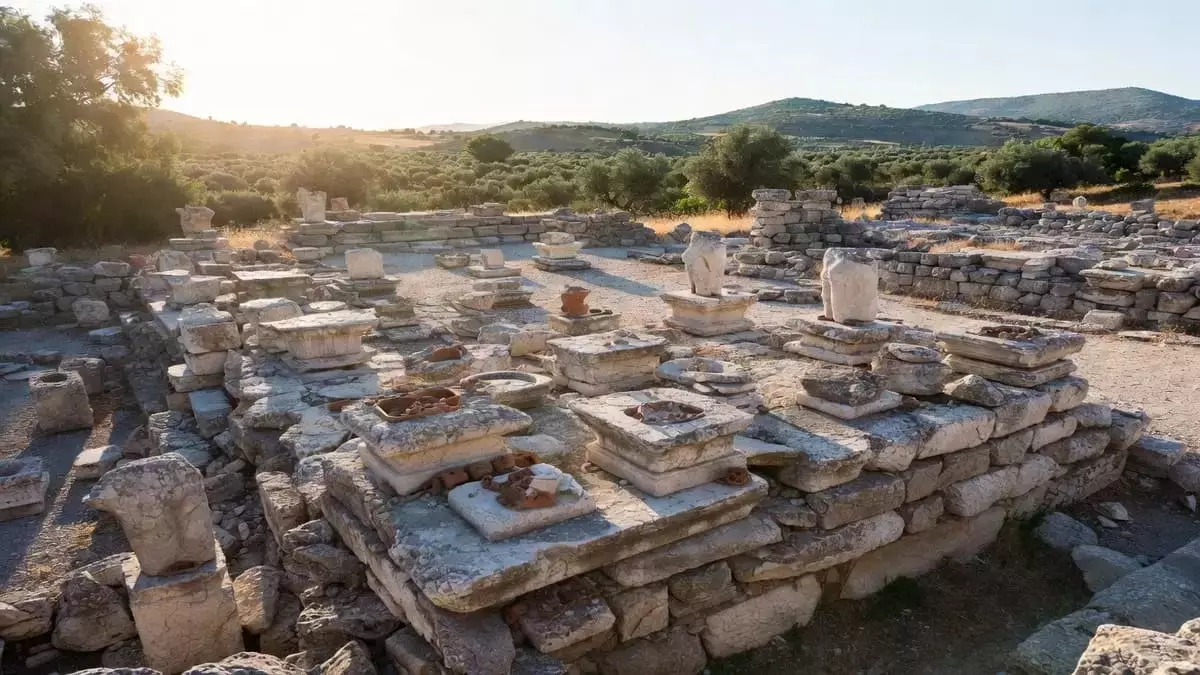
Archaeologists have made an extraordinary discovery at an ancient sanctuary dedicated to Apollo in Cyprus, unearthing more than 20 votive statue bases still standing exactly where worshippers placed them over 2,500 years ago. This remarkable find at the Frangissa site offers fresh insights into religious practices, ritual offerings, and the long-term evolution of sacred spaces in the ancient Mediterranean world.
The well-preserved limestone bases, some still bearing the feet of original statues, provide a rare snapshot of how devotees honored the gods through centuries of continuous worship. This latest excavation season has transformed our understanding of one of Cyprus’s lesser-known but significant religious centers.
Rare 2,500-Year-Old Votive Bases Reveal Secrets of Cyprus Apollo Sanctuary
### Rediscovering a Forgotten Sanctuary Dedicated to Apollo
Located near the modern village of Pera Oreinis, the Sanctuary of Apollo at Frangissa lay hidden for decades after its initial exploration in the late 19th century. German archaeologist Max Ohnefalsch Richter first excavated the site in 1885, but his records were limited, and the exact location faded from memory over time.
Modern efforts, led by Matthias Recke of Goethe University Frankfurt with Philipp Kobusch of the University of Rostock as field director, have successfully relocated and reopened the sanctuary. The recent fifth excavation campaign focused on both previously disturbed areas and untouched sections, yielding some of the most compelling evidence yet of the site’s Archaic period activity.
These new findings stand out because many statue bases remained in their original positions, untouched since antiquity. Earlier digs had removed numerous bases and used them as fill material when the site was reburied. The current team recovered over 100 fragments from those old backfill deposits, allowing them to piece together a more complete picture of the sanctuary’s history.
### Exceptional Preservation of Ancient Votive Offerings
The discovery of intact votive statue bases represents a significant breakthrough for Cypriot archaeology. Several limestone platforms still preserve the feet of the statues that once stood proudly upon them. Archaeologists also found terracotta feet and fragments of clay figurines, revealing a diverse range of devotional objects.
This evidence marks the first clear archaeological confirmation in Cyprus that terracotta votive figures were mounted on specially crafted limestone bases rather than simply placed on the ground or tucked into rock-cut niches. Such careful presentation highlights the importance devotees placed on proper display of their offerings to Apollo.
The spatial arrangement of these bases tells a fascinating story of gradual accumulation. In certain areas, statues stood so closely packed that newer bases were placed directly atop older layers while still keeping the upper figures visible. This layered setup provides the clearest evidence yet of how sanctuaries slowly filled with dedications over generations.
**Soil analysis revealed deliberate ancient reorganizations.** Earlier groups of statue bases were carefully buried under leveling deposits, creating flat surfaces for new offerings. Researchers believe this major renovation likely occurred toward the end of the Archaic period, possibly due to space constraints or damage from conflict or natural events.
### Life in Ancient Cyprus: Context of the Archaic Period
Around 2,500 years ago, Cyprus thrived as a cultural crossroads where Greek, Phoenician, and local traditions blended. Sanctuaries like Frangissa served not only as religious centers but also as social hubs where communities gathered, celebrated festivals, and expressed their devotion through elaborate offerings.
Apollo, worshipped widely across the Greek world as the god of music, prophecy, healing, and archery, held special importance in Cyprus. The presence of numerous votive statues suggests worshippers sought divine favor for everything from personal health to community prosperity and protection in uncertain times.
The sanctuary’s rural setting adds another layer of interest. Unlike grand urban temples, Frangissa served local populations and possibly travelers along regional routes. The accumulation of offerings over centuries demonstrates sustained community investment and the enduring power of religious traditions in daily Cypriot life.
### How the Discoveries Illuminate Ritual Practices
The preserved layout of the votive bases allows researchers to reconstruct ancient rituals with unprecedented accuracy. Worshippers likely approached the sanctuary, made offerings, and positioned statues in meaningful arrangements—perhaps grouping them by theme, family, or status.
The transition from Archaic to Hellenistic periods at the site becomes clearer with these finds. The first undisturbed Archaic pottery deposits recovered in modern excavations confirm activity during the earlier phase, previously known only from scattered fragments. This pottery, combined with the statue bases, provides direct proof of continuous use across several hundred years.
Such layered sacred spaces were common in the ancient Mediterranean, but few survive with this level of integrity. The Frangissa sanctuary offers an exceptional opportunity to study how ritual behavior, social dynamics, and architectural adaptations evolved together over time.
### Challenges and Triumphs of Modern Excavation
The project faced typical archaeological hurdles, including working around damage from later burials and modern development. However, careful stratigraphic analysis and documentation have maximized the information gained from each layer.
Support from the Amricha Foundation in Leipzig and Argo Frankfurt has enabled this important work to continue. The collaboration between German universities and the Cyprus Department of Antiquities demonstrates the value of international partnerships in preserving Mediterranean heritage.
Future seasons will likely focus on expanding excavation areas, conducting detailed material analysis, and possibly identifying more about the sanctuary’s architectural layout. Advanced techniques such as 3D scanning and residue analysis on the bases could reveal traces of paints, inscriptions, or even organic offerings once placed there.
### Broader Implications for Cypriot and Mediterranean Archaeology
This discovery enriches our knowledge of Cypriot religious life during a formative period. It shows how even smaller rural sanctuaries played vital roles in maintaining cultural identity and community cohesion amid shifting political landscapes.
The careful preservation and reorganization of votive offerings reflect sophisticated management of sacred spaces. Priests or sanctuary officials evidently oversaw these processes, ensuring the site remained functional despite growing numbers of dedications.
Comparisons with other Apollo sanctuaries across Greece and the broader Mediterranean will benefit from the Frangissa data. The site’s unique preservation conditions help answer questions about how different regions adapted similar religious practices to local contexts.
As climate change and development pressures increase across Cyprus, discoveries like this one underscore the urgency of protecting archaeological sites. Each new find adds depth to our shared human heritage and connects modern audiences with ancient spiritual traditions.
The presence of both stone and terracotta votives also highlights economic aspects of devotion. Wealthier worshippers could afford larger limestone statues, while others contributed more modest clay figures—demonstrating that religious participation crossed social boundaries.
### The Enduring Power of Ancient Faith
At its heart, this discovery speaks to the universal human desire to connect with the divine. The hundreds of votive bases represent countless individual acts of faith, hope, and gratitude spanning generations. Each statue told a personal story—perhaps a prayer answered, a milestone celebrated, or protection sought during difficult times.
The fact that ancient people took such care to reorganize and preserve earlier offerings shows deep respect for their religious heritage. This continuity strengthens our understanding of Cyprus as a place where traditions endured despite external influences.
Researchers continue to analyze the materials, hoping to identify specific workshops, regional styles, and possible inscriptions that could name individual donors or deities. Every detail brings us closer to the lived experiences of people who walked these sacred grounds millennia ago.
In conclusion, the uncovering of these rare 2,500-year-old votive statue bases at the lost Apollo sanctuary in Cyprus represents far more than an impressive archaeological haul. It opens a vivid window into ancient ritual life, community devotion, and the dynamic evolution of sacred spaces. As excavations proceed, we can anticipate even richer insights into one of the Mediterranean’s most fascinating cultural crossroads.
This project reminds us why archaeology matters: it transforms forgotten places into living connections with our ancestors, revealing both how much has changed and how deeply some human experiences remain constant across time.
## FAQ
**How old are the votive statue bases found in Cyprus?**
The bases date back approximately 2,500 years to the Archaic period, offering direct evidence of religious activity at the Apollo sanctuary during that time.
**What makes this discovery at Frangissa special?**
Many bases remained in their original positions with statues still attached, providing the clearest view yet of how offerings accumulated over centuries in a Cypriot sanctuary.
**Why was the Sanctuary of Apollo at Frangissa forgotten?**
After initial 1885 excavations with limited documentation, the site’s location was lost until modern research teams relocated it through careful fieldwork.
**What do the statue bases reveal about ancient rituals?**
They show layered arrangements where newer offerings were placed atop older ones, along with evidence of deliberate reorganizations, shedding light on long-term management of sacred spaces.
**Were terracotta figurines commonly used as votives in Cyprus?**
Yes, but this find provides the first clear evidence they were displayed on limestone bases rather than placed directly on floors or in niches.
**Who is leading the current excavations at the site?**
Matthias Recke from Goethe University Frankfurt leads the project, with Philipp Kobusch of the University of Rostock serving as field director.
**Will more artifacts be discovered at the Apollo sanctuary?**
Ongoing work and future seasons are expected to yield additional finds, potentially including more pottery, inscriptions, and architectural details from different periods.