
Table of Contents
**Healed Skull Wounds Rewrite Medieval Violence History**
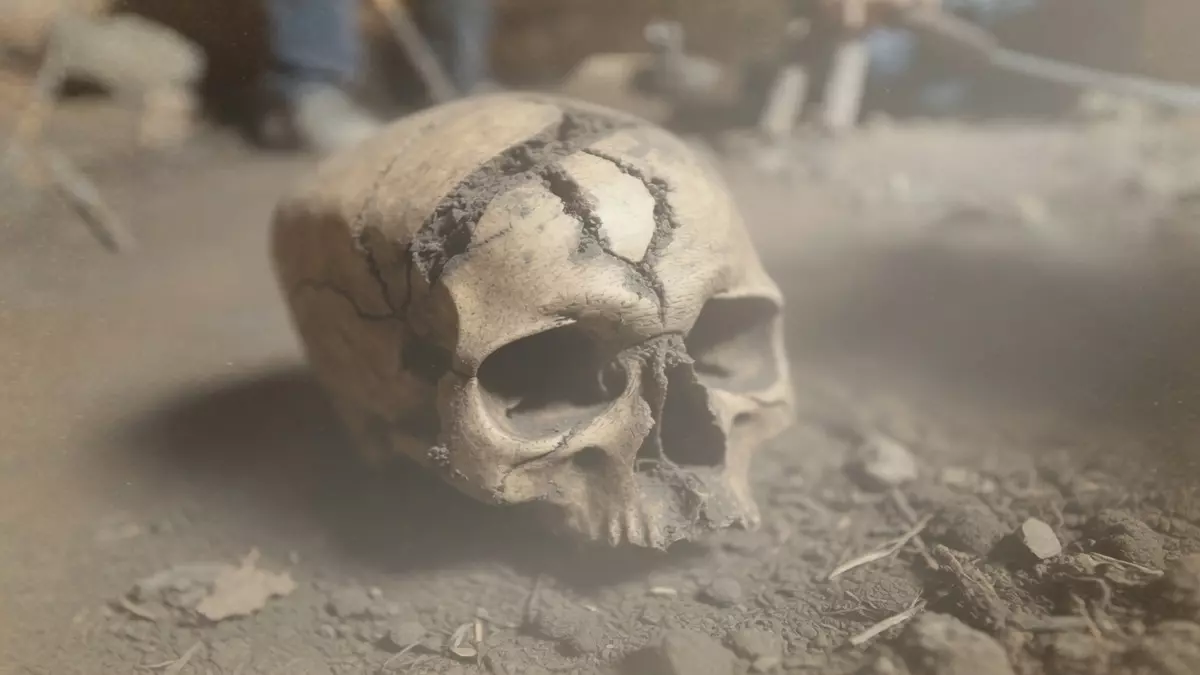
A remarkable discovery from an early medieval cemetery in northeastern Italy is prompting historians and archaeologists to reconsider long-held assumptions about gender and violence in Langobard society. The skeleton of a middle-aged woman, known as T46, bears clear evidence of two severe head injuries that healed years before her death—offering the first direct archaeological proof of interpersonal violence against a Langobard woman.
This finding, published in 2026, adds nuance to our understanding of life in 6th- and 7th-century Italy during the Langobard period and highlights the resilience of individuals who survived traumatic events in turbulent times.
Healed Skull Wounds Rewrite Medieval Violence History

### The Discovery of T46 in Cividale del Friuli
Archaeologists uncovered the remains of T46 during a 2012 emergency excavation at the Ferrovia cemetery in Cividale del Friuli. Later burials had disturbed the grave, leaving the skeleton incomplete and fragmented. Despite the damage, advanced analysis revealed compelling details about her life and experiences.
Living between approximately 590 and 630 CE, T46 belonged to the Langobard community that ruled much of Italy after the fall of the Western Roman Empire. The Langobards, also known as Lombards, migrated from northern Europe and established a powerful kingdom characterized by a warrior culture. Their cemeteries frequently contain weapons and evidence of conflict, but until now, signs of violence appeared exclusively on male skeletons.
 Advanced Geochemical Study Reveals Far-Reaching Bronze Age Metallurgy Networks in Sardinia
Researchers faced challenges determining the sex of T46 because many skeletal features were missing or damaged. They relied on cutting-edge protein analysis, which confirmed she was female. This scientific step proved essential in establishing the significance of her case.
### Two Severe Injuries That Tell a Story of Survival
The woman’s skull provides dramatic evidence of violence. One injury was a clean, tangential cut on the left forehead, consistent with a sharp blade striking from the front and above. Experts suggest the weapon may have been a scramasax—a single-edged knife commonly associated with Germanic warriors. The angle and shape indicate a deliberate attack rather than an accident.
A second injury showed signs of a crushing blow, likely delivered by a hard, flat object such as a stone or blunt weapon. This trauma caused a fracture that later showed signs of infection. Despite the severity of both wounds, bone remodeling around the injuries proves she survived for years afterward. This long healing period strongly suggests she received dedicated care and support from her community.
**Cranial trauma patterns like these are rare in female remains from this era.** The fact that both wounds healed successfully speaks to the medical knowledge and social bonds present in Langobard society. Survival after such head trauma in pre-modern times was no small feat and likely involved rest, wound cleaning, and possibly herbal treatments.
### Langobard Society: Warriors, Laws, and Gender Roles
The Langobards earned a reputation as fierce warriors, with many male graves containing swords, spears, and shields. Skeletal evidence from sites across Italy and Hungary previously showed head wounds only on men, leading some scholars to assume women were largely shielded from direct physical violence.
However, Langobard legal codes—some of the best-preserved early medieval law texts—tell a more complex story. These documents mention violence against women, penalties for attacks, and even situations where women participated in fights or were sent into conflicts. The case of T46 brings these written references to life, showing that women were not entirely spared from the brutal realities of the time.
This discovery challenges simplistic narratives about early medieval gender roles. While men likely bore the brunt of battlefield injuries, domestic disputes, raids, or interpersonal conflicts could affect anyone. Soft tissue injuries, which leave no trace on bones, may have been far more common than skeletal evidence suggests.
### Why This Case Stands Out in Paleopathology
T46 represents a breakthrough in the study of violence in past societies. Before this find, researchers had documented 33 cases of similar cranial trauma in Langobard contexts—all involving males. The complete absence of female examples had created a gap in the archaeological record that this single individual now begins to fill.
Several factors explain why female violence cases rarely appear in skeletal collections:
– Women may have participated less frequently in large-scale raids and battles.
– Violence against women often involved soft tissue rather than bone-breaking force.
– Poorer preservation of female graves in some cemeteries.
– Cultural burial practices that might have differed by gender.
Despite these limitations, T46’s injuries provide tangible proof that women experienced and survived serious interpersonal violence. The healed wounds also demonstrate community support systems that helped individuals recover from life-threatening trauma.
### Broader Context of Early Medieval Italy
The Langobard period (roughly 568–774 CE) was a time of cultural blending between Germanic traditions and Roman legacies. Cividale del Friuli served as an important center in northeastern Italy, strategically located near trade routes and borders. Cemeteries like Ferrovia offer valuable insights into daily life, health, diet, and social structure.
The presence of occupational wear on T46’s teeth suggests she engaged in repetitive tasks common for women of the period, such as textile work or food preparation. Combined with her healed injuries, her story paints a picture of a resilient individual who contributed to her community despite facing significant adversity.
Ongoing excavations and advanced laboratory techniques, including ancient DNA and isotope analysis, continue to reveal new details about migration patterns, family relationships, and health conditions in Langobard society. These methods help researchers move beyond assumptions and build evidence-based interpretations.
### Implications for Understanding Historical Violence
This case encourages scholars to reexamine assumptions about violence in early medieval Europe. It suggests that conflict was not limited to male warriors but could touch all members of society. The survival of T46 also highlights the caregiving roles that likely existed within families and communities, challenging stereotypes of early medieval life as purely brutal.
As more cemeteries are studied using modern scientific approaches, additional cases may emerge. Future research combining skeletal analysis with genetic data and historical texts could reveal whether T46 was an exception or part of a broader, under-documented pattern.
The discovery underscores the value of emergency archaeology. Development projects often uncover hidden heritage sites, providing opportunities to recover information that would otherwise be lost forever.
### What This Means for Modern Perspectives on the Past
Stories like T46’s humanize history. They remind us that people in the distant past faced challenges—violence, injury, recovery, and survival—that resonate with contemporary experiences. Understanding how early medieval societies handled trauma and supported injured members offers insights into human resilience across time.
This find also contributes to larger discussions about gender and violence throughout history. By showing that women experienced physical conflict, it adds depth to our view of Langobard society as multifaceted rather than one-dimensional.
As paleopathologists continue their work, cases like this one will help refine our models of past societies, health outcomes, and social dynamics. They demonstrate how a single skeleton can transform academic understanding and capture public imagination.
In conclusion, the healed skull injuries of the Langobard woman from Cividale del Friuli represent more than an interesting archaeological curiosity. They challenge traditional narratives, highlight female experiences in early medieval society, and underscore the power of modern scientific methods to reveal hidden stories. As research progresses, we can expect an even richer, more nuanced picture of life during this transformative period in European history.
## FAQ
**How old was the Langobard woman when she died?**
She was middle-aged at the time of death, living roughly between 590 and 630 CE during the early Langobard period in Italy.
**What evidence shows her injuries healed before death?**
Bone remodeling and new bone growth around both the blade wound and crushing injury indicate she survived for years after the attacks.
**Why is this discovery significant for understanding violence?**
It provides the first direct skeletal evidence of interpersonal violence on a Langobard woman, challenging the previous pattern of injuries appearing only on male remains.
**How did researchers confirm the skeleton belonged to a woman?**
Protein analysis was used when traditional bone structure methods were inconclusive due to poor preservation.
**What does this case reveal about Langobard society?**
It shows that women could experience serious violence but also received community support for long-term recovery, adding complexity to views of gender roles and caregiving.
**Where was the skeleton found?**
The remains were excavated from the Ferrovia cemetery in Cividale del Friuli, northeastern Italy.
**Will more similar cases likely be discovered?**
Future studies using advanced techniques may identify additional examples, helping determine if T46 represents an isolated case or part of a wider pattern in Langobard communities.