
Table of Contents
- 1. The Discovery at Loch Borralie
- 2. The Ritual of Individual 1: Brain Removal and Bone Toolcraft
- 3. Complex Social Networks in Iron Age Scotland
- 4. Understanding Ancestral Veneration
- 5. Frequently Asked Questions
- 5.1. What evidence suggests the brain was removed?
- 5.2. Does the modification of bones into tools imply a lack of respect?
- 5.3. How are the two skeletons related?
- 5.4. Was this kind of bone modification common?
- 5.5. What does this tell us about ancient Scottish society?
Iron Age Rituals: 2,000-Year-Old Remains Reveal Macabre Traditions
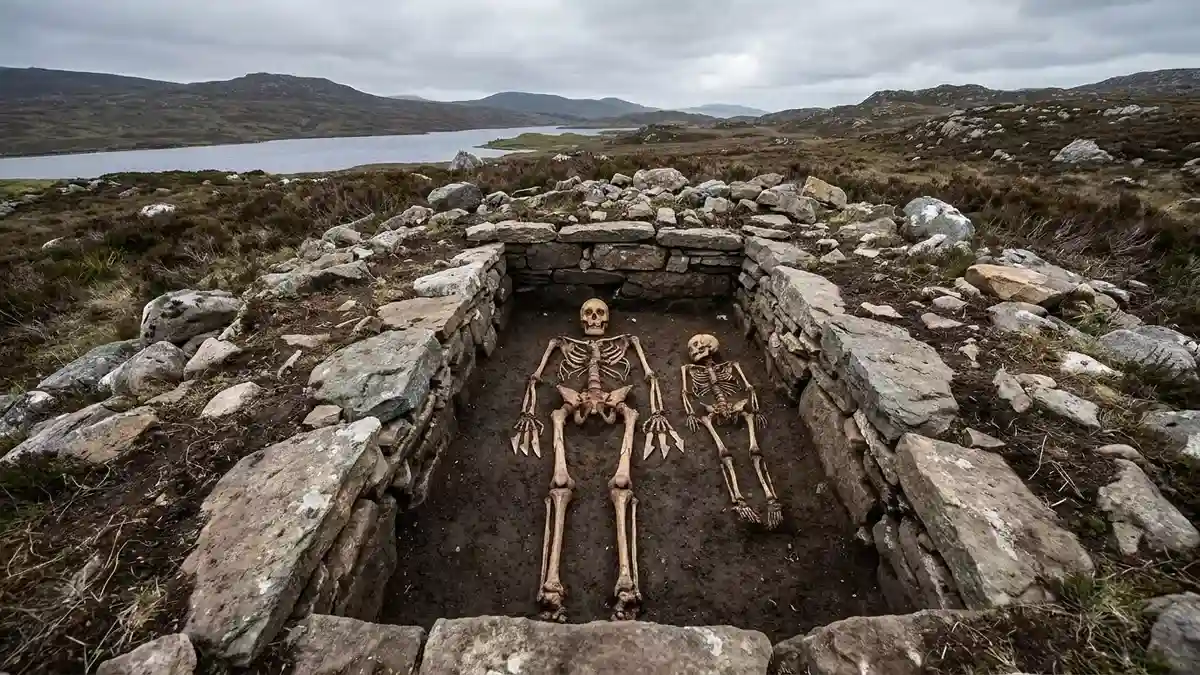
In the rugged landscapes of northern Scotland, a 2,000-year-old burial cairn near Loch Borralie has provided a chilling look at the complex, and often unsettling, funerary practices of Iron Age Britain. Recent scientific analysis of two skeletons discovered at the site reveals that these ancient communities engaged in sophisticated postmortem rituals, including the intentional removal of brains and the transformation of human bones into functional tools.
The Discovery at Loch Borralie
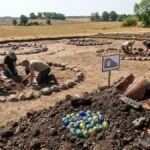
The site first gained archaeological attention in 2000, when local residents discovered human remains unearthed by rabbits near the shores of a northern Scottish lake. Upon excavation, researchers uncovered a rectangular stone cairn containing the remains of an adult woman (Individual 1) and a teenager (Individual 2). Both individuals were interred between the first century B.C. and the first century A.D.
For years, initial assessments of the bones suggested that the damage—scratches and surface degradation—was the result of scavenging animals, such as rats or dogs. However, a groundbreaking study published in the journal Antiquity has completely overturned this theory, revealing that the modifications were deliberate, human-made, and steeped in ritualistic intent.
Iron Age Rituals 2,000-Year-Old Remains Reveal Macabre Traditions
The Ritual of Individual 1: Brain Removal and Bone Toolcraft
The most shocking evidence centers on the woman, who was over 30 years old at the time of her death. Detailed forensic examination of her skull revealed a significant fracture at the base, accompanied by deliberate, sharp-tool incisions on the interior surfaces. According to the research team led by the University of York, these marks are clear indicators of a postmortem procedure to remove the brain.
The implications of this act are profound. The researchers suggest that this practice could be linked to two distinct possibilities:
Cannibalism: The removal of the brain may have been part of a ritualized consumption of the deceased.
Preservation and Veneration: Alternatively, the removal of the brain could have been a necessary step to clean and preserve the skull for long-term display as a relic of a respected ancestor.
Furthering the mystery, archaeologists discovered that four of the woman’s limb bones—three from her arms and one from her leg—had been meticulously modified. The bones had been whittled and shaped into sharp-edged tools, potentially used for everyday tasks.
What makes this finding truly baffling is the “reverent” reassembly of the remains. Despite the invasive removal of organs and the repurposing of her bones into tools, someone took the time to place the modified remains back into the cairn in their correct anatomical positions. This suggests that while the community felt comfortable manipulating the physical body, they still held the individual in high regard.
 Under the Layers of Deception: High-Tech Scans Reveal Hidden Nazi Symbols Beneath Postwar Painting
Complex Social Networks in Iron Age Scotland
The second skeleton, a 15-year-old boy, showed no signs of similar manipulation, leaving researchers to wonder why the woman was singled out for such an elaborate process. Interestingly, DNA analysis indicates that the two individuals were second cousins.
Beyond the burial itself, the DNA study has provided a broader map of Iron Age human migration. The genetic signatures of the Loch Borralie individuals show connections to other prehistoric sites, including the remote Orkney Islands. These findings challenge the perception of ancient northern Scotland as a series of isolated, disconnected outposts. Instead, the data supports the existence of highly mobile maritime communities that traversed the north coast and the Northern Isles, maintaining complex social and ancestral networks over long distances.
Understanding Ancestral Veneration
The “careful” nature of the reassembly at Loch Borralie underscores a fundamental truth about prehistoric life: death was not the end of an individual’s relationship with their community.
“The motivation behind the extensive manipulation… is very difficult to interpret,” said lead author Laura Castells Navarro. “However, the care with which she was reassembled and deposited in the cairn possibly suggests she commanded a level of reverence and respect by her community.”
This discovery adds to a growing body of evidence that Iron Age people in Britain did not view the human body through the same lens of permanence that we do today. For these ancient cultures, the body was a medium through which social memory was curated, ancestors were honored, and community ties were reinforced, regardless of how invasive or macabre those rituals might appear to modern eyes.
Frequently Asked Questions
What evidence suggests the brain was removed?
Researchers found deliberate, sharp-tool cut marks on the interior base of the skull, combined with a specific fracture pattern that could only be explained by someone manually reaching into the cranium to extract the brain.
Does the modification of bones into tools imply a lack of respect?
Not necessarily. While it seems gruesome to us, the fact that the tools were carefully placed back into the grave in their correct anatomical positions suggests that the deceased was still being honored and “put back together” as part of a funerary rite.
How are the two skeletons related?
Ancient DNA analysis confirmed that the woman and the teenage boy were related, likely as second cousins sharing the same set of great-grandparents.
Was this kind of bone modification common?
While not standard, evidence of postmortem body manipulation is found periodically in European prehistory. The Loch Borralie case is particularly significant because of the specific combination of brain removal and the transformation of limb bones into tools.
What does this tell us about ancient Scottish society?
It highlights that these populations were not isolated. They were mobile, maritime people who maintained consistent contact across the North Sea and the Northern Isles, sharing cultural and funeral traditions across vast geographic distances.