
Table of Contents
- 1. The Natufians: Visionaries at the Crossroads of Prehistory
- 2. Anatomy of a 12,000-Year-Old Masterpiece
- 2.1. Advanced Pyrotechnology
- 2.2. A Prehistoric Signature
- 2.3. Symbolic Pigments
- 3. The Sacred Ground: Where the Figurine Was Found
- 4. Interpreting the Myth: Hunting Trophy or Spiritual Guide?
- 5. A Giant Leap Forward in Artistic Innovation
- 6. Conclusion: The Dawn of Human Storytelling
- 7. Frequently Asked Questions
- 7.1. Who were the Natufians and when did they live?
- 7.2. How did the researchers determine a young adult made the figurine?
- 7.3. What is the historical significance of the goose in this sculpture?
- 7.4. Why does the location of the discovery matter so much?
- 7.5. How was the clay figurine preserved for 12,000 years?
Rare Ancient Figurine Gives Historians New Insight Into Early Myths
The transition from nomadic foraging to settled village life is widely considered one of the most defining chapters in the story of human civilization. For decades, researchers believed that complex religious systems, structured storytelling, and advanced artistic expression only truly blossomed after humanity mastered agriculture. However, a stunning archaeological discovery in northern Israel is completely overturning that evolutionary timeline, revealing that our ancestors were deeply immersed in complex mythological and spiritual worlds long before the first seeds were ever planted.
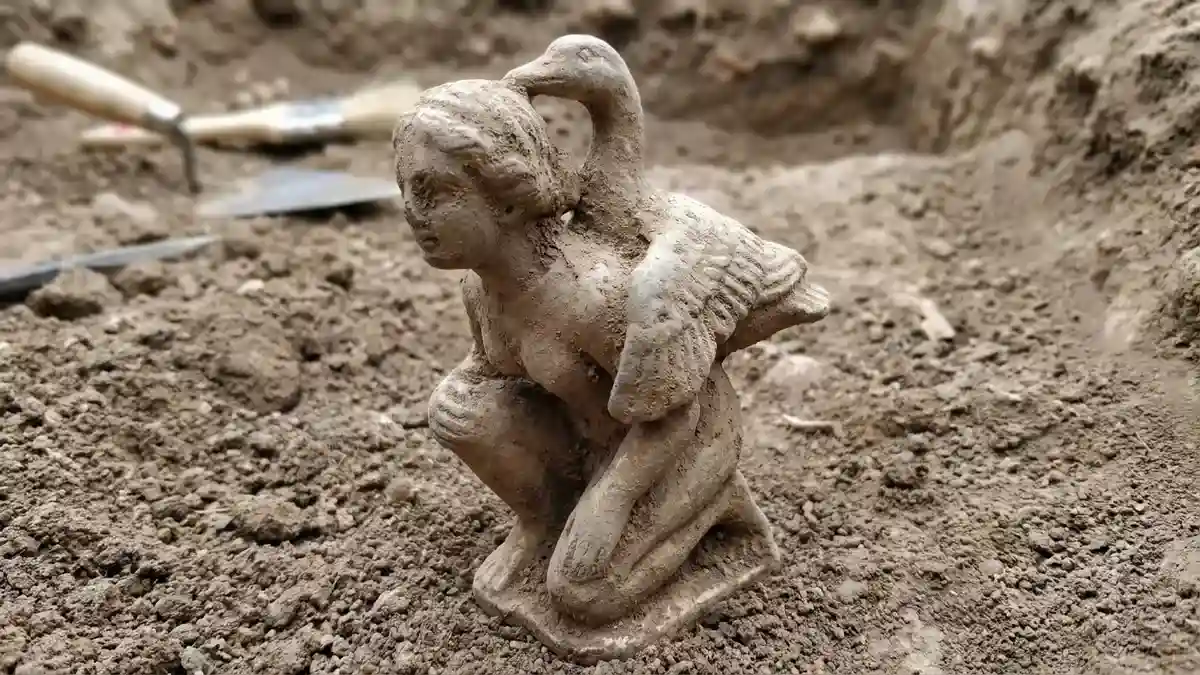
While excavating a prehistoric settlement near the Sea of Galilee, a team of archaeologists unearthed an incredibly rare, 12,000-year-old clay sculpture. The miniature artifact depicts a crouching woman with a live goose perched on her back, its wings reaching around her in an intimate embrace. This unprecedented piece of art provides an extraordinary window into the minds of the Natufian people, capturing a moment in time when early human societies began exploring intricate symbolic frameworks and shared mythologies at the dawn of sedentary life.
Rare Ancient Figurine Gives Historians New Insight Into Early Myths
The Natufians: Visionaries at the Crossroads of Prehistory
To fully appreciate the historical weight of this tiny sculpture, one must understand the unique culture that created it. The Natufians thrived across the Levant—a geographical region spanning modern-day Israel, Jordan, Lebanon, and Syria—between approximately 15,000 and 11,500 years ago during the Epipaleolithic period.
Unlike the highly nomadic hunter-gatherers who came before them, the Natufians chose a radically different path. They became some of the world’s very first sedentary communities, establishing permanent or semi-permanent settlements long before the invention of farming or animal domestication.
Foraging in Place: They built sturdy stone structures and successfully sustained large villages by harvesting wild grains and hunting local wildlife, particularly gazelles and migratory waterfowl.
Cultural Incubators: This newly stable lifestyle granted communities something their nomadic ancestors rarely possessed: time. Freed from the constant demands of a migratory existence, the Natufians became pioneers of artistic, technological, and spiritual experimentation, setting the stage for the massive cultural explosion of the subsequent Neolithic era.
Anatomy of a 12,000-Year-Old Masterpiece
Discovered at the Late Natufian settlement site known as Nahal Ein Gev II, the newly recovered figurine is a masterclass in ancient craftsmanship. Measuring a mere 3.7 centimeters (about 1.5 inches) in height, the sculpture was molded by hand from clay sourced directly from the local environment.
       [ Goose ]
      /         \  <- Wings wrapping forward
  [ Crouching Woman ]
Advanced Pyrotechnology
After shaping the figures, the artisan did not simply leave the clay to dry in the sun. Instead, the piece was intentionally placed into a domestic fireplace and baked under carefully controlled temperatures. This deliberate use of thermal engineering represents an early stage of ceramic technology, proving that these ancient people understood how heat structurally alters raw earth to create durable, long-lasting objects.

A Prehistoric Signature
During a microscopic analysis of the artifact, researchers discovered a breathtaking connection to the individual creator: a beautifully preserved partial fingerprint permanently baked into the clay surface. By conducting a detailed ridge-pattern analysis—a forensic technique used to study the spacing and characteristics of skin ridges—specialists determined that the imprint most likely belonged to a young adult, quite possibly a young woman.
Symbolic Pigments
The microscopic review also revealed lingering traces of red ocher explicitly applied to both the female figure and the goose. Red ocher, a naturally occurring iron oxide pigment, held immense spiritual and ritualistic significance across the prehistoric world, frequently utilized in burial practices, body ornamentation, and sacred art to symbolize life, blood, or transformation.
The Sacred Ground: Where the Figurine Was Found
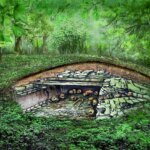
The true meaning of an archaeological object is almost always revealed by its context, and the location where this statuette was uncovered points directly to a deeply spiritual purpose. Rather than being found discarded among everyday domestic refuse or kitchen waste, the figurine was carefully deposited within a specialized, semicircular stone structure.
This specific building served as a focal point for sacred funerary rituals and unusual communal offerings. Excavators working within the structure uncovered a variety of significant features, including:
The primary grave of a young child.
A deliberate, curated collection of detached human teeth.
Specialized architectural partitions separating ritual spaces from standard domestic life.
The presence of the woman-and-goose sculpture in an area so explicitly tied to death, remembrance, and community ritual strongly indicates that the object was not a mere plaything or decorative trinket. It was a sacred item, intentionally manufactured and deposited to fulfill a profound metaphysical or ritualistic role within the village.
Interpreting the Myth: Hunting Trophy or Spiritual Guide?
Waterfowl, particularly geese, were a familiar part of daily life for the people living at Nahal Ein Gev II. The local wetlands and the nearby Sea of Galilee served as crucial stopovers for millions of migratory birds. While archaeological evidence shows that Natufians regularly hunted geese for sustenance and used their bones to fashion beads and tools, the artistic rendering in this figurine tells a radically different story.
| Aspect of Interaction | Practical Interpretation | Mythological Interpretation |
| State of the Bird | Dead game, hunted food source | Alive, active, and highly energetic |
| Physical Stance | Being carried or slung over a shoulder | Enveloping the woman from behind |
| Emotional Tone | Exploitative, resource-driven | Intimate, collaborative, and protective |
The artist took great care to portray the goose as an active participant rather than passive prey. By showing the bird’s wings extending forward to cradle the leaning woman, the sculpture bypasses a literal depiction of a hunter carrying meat. Instead, it captures an intimate, non-adversarial bond between human and animal.
Many researchers believe this scene points directly to an animistic worldview. In animism, humans do not view themselves as separate from or superior to nature; instead, they believe that animals, plants, and natural forces possess distinct spiritual identities. The figurine may represent an early origin myth, a tale of a spiritual protector, or a narrative about a legendary ancestor who possessed the unique ability to shift shapes or communicate across the human-animal divide.
A Giant Leap Forward in Artistic Innovation
Beyond its profound spiritual implications, the Bjugn-era Natufian statuette marks a monumental leap forward in the history of human artistic technique. Prior to this discovery, the vast majority of Paleolithic human figurines were static, rigid, and strictly two-dimensional in execution, focusing heavily on front-facing profiles with minimal interaction or negative space.
The artisan at Nahal Ein Gev II shattered these artistic conventions. By manipulating the volume of the clay and intentionally twisting the posture of the crouching woman beneath the enveloping goose, the sculptor created a dynamic sense of depth, perspective, and movement. The surface of the piece was designed to catch and play with ambient firelight, creating shifting shadows that gave the illusion of life to the static clay. It stands as the earliest known three-dimensional, naturalistic dual-subject narrative sculpture ever discovered in Southwest Asia, predating the highly stylized geometric art forms of the later Neolithic period by thousands of years.
Conclusion: The Dawn of Human Storytelling
The 12,000-year-old woman and the goose of Nahal Ein Gev II remind us that the human need for story, connection, and spiritual expression is ancient and deeply ingrained. Long before our ancestors built cities, invented writing, or organized large-scale farming, they sat around glowing hearthfires, working local clay with their hands, and gave physical form to the complex myths that bound their communities together. This tiny masterpiece changes our understanding of human prehistory, proving that the roots of our artistic and spiritual lives run far deeper than we ever imagined.
Frequently Asked Questions
Who were the Natufians and when did they live?
The Natufians were a unique prehistoric culture that inhabited the Levant region of Southwest Asia from roughly 15,000 to 11,500 years ago. They are incredibly famous in anthropology because they were among the first human groups to abandon a fully nomadic lifestyle and build permanent settlements before the widespread development of agriculture.
How did the researchers determine a young adult made the figurine?
Scientists utilized a forensic technique known as dermatoglyphics, which involves analyzing the physical characteristics of the partial fingerprint left behind in the clay. By measuring the specific width, density, and pattern of the skin ridges, experts were able to deduce that the person who molded the wet clay was a young individual, most likely a young adult female.
What is the historical significance of the goose in this sculpture?
While earlier Ice Age art occasionally featured animals, they were almost always depicted as separate entities, frequently shown as targets of a hunt. The Natufian figurine is revolutionary because it depicts an intimate, non-violent, narrative interaction between a human and a living bird, suggesting a deep mythological or spiritual connection rather than a simple hunt.
Why does the location of the discovery matter so much?
The figurine was found inside a specialized, semicircular stone structure alongside a child’s grave and a collection of human teeth. Finding the object in a clear funerary and ritualistic space proves to archaeologists that the sculpture held genuine religious or symbolic value for the community, rather than being an ordinary domestic tool or toy.
How was the clay figurine preserved for 12,000 years?
The preservation is due to a combination of intentional ancient technology and fortunate geological conditions. The creator fired the clay sculpture in a fireplace at a controlled temperature, chemically altering the mud into a durable ceramic material. Once buried within the protective archaeological layers of the settlement, the hardened ceramic resisted the degradation that normally destroys unfired clay over millennia.