
Table of Contents
- 1. The Altamura Skeleton: A Time Capsule Frozen in Limestone
- 2. The Long-Standing Myth of the Neanderthal “Built-In Heater”
- 3. Endoscopic Cameras Shatter Decades of Evolutionary Theory
- 3.1. Key Structural Re-evaluations
- 4. Solving the Evolutionary Paradox
- 5. A Digital Future for Prehistoric Research
- 6. Conclusion: A New Chapter in Human Evolutionary Biology
- 7. Frequently Asked Questions
- 7.1. Why has the Altamura skeleton never been removed from the cave?
- 7.2. How old is the Altamura Neanderthal fossil?
- 7.3. If their noses weren’t built for warming air, why did Neanderthals have such large faces?
- 7.4. How did researchers look inside the skull without damaging it?
- 7.5. Does this mean Neanderthals and modern humans are more similar than we thought?
Cave Discovery Rewrites What Scientists Know About Neanderthal Noses
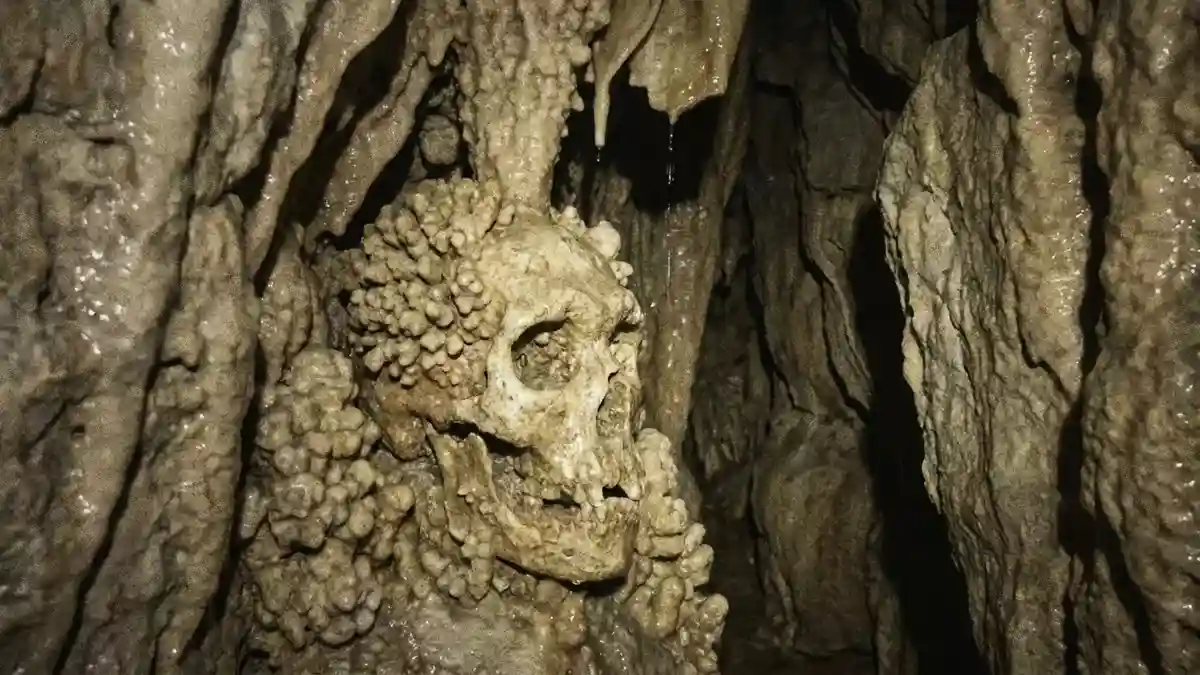
Deep within an intricate, limestone karst system in southern Italy, a ancient human skeleton has been quietly guarded by nature for millennia. Found fused into the rock formations of a cave near Altamura, this exceptional specimen has long been a source of fascination for paleoanthropologists. Now, by leveraging modern medical tech to explore parts of the fossil that are physically inaccessible, researchers have managed to peer into a pristine, completely intact Neanderthal nasal cavity for the very first time.
The results of this pioneering examination have fundamentally shaken the scientific consensus regarding how our extinct cousins survived the brutal freezing cycles of Ice Age Europe. For decades, standard evolutionary models assumed that Neanderthals possessed specialized, internal facial plumbing designed to warm and humidify sub-zero air. However, this newly acquired internal look demonstrates that the long-hypothesized climate adaptations simply do not exist. Instead, the internal anatomy of a Neanderthal nose bears a striking, undeniable resemblance to our own.
Cave Discovery Rewrites What Scientists Know About Neanderthal Noses

The Altamura Skeleton: A Time Capsule Frozen in Limestone
The extraordinary fossil at the center of this discovery was first encountered in 1993 by a team of speleologists exploring the Lamalunga cave complex near Altamura, Italy. The individual, who lived roughly 130,000 to 172,000 years ago during the Late Pleistocene, met their end after falling down a deep sinkhole. Unable to escape, the ancient human perished in a narrow crevice.
Over the subsequent millennia, mineral-rich water dripping through the cave coated the bones in thick layers of calcite and coral-like stalagmites, frequently referred to by geologists as “cave popcorn.” This process effectively cemented the skeleton directly into the cave’s limestone walls.
Because the skull is physically wedged between two tight, narrow chambers, extracting the physical specimen without destroying it is entirely impossible using traditional archaeological methods. As a result, the Altamura individual has remained in situ for more than three decades, acting as an untouchable, perfectly sealed time capsule of ancient human anatomy.
The Long-Standing Myth of the Neanderthal “Built-In Heater”
To understand why this discovery has caused such a stir in the scientific community, it is helpful to look at how researchers historically interpreted Neanderthal skulls. Compared to modern humans, Neanderthals possessed massive, prominent midfaces and exceptionally wide nasal openings.
For generations, evolutionary biologists viewed these features through the lens of climate adaptation. Because Neanderthals thrived in frigid environments during Europe’s glacial periods, scientists assumed their huge noses housed a sophisticated internal warming mechanism. The prevailing theory suggested that Neanderthals possessed unique internal structures—known technically as autapomorphies—which included localized bony swellings along the nasal walls and a distinct absence of bone above the tear duct groove.
These traits were believed to maximize the surface area of mucous membranes, transforming the internal nasal passage into a natural radiator that conditioned icy air before it reached the delicate respiratory system. However, because internal nasal bones are paper-thin and fragile, they are almost never preserved in the fossil record. The “built-in heater” theory was highly logical, but it remained entirely unproven—until now.

Endoscopic Cameras Shatter Decades of Evolutionary Theory
To finally test this climate adaptation theory, an international research team bypassed the physical restrictions of the cave by utilizing high-tech endoscopes, similar to the flexible micro-cameras used by surgeons to peer inside the human body. By carefully navigating these tiny lenses through minuscule cracks in the limestone and into the interior channels of the Altamura skull, scientists successfully captured the first-ever complete internal visualization of a prehistoric nasal cavity.
What the cameras revealed caught the scientific community completely off guard. Rather than uncovering specialized structures or unique adaptation zones, the endoscopes revealed a clean, standard nasal cavity that mirrors the inner structures found in modern humans today.
Key Structural Re-evaluations
The study, published in the Proceedings of the National Academy of Sciences (PNAS), systematically evaluated the internal space and removed several theoretical markers from the official definition of Neanderthal physiology:
No Specialized Bony Swellings: The interior nasal walls lack the hypothesized tissue-supporting structures that were long thought to act as thermal regulators.
Standard Interior Proportions: The rear functional segments of the nasal passages align cleanly with modern human dimensions, rather than expanding outward to match the exterior projection of the face.
Shared Architecture: The overall internal map confirms that the operational portions of the respiratory pathway have remained essentially consistent across both human lineages.
Solving the Evolutionary Paradox
This unexpected discovery effectively resolves an anatomical paradox that has puzzled anthropologists for decades. When studying modern human populations, a clear geographic pattern emerges: communities native to freezing environments typically evolve narrow, elongated nasal cavities to better conserve heat and moisture, whereas wide nasal passages are strongly associated with warm, humid equatorial climates.
Neanderthals broke this rule entirely. They possessed short, stocky, cold-adapted bodies, yet their massive nasal openings looked like they belonged to a tropical species.
| Lineage | Body Proportions | External Nose Shape | Internal Airway Architecture |
| Modern Humans (Cold-Adapted) | Compact, short limbs | Narrow, elongated | Standard modern proportions |
| Neanderthals (Cold-Adapted) | Stocky, high-mass | Exceptionally wide, prominent | Standard modern proportions |
The Altamura data explains this mismatch by showing that the exterior projection of the Neanderthal face is distinct from its internal respiratory function. Only the outermost front portion of the nose follows the forward-thrusting shape of the midface. The deeper, functional portions of the respiratory airway—where the actual air processing happens—remain fundamentally unchanged and perform efficiently via a structural configuration that is different from what we see in cold-adapted modern humans.
The unique shape of the Neanderthal face was likely the result of alternate evolutionary drivers, such as generic genetic drift or structural reinforcement to withstand heavy chewing forces, rather than a direct response to respiratory demands in cold climates.
A Digital Future for Prehistoric Research
Beyond correcting a long-held scientific misconception, the success of the Altamura project demonstrates the immense power of minimally invasive archaeology. By combining advanced endoscopic imaging with sophisticated digital acquisition techniques, the researchers managed to construct a highly accurate, 3D digital model of the skull’s interior without moving a single stone or damaging a single fragment of bone.
Moving forward, this complete 3D digital asset will give researchers worldwide the opportunity to run advanced computational fluid dynamics simulations. These digital airflow tests will clarify exactly how air traveled through the prehistoric nasal cavity, how efficiently it conserved moisture, and how these ancient humans met the immense metabolic and energetic demands of surviving in a Pleistocene landscape.
Conclusion: A New Chapter in Human Evolutionary Biology
The hidden skull of Altamura has proven that things are not always what they seem on the surface. While the exterior of the Neanderthal face points to a radically different evolutionary path, the interior tells a story of deep, shared ancestral architecture. By demonstrating that Neanderthals survived the brutal European ice ages without specialized internal nose warmers, this breakthrough forces us to reconsider how ancient humans interacted with their environments, reminding us that nature often finds multiple ways to solve the exact same survival puzzle.
Frequently Asked Questions
Why has the Altamura skeleton never been removed from the cave?
The skeleton is entirely encrusted in calcite and fused directly into the limestone cave walls within a highly restricted karst system. Any physical attempt to extract the bones using hammers or chisels would cause catastrophic, irreparable shattering to the incredibly fragile, ancient fossilized remains.
How old is the Altamura Neanderthal fossil?
Based on uranium-series dating of the calcite layers covering the bones, scientists estimate that the Altamura individual lived between 130,000 and 172,000 years ago, placing the specimen squarely within the Late Pleistocene epoch.
If their noses weren’t built for warming air, why did Neanderthals have such large faces?
Anthropologists now believe that the prominent midface and wide nasal architecture of Neanderthals evolved due to a combination of factors rather than cold-climate respiration. These include genetic drift (random evolutionary changes in isolated populations) and structural adaptations designed to distribute high mechanical stress across the skull from powerful chewing forces.
How did researchers look inside the skull without damaging it?
The international research team utilized advanced medical endoscopes—highly flexible, ultra-thin tubes equipped with specialized light sources and micro-cameras. These devices were guided through tiny natural openings in the limestone matrix directly into the skull’s intact cavities.
Does this mean Neanderthals and modern humans are more similar than we thought?
Yes. On an internal structural level, this discovery proves that our respiratory pathways are incredibly similar. It demonstrates that despite thousands of years of evolutionary separation and distinct external facial shapes, the internal operational mechanics of the human airway remained remarkably stable across both species.