
Table of Contents
**Nile Stability Powered Rise of Ancient Kushite Capital**
A major new study reveals how the Nile River’s long period of stability helped transform a modest riverside location into the powerful ancient city of Napata, heart of Sudan’s Kushite kingdom. Researchers from the University of Michigan, working closely with Sudanese colleagues, uncovered geological evidence showing that predictable flooding, fertile soil buildup, and reliable water access created ideal conditions for one of ancient Africa’s most influential civilizations to flourish for centuries.
The findings highlight the deep connection between environmental changes and human achievement along the Nile, offering fresh insights into how geography and climate shaped the rise of the Kingdom of Kush, a powerful neighbor and sometimes ruler of Egypt.
Nile Stability Powered Rise of Ancient Kushite Capital

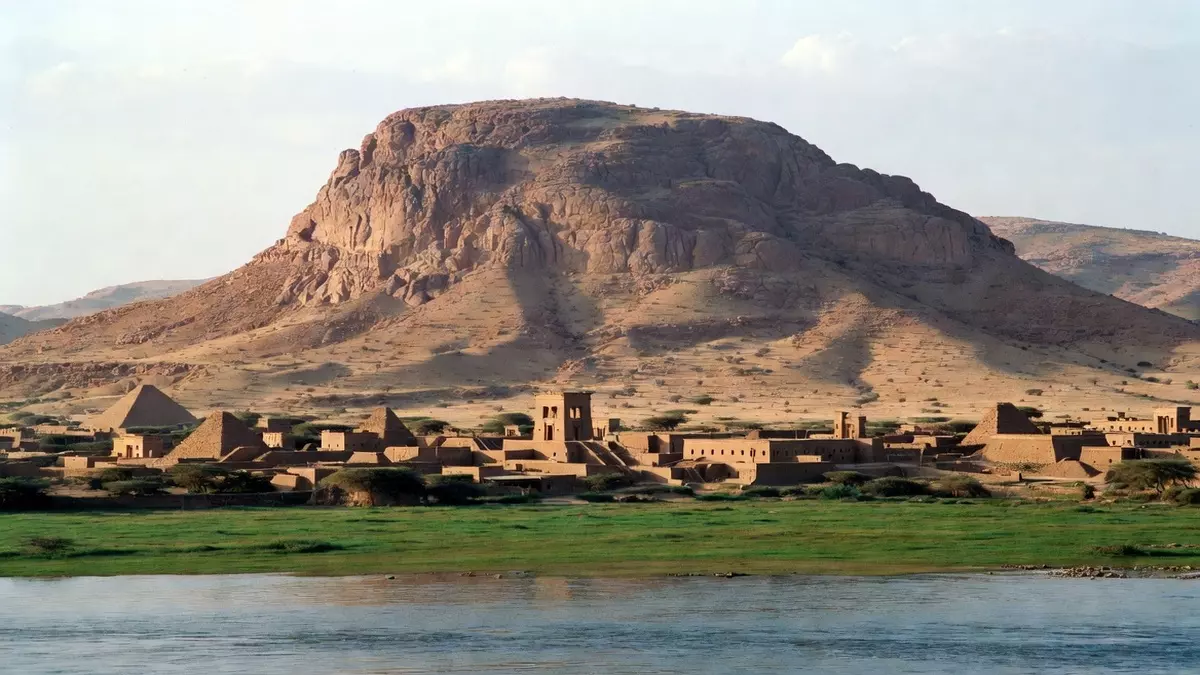
### Jebel Barkal and the Birth of Napata
Napata rose to prominence around 1070 BCE near the sacred mountain of Jebel Barkal in what is now northern Sudan. The site became a religious and political center for Kushite rulers, who built impressive temples, palaces, and later pyramids there. The city remained important until around 350 CE, serving as a hub that connected sub-Saharan Africa with the Mediterranean world through trade, religion, and military power.
For generations, scholars recognized Jebel Barkal’s strategic location but lacked detailed understanding of why this specific spot supported such long-term success. The new research, published in the *Proceedings of the National Academy of Sciences*, provides the missing environmental puzzle piece by reconstructing 12,500 years of Nile River behavior in the valley beneath the ancient city.
**H3: Uncovering the River’s Ancient Story**
The international team extracted 26 deep sediment cores from across the river valley, some reaching 13 meters deep. Using advanced techniques like optically stimulated luminescence and radiocarbon dating, supplemented by pottery fragments for chronological control, they built a detailed timeline of how the Nile evolved.
During the early and middle Holocene (roughly 12,500 to 4,000 years ago), the river was more aggressive, cutting deeply into its valley through erosion. Then, around 4,000 years ago, shifting rainfall patterns across East Africa caused a major transformation. The Nile slowed down, stopped eroding as aggressively, and began depositing thick layers of clay and silt. Over time, these sediments built up nearly 10 meters of rich floodplain soil.
 Secrets of the Coast: Brain Removal and Long-Distance Dynasties Uncovered in Iron Age Scotland
This change created stable, farmable land that was far less prone to destructive flooding while maintaining year-round access to water. The Fourth Cataract upstream played a crucial role. The rocky rapids and islands in this stretch reduced the river’s speed and energy, allowing sediment to settle more easily in the narrower valley below.
### How River Stability Supported Kushite Civilization
The stabilized Nile transformed the landscape around Jebel Barkal into prime real estate for ancient settlers. Reliable flooding deposited nutrient-rich silt each year, supporting productive agriculture without the extreme risks faced in other parts of the river valley. This agricultural surplus could sustain growing populations, specialist workers, and the elite classes needed to construct monumental temples and maintain political power.
Jebel Barkal itself held deep religious significance. Kushites viewed the mountain as a holy site associated with the god Amun, similar to its role in Egyptian worship. The combination of spiritual importance and practical advantages made Napata an ideal capital. Kushite kings built the great Temple of Amun there, and the city served as a coronation site for rulers who sometimes conquered parts of Egypt during the 25th Dynasty (around 744–656 BCE), when Kushite pharaohs governed a vast territory stretching from Sudan to the Mediterranean.
**H3: Life in Ancient Napata**
At its height, Napata featured impressive architecture, including temples, palaces, and residential areas. The surrounding floodplain supported crops like barley, wheat, and sorghum, while the river facilitated trade in gold, ivory, incense, and other valuable goods. This economic strength helped Kush maintain independence and cultural distinctiveness even while engaging deeply with Egyptian traditions.
The stability of the Nile likely reduced the frequency of catastrophic floods that could wipe out settlements elsewhere. At the same time, the predictable water supply supported irrigation and year-round farming, allowing communities to thrive during both wet and dry seasons. These favorable conditions contributed to Napata’s longevity as a political and religious center over more than a millennium.
### Broader Context of Nile Dynamics in African History
The study fits into a growing body of research showing how climate and river changes influenced the development of early African civilizations. In Egypt, the Nile’s predictable annual floods were long credited with supporting pharaonic power. The new data from Sudan demonstrates similar patterns farther upstream, where the river’s behavior helped shape the parallel but distinct trajectory of the Kingdom of Kush.
Kushite civilization produced remarkable achievements, including sophisticated ironworking, unique pyramid architecture (steeper and smaller than Egyptian ones), and a powerful military. Rulers like Piye and Taharqa left lasting legacies, with Taharqa even mentioned in the Bible. The environmental stability at Napata provided the foundation for these accomplishments by enabling sustained population growth, surplus food production, and the concentration of resources.
**H3: Challenges of Research in Modern Sudan**
Conducting fieldwork in Sudan presents significant difficulties, especially amid ongoing regional conflicts. Despite these challenges, Sudanese archaeologists from the National Corporation for Antiquities and Museums continue vital work at sites like Jebel Barkal, often in partnership with international teams. Their dedication ensures that important cultural heritage is documented and protected even in difficult times.
The University of Michigan-led project demonstrates the value of collaborative, interdisciplinary research that combines geology, archaeology, and environmental science. By analyzing deep sediment records alongside known archaeological timelines, the team could directly link physical landscape changes to human settlement patterns.
### Implications for Understanding Ancient African Societies
This research challenges older narratives that sometimes downplayed the environmental sophistication of African civilizations. It shows that Kushite success was not accidental but rooted in a deep understanding of their landscape and the ability to capitalize on favorable conditions. The stable floodplain at Napata allowed generations of rulers, priests, and farmers to build enduring institutions and cultural traditions.
The findings also carry modern relevance. As climate change alters rainfall patterns and river behaviors worldwide, lessons from how ancient societies adapted to Nile fluctuations offer valuable perspective. Sustainable land use, flood management, and agricultural resilience were key to Napata’s longevity—issues that remain critical in the Nile Basin today.
**H3: Jebel Barkal’s Enduring Sacred Landscape**
Even after Napata’s political importance waned, Jebel Barkal retained religious significance. Later Meroitic rulers (who eventually shifted the capital south to Meroë) continued to honor the site. Today, the ruins of temples and pyramids at Jebel Barkal stand as powerful testaments to Kushite engineering and spirituality, attracting researchers and visitors interested in Africa’s ancient heritage.
The mountain’s distinctive shape, sometimes compared to a cobra or crown, likely enhanced its symbolic power. Combined with the reliable Nile resources nearby, it created a landscape that felt both practical and divinely favored.
### Why This Discovery Matters for Global History
Understanding Napata’s environmental foundations enriches the broader story of human civilization. While Egypt often dominates discussions of the ancient Nile, the Kushite kingdom represents a parallel center of power and innovation in Africa. The new study bridges geology and archaeology to show how subtle changes in river dynamics could have outsized impacts on where cities rose and empires endured.
For readers interested in world history, African heritage, or environmental science, the research underscores a key truth: geography and climate have always shaped human destiny. The Kushites succeeded by working with their environment rather than against it, building a resilient society that lasted for centuries.
Ongoing studies at Jebel Barkal and other Nubian sites promise more revelations. As techniques improve and more data emerges, our picture of ancient Sudan becomes clearer and more nuanced, highlighting the region’s central role in African and global history.
This University of Michigan project exemplifies how modern science can illuminate the past. By listening to the sediments beneath ancient cities, researchers have uncovered why Napata became a powerhouse—and why its location mattered so profoundly for the Kushite kingdom’s remarkable rise.
## FAQ: Nile River and Ancient Napata in Sudan
**Q: What was Napata and why was it important?**
A: Napata was the early capital of the Kushite kingdom in ancient Nubia (modern Sudan). It served as a major religious, political, and economic center from around 1070 BCE to 350 CE, featuring temples dedicated to Amun and royal pyramids.
**Q: How did the Nile River influence Napata’s development?**
A: Around 4,000 years ago, the Nile shifted to a more stable regime with sediment buildup, creating a fertile, flood-resistant floodplain ideal for farming and settlement near Jebel Barkal.
**Q: What role did the Fourth Cataract play?**
A: The rapids and islands upstream reduced the river’s force, promoting sediment deposition and creating the stable conditions that supported long-term human occupation.
**Q: What methods did researchers use in the study?**
A: The team collected 26 deep sediment cores, used radiocarbon and luminescence dating, and analyzed pottery to reconstruct 12,500 years of Nile behavior.
**Q: How does this research connect to Egyptian history?**
A: Kushite rulers from Napata conquered Egypt during the 25th Dynasty, showing the close but independent relationship between the two Nile civilizations.
**Q: What challenges exist for archaeology in Sudan?**
A: Ongoing conflict makes fieldwork difficult, yet Sudanese archaeologists continue important research with international collaboration to preserve the region’s rich heritage.
**Q: Why does this study matter today?**
A: It demonstrates how environmental stability supported ancient African civilizations and offers lessons on climate adaptation relevant to modern Nile Basin communities.
The story of Napata reveals how a stable Nile River helped nurture one of Africa’s great ancient powers. As researchers continue to explore this remarkable landscape, we gain deeper appreciation for the ingenuity of Kushite builders and the enduring influence of geography on human history.