
Table of Contents
- 1. The Mysterious Origins of Beycesultan Höyük
- 2. Tx1: The Birth of Indigo and Nålbinding in Anatolia
- 2.1. Unlocking the Secrets of Nålbinding
- 2.2. The Evolution of the Color Blue
- 3. Tx2: Loom Technology and the Old Hittite Period
- 4. Industrial-Scale Production Revealed
- 5. Connecting the Artifacts to Ancient Trade Networks
- 6. Re-evaluating the Textile Masters of the Past
- 7. Frequently Asked Questions
- 7.1. What is nålbinding and how does it differ from knitting?
- 7.2. How did the textile fragments survive for 4,000 years?
- 7.3. Where did the ancient blue dye come from?
- 7.4. Why is the discovery of hemp fibers significant?
- 7.5. What does this discovery tell us about the status of Beycesultan?
Bronze Age Discovery Rewrites Ancient Textile History
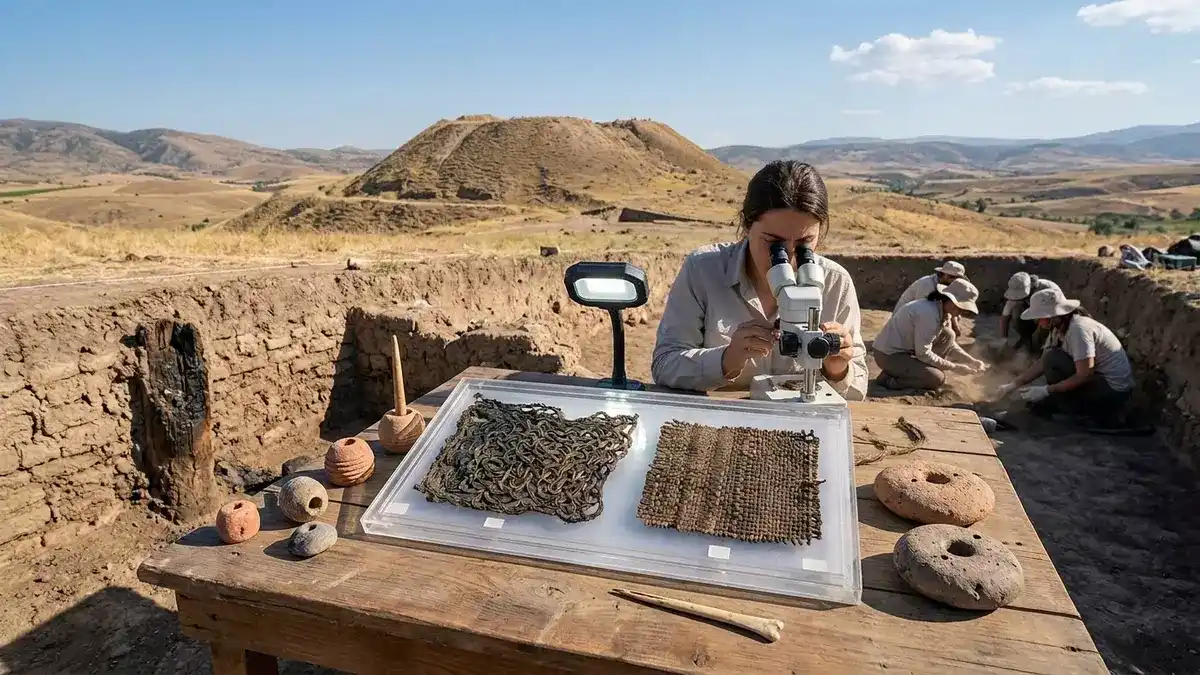
A groundbreaking archaeological discovery in western Turkey is reshaping our understanding of ancient fashion, technology, and trade. Excavations at the ancient settlement of Beycesultan Höyük have unearthed two remarkably well-preserved fabric fragments dating back nearly 4,000 years. This discovery pushes back the timeline for sophisticated fabric production in the region, offering the earliest known evidence of both indigo dyeing and a specialized loop-stitching technique called nålbinding in Bronze Age Anatolia.
Textiles from this era are exceptionally rare discoveries. The humid, acidic soil conditions characteristic of modern Turkey typically accelerate the decay of organic fibers, leaving archaeologists with little more than stone tools and pottery to reconstruct ancient daily life. However, a catastrophic ancient fire at Beycesultan turned out to be a historical blessing in disguise. The intense heat carbonized the delicate fabric fragments, effectively shielding them from bacterial decomposition and preserving them for millennia.
The research, led by Associate Professor Dr. Çiğdem Maner of Koç University and published in the journal Antiquity, provides a mesmerizing glimpse into a highly sophisticated, regional textile hub that operated during the heights of the Old Assyrian and Hittite periods.
Bronze Age Discovery Rewrites Ancient Textile History
The Mysterious Origins of Beycesultan Höyük
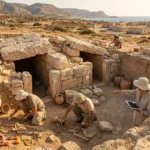
Located near modern-day Çivril in Turkey’s Denizli Province, Beycesultan Höyük was a major settlement during the Middle and Late Bronze Age. Despite its massive architectural footprint and clear regional influence, the site remains shrouded in a bit of mystery. Archaeologists have yet to uncover any cuneiform tablets within its ruins, meaning the true ancient name of this thriving city remains unknown.
What the site lacks in written records, it more than makes up for in physical evidence. The sheer scale of the public buildings and residential quarters suggests a prosperous urban center. The latest excavations indicate that the citizens of Beycesultan were not merely self-sufficient farmers; they were master craftspeople operating a highly organized, industrialized textile economy.
Tx1: The Birth of Indigo and Nålbinding in Anatolia
The older of the two textile fragments, cataloged by researchers as Tx1, dates to a window between 1915 and 1745 BCE. This timeline aligns perfectly with the era of the Old Assyrian trading colonies, a period defined by bustling commercial networks stretching across the Near East.

Unlocking the Secrets of Nålbinding
When scientists placed Tx1 under an optical microscope, they discovered a structural surprise. Instead of the standard crisscross patterns produced by a traditional weaving loom, the fabric featured an intricate network of interconnected loops formed by a single needle and a continuous strand of yarn.
This manual method is known as nålbinding (an ancient knotless netting technique that predates both knitting and crocheting). While nålbinding has been documented in prehistoric Europe and parts of the Mediterranean, this fragment represents the absolute first time the technique has been verified in Bronze Age Anatolia or the wider Near East. The discovery proves that local artisans possessed an advanced understanding of non-loom textile construction.
The Evolution of the Color Blue
Beyond its unique structure, Tx1 holds another historical title: it is now officially the earliest known blue-dyed textile found in Anatolia. Advanced chemical analysis of the carbonized fibers detected the unmistakable presence of indigotin, the core chemical compound responsible for deep blue dyes.

Because the plant modernly used for true indigo is native to the tropics, researchers determine that the source of this blue dye was almost certainly woad (Isatis tinctoria), a yellow-flowering plant native to the Anatolian landscape. Local craftspeople had mastered the complex chemical process required to extract rich blue pigments from a yellow plant, transforming ordinary plant material into high-value luxury goods.
Tx2: Loom Technology and the Old Hittite Period
The second fabric fragment, labeled Tx2, dates to a slightly later era, roughly 1700 to 1595 BCE, placing it squarely within the Old Hittite period. While Tx1 was crafted by hand using a single needle, Tx2 showcases an entirely different technological approach: the plain tabby weave.
[Tabby Weave Structure]
Warp (Vertical Threads):   |   |   |   |
Weft (Horizontal Threads): =================
                           |   |   |   |
The plain tabby weave is the simplest form of loom weaving, where the horizontal weft threads alternate over and under the vertical warp threads. Even though it is considered a fundamental weaving technique today, plain tabby textiles are exceedingly rare finds in Middle Bronze Age contexts across Anatolia, Mesopotamia, and the Caucasus mountains.
The presence of Tx2 confirms that the weavers of Beycesultan were actively operating warp-weighted looms to produce uniform, tight-knit bolts of fabric.
Industrial-Scale Production Revealed
The context in which these fabric pieces were found eliminates any doubt about the nature of Beycesultan’s economy. These were not random domestic scraps or the remnants of casual clothing repairs. Both Tx1 and Tx2 were discovered in specialized rooms packed to the brim with professional textile manufacturing tools.
During the excavations, archaeologists uncovered an impressive concentration of artifacts, including:
Spindle whorls of varying sizes and weights, used to spin raw hemp fibers into distinct thicknesses of yarn.
Loom weights made of heavy clay and stone, used to keep tension on vertical warp threads.
Bone and metal needles tailored for fine detail work and alternative stitching.
Structural postholes embedded in the floor layout, marking the exact spots where heavy, vertical wooden weaving looms once stood.
In a striking discovery, a heavy, disk-shaped stone loom weight was found resting directly on top of the indigo-dyed Tx1 fragment inside the ruins of a Middle Bronze Age house. This structural layout proves that textile production was a highly organized, dedicated industry integrated directly into the city’s architectural planning.
Connecting the Artifacts to Ancient Trade Networks
While Beycesultan itself has not yielded written archives, contemporary cuneiform tablets recovered from other major trading hubs across Turkey and Mesopotamia fill in the missing blanks. Old Assyrian and Hittite cuneiform texts frequently describe a massive, international trade network centered entirely around clothing and fabrics.
+------------------------------------------------------------+
|             ANCIENT BRONZE AGE TEXTILE VALUATION           |
+----------------------------+-------------------------------+
| Standard Textiles          | Luxury / Elite Textiles       |
+----------------------------+-------------------------------+
| * Untreated, raw fibers    | * Rare natural hemp material  |
| * Natural tan/brown colors | * Labor-intensive nålbinding  |
| * Local domestic use       | * Exotic woad-extracted indigo|
| * Standard tax payments    | * Elite status symbol / Trade |
+----------------------------+-------------------------------+
Royal ledger entries and merchant correspondence from this period list vast quantities of wool, garments, and specialized luxury cloths that were heavily taxed and traded among high-status households. Blue-dyed garments are explicitly highlighted in these ancient texts as luxury items reserved for royalty, elite gifts, and religious ceremonies.
The discovery of indigo-dyed hemp at Beycesultan aligns beautifully with visual evidence found throughout the broader ancient world. Similar premium blue textiles have been documented in the lavish tombs of Egyptian pharaohs and vividly illustrated on the walls of Minoan palaces in the Aegean Sea. Beycesultan was undeniably a key player in this elite Bronze Age supply chain.
Re-evaluating the Textile Masters of the Past
The discovery of Tx1 and Tx2 forever alters our perspective on Bronze Age technology in the Near East. The ancient inhabitants of Beycesultan Höyük were highly skilled innovators. They recognized the strength and versatility of hemp fibers, perfected the delicate art of woad vat dyeing to achieve a brilliant indigo blue, and preserved traditional manual arts like nålbinding even as loom technology advanced.
As excavations continue along the Aegean and Mediterranean corridors, these two carbonized fragments serve as a powerful reminder that the ancient world was deeply interconnected, highly technological, and brilliantly colorful.
Frequently Asked Questions
What is nålbinding and how does it differ from knitting?
Nålbinding is an ancient textile creation method that utilizes a single, flat needle and relatively short lengths of thread to create interlocking loops. Unlike knitting or crocheting, which use continuous loops that can easily unravel if a thread snips, nålbinding creates a knotless yet secure mesh that will not unravel when cut. It is a slower, entirely manual process that predates the invention of knitting by centuries.
How did the textile fragments survive for 4,000 years?
Organic items like textiles rarely survive in the humid soil of Anatolia because moisture encourages microbial decay. The fragments at Beycesultan survived because they were caught in an intense, localized fire that consumed the buildings in antiquity. This fire carbonized the hemp fibers, turning them into pure carbon, which cannot be broken down by soil bacteria or moisture.
Where did the ancient blue dye come from?
Chemical testing identified the blue pigment as indigotin. While true indigo comes from tropical plants, the artisans at Beycesultan likely extracted it from woad (Isatis tinctoria), a plant native to the region. Extracting blue dye from woad requires a complex fermentation and chemical reduction process, showing a high level of chemical knowledge among Bronze Age craftspeople.
Why is the discovery of hemp fibers significant?
While wool and flax (linen) were widely used in the ancient Near East, finding verified hemp textiles in Bronze Age Anatolia is rare. Hemp produces incredibly durable, strong fibers that require specific processing to soften for comfortable garments. This find proves that the community cultivated and processed hemp for specialized fabric production.
What does this discovery tell us about the status of Beycesultan?
Although the ancient name of Beycesultan Höyük is unknown due to a lack of written tablets on-site, the sheer volume of production tools—such as loom weights, spindle whorls, needles, and postholes—indicates that it was a highly organized regional center for textile manufacturing, capable of producing luxury items that matched the tastes of elite international markets.