
Table of Contents
**17,000-Year-Old Welsh Cave Art Confirmed Oldest in Britain**
In a groundbreaking discovery that reshapes our understanding of early human creativity in Europe, scientists have verified that striking red markings in a Welsh cave are the oldest known rock art in the British Isles. This confirmation ends over a century of debate and highlights the sophisticated symbolic thinking of our Ice Age ancestors.
17,000-Year-Old Welsh Cave Art Confirmed Oldest in Britain
### Rediscovering a Hidden Treasure in Bacon Hole Cave
Deep within the limestone cliffs of the Gower Peninsula in South Wales lies Bacon Hole, a cave that has guarded its secrets for millennia. In 1912, archaeologists first noticed unusual red lines on its walls and proposed they were examples of Upper Paleolithic cave paintings—the earliest of their kind in Britain. Skeptics quickly dismissed the idea, suggesting the marks were natural formations rather than human creations. Over time, the panel was largely forgotten, its precise location lost even to experts.
That changed in 2022 when an international team of researchers returned to the site. Using modern techniques, they relocated the artwork, conducted thorough analysis, and published their compelling findings in 2026. Their work not only validates the original 1912 interpretation but also provides robust scientific evidence that these paintings date back approximately 17,000 years.
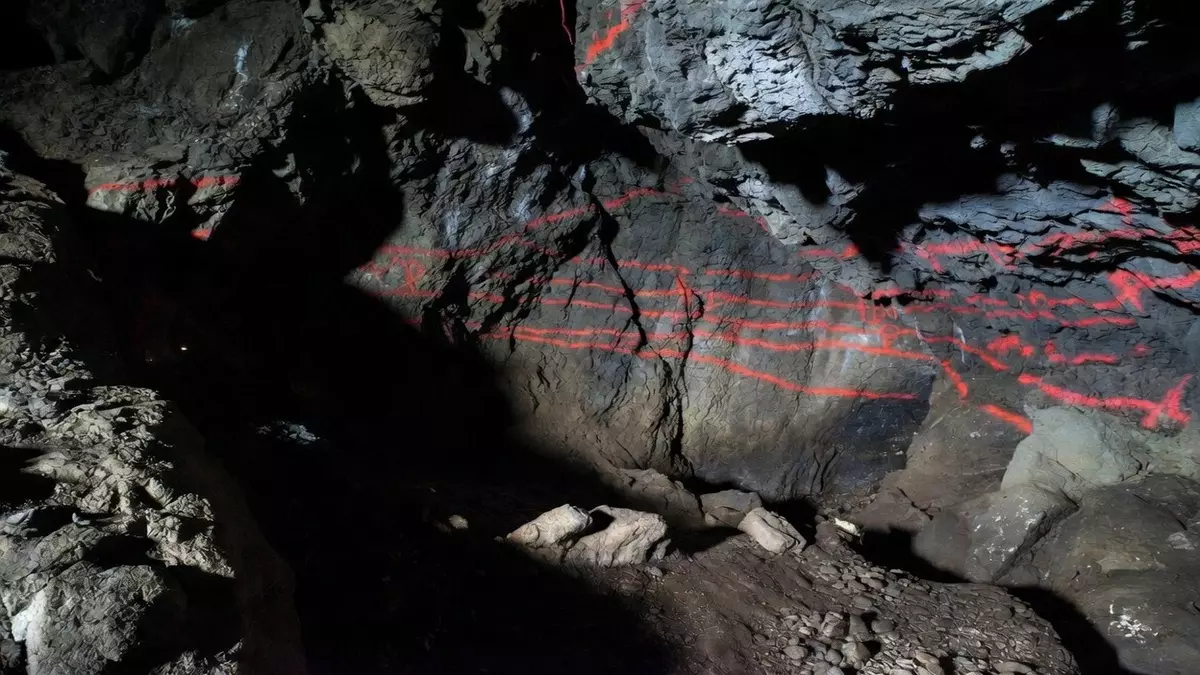
The panel features at least ten carefully placed horizontal red lines forming a deliberate pattern. What makes this discovery particularly exciting is its location in a remote chamber far from natural light, suggesting the artists intentionally sought out a special, secluded space for their work.
### Scientific Evidence That Proves Human Creation
Advanced laboratory testing left little room for doubt. Researchers identified high concentrations of hematite, a naturally occurring iron oxide that prehistoric peoples commonly used for red pigments. The presence of clay mixed into the pigment indicates intentional preparation, pointing to a purposeful artistic process rather than random staining.
The lines themselves show remarkable regularity in spacing and direction—characteristics highly unlikely to occur through natural geological processes. Additional clues include finger marks, small dots, and pigment splashes scattered throughout the chamber, all consistent with human activity. No similar markings appear on other surfaces in the cave, further supporting the conclusion that these were intentionally created artworks.

To establish the age, scientists used uranium-thorium dating on calcite deposits that had formed directly over the paintings. The results place the artwork between 18,300 and 15,700 years old, centering around 17,000 years ago. This makes Bacon Hole significantly older than any other confirmed rock art sites in Britain or Ireland.
### Life During the Late Ice Age in Wales
Understanding the context of these paintings requires imagining a dramatically different landscape. Around 17,000 years ago, Britain was emerging from one of the harshest periods of the last Ice Age. Much of Wales consisted of open, treeless plains where herds of animals roamed seasonally. The area now occupied by the Bristol Channel was then dry land, part of a vast plain connecting Britain to continental Europe.
Hunter-gatherer groups moved across this challenging environment, relying on their deep knowledge of the land and its resources. While no evidence shows permanent settlement inside Bacon Hole during this time, the cave clearly served as an important shelter and possibly a significant cultural site. The decision to create art in its darkest recesses suggests these early Britons engaged in complex symbolic behaviors—perhaps for spiritual, social, or ritualistic purposes that we may never fully understand.
### Why Location Matters in Ancient Cave Art
The placement of the Bacon Hole paintings deep inside the cave is telling. Unlike everyday activities that would occur near the entrance, artistic expression happened in a hidden, mysterious part of the space. This pattern mirrors famous Paleolithic sites across Europe, such as those in France and Spain, where artists often worked by torchlight in profound darkness.
The red lines’ meaning remains a fascinating mystery. They could represent anything from seasonal calendars and animal tracking to spiritual symbols or abstract expressions of identity. Whatever their purpose, they demonstrate that humans living in Britain at the end of the Ice Age possessed rich inner lives and the desire to leave their mark on the world.
### A Site Visited Across Thousands of Years
Bacon Hole’s significance extended far beyond the Paleolithic period. Excavations have uncovered artifacts spanning multiple eras, including pre-Roman pottery, Roman-era items, early medieval jewelry, Saxon beads, and medieval household objects. This long history of visitation shows how the cave remained a meaningful place for people across generations, possibly due to its natural beauty, strategic location, or lingering cultural memory of its ancient importance.
### Broader Implications for British Prehistory
This confirmation of 17,000-year-old cave paintings in Wales fills a crucial gap in our knowledge of early human settlement in northwest Europe. For decades, Britain appeared to lack significant Paleolithic cave art compared to continental Europe. The Bacon Hole discovery changes that narrative, suggesting that early inhabitants of the British Isles participated fully in the creative and symbolic explosion that characterized the Upper Paleolithic period.
It also raises intriguing questions about other potential undiscovered sites along Britain’s limestone regions. As technology improves and awareness grows, more ancient artworks may come to light, further enriching our understanding of humanity’s deep roots in these islands.
### The Human Drive to Create
At its core, this story speaks to something fundamental about human nature. Even during harsh Ice Age conditions—with limited resources and constant environmental challenges—our ancestors found ways to express themselves through art. The careful preparation of pigments, the journey into the cave’s depths, and the creation of meaningful patterns all reflect a capacity for abstract thinking that defines us as a species.
These 17,000-year-old paintings connect us directly to the earliest chapters of British history, reminding us that creativity and the impulse to make meaning have always been part of the human story.
### Conclusion
The verification of the Bacon Hole cave paintings as the oldest rock art in the British Isles represents far more than an academic victory. It restores an important piece of cultural heritage and deepens our appreciation for the resilient, creative people who lived through the last Ice Age. As researchers continue studying the site and similar locations, we can expect even more insights into how our distant ancestors thought, felt, and expressed their place in the world.
This discovery invites all of us to reflect on the enduring human desire to create and connect—qualities that continue to define us thousands of years later.
## FAQ
**How old are the cave paintings at Bacon Hole?**
The paintings are approximately 17,000 years old, with scientific dating placing them between 18,300 and 15,700 years before present.
**Why were the Bacon Hole markings controversial for so long?**
Early 20th-century researchers lacked modern dating techniques and analytical tools, leading many to dismiss the red lines as natural formations rather than human-made art.
**What makes these Welsh cave paintings significant?**
They represent the oldest confirmed rock art in the British Isles and provide rare evidence of symbolic behavior among Ice Age inhabitants of Britain.
**What techniques did scientists use to date the artwork?**
Researchers used uranium-thorium dating on calcite layers covering the paintings, along with detailed pigment analysis and high-resolution imaging.
**Will more ancient cave art be found in Britain?**
With improved technology and renewed interest, archaeologists believe additional Paleolithic sites may be discovered, particularly in limestone regions across Wales and England.
**What did the artists use to create the red lines?**
They used hematite-based pigment mixed with clay, applied in a deliberate, patterned manner deep within the cave.
**Can visitors see the Bacon Hole paintings today?**
The site is protected for preservation. Access is limited to researchers, though the findings are shared through scientific publications and public outreach.