
Table of Contents
**Massive Laos Jar Holds 37 Ancient Remains, Unveiling Old Burial Rituals**
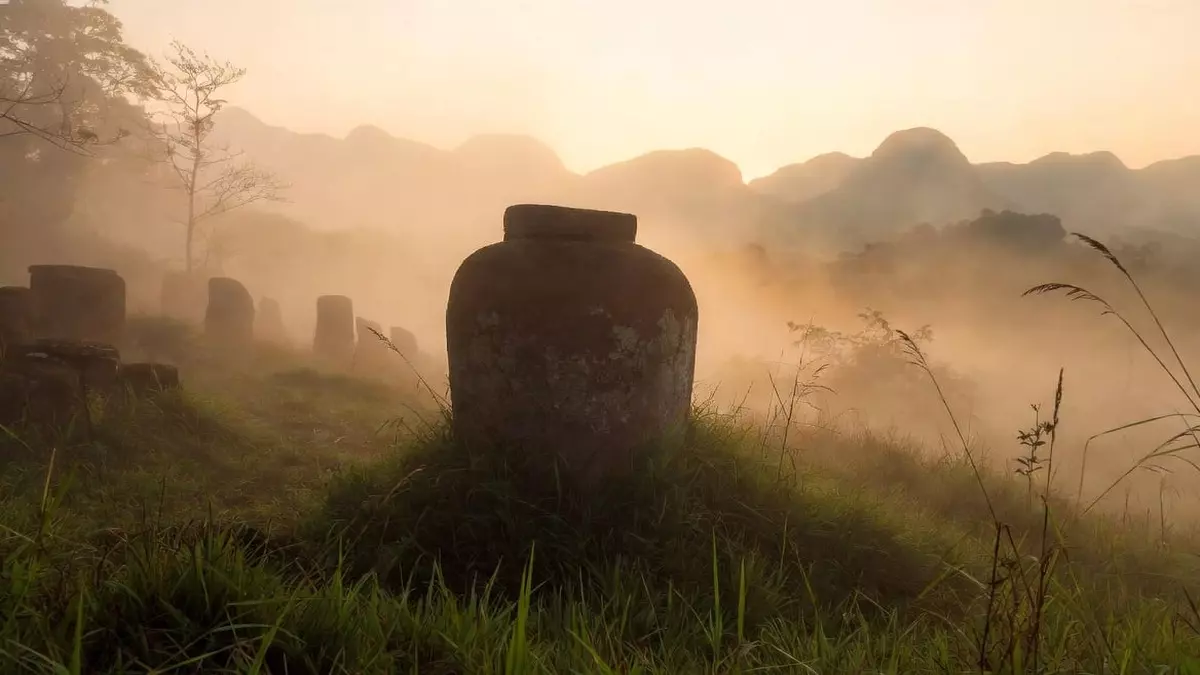
Archaeologists have made a remarkable discovery at Laos’ famous Plain of Jars, uncovering the remains of at least 37 people inside one giant stone vessel. This find sheds new light on ancient Southeast Asian burial practices and reveals surprising long-distance trade connections that linked remote highland communities to distant parts of Asia over a thousand years ago.
The massive jar, located northeast of Phonsavan, stands as a powerful testament to sophisticated ritual traditions that continued for centuries. Far from being simple containers, these enormous stone jars played a central role in how ancient Laotian societies honored their dead and maintained connections with their ancestors.
Massive Laos Jar Holds 37 Ancient Remains, Unveiling Old Burial Rituals
 Uncovering America’s First War; Contact, Conflict, and Coronado’s Expedition to the Rio Grande
### The Mysterious Plain of Jars in Northern Laos
The Plain of Jars is one of Southeast Asia’s most enigmatic archaeological landscapes. Hundreds of giant stone jars, some weighing several tons, are scattered across the upland regions of northern Laos. For decades, researchers have puzzled over who created these vessels, how they moved them into mountainous terrain, and what exact purpose they served.
A new study published in the journal *Antiquity* focuses on one particularly large jar excavated by a team led by Dr. Nicholas Skopal of James Cook University and Lao heritage specialist Souilya Bounxayhip. Standing 1.3 meters tall and over 2 meters wide, this vessel yielded an extraordinary collection of densely packed human bones and teeth belonging to dozens of individuals.
Radiocarbon dating of the remains shows they were placed inside the jar between the 9th and 12th centuries CE. Rather than a single burial event, the jar was used repeatedly over approximately 270 years, pointing to a long-lasting cultural tradition.
### Secondary Burial Practices in Ancient Laos
The evidence strongly supports a secondary burial ritual. Bodies were likely first placed elsewhere to decompose naturally before selected bones were gathered and transferred into the stone jar. This practice differs from earlier assumptions that the jars served as primary burial sites during the Iron Age (500 BCE to 500 CE).
 Manual of Egyptian Archaeology (PDF)
The presence of so many individuals in one jar suggests these vessels functioned as communal ossuaries for family groups or extended kin networks. Researchers believe the jars served as focal points for ongoing ancestral ceremonies conducted across multiple generations. Each addition of remains would have reinforced social bonds and cultural memory within the community.
This repeated use over centuries highlights the deep spiritual importance of these locations. The jars were not simply final resting places but active sites where the living maintained relationships with their ancestors through ritual activities.
### Trade Networks Revealed Through Glass Beads
One of the most exciting aspects of the discovery involves a collection of glass beads found among the human remains. Chemical analysis traced some beads to South India and others to Mesopotamia (modern-day Iraq). These findings provide clear evidence of extensive trade links connecting the Laotian highlands with distant regions of Asia and even Western Asia during the 9th to 12th centuries CE.
This period saw expanding commerce across Asia, fueled by powerful states such as China’s Song Dynasty and the Khmer Empire in Cambodia. The imported beads found in this remote jar demonstrate that even highland communities in Laos participated in these broader economic networks, acquiring luxury goods through long-distance exchange.
Such connections likely involved multiple intermediaries along ancient trade routes. Goods, ideas, and cultural influences flowed across mountains, rivers, and forests, linking seemingly isolated communities to the wider world.
### How the Excavation Unfolded
The research team benefited from working with a relatively undisturbed jar. Many archaeological sites in the region have suffered from development, looting, or natural erosion, but this particular vessel and its contents remained largely intact. This excellent preservation allowed detailed documentation of the bones’ positioning and associated artifacts.
Excavators carefully removed layers of remains and recorded their positions using advanced techniques, including photogrammetry. The work revealed complex patterns of bone placement, with some skulls positioned in specific ways that may hold ritual significance.
The study also examined multiple jars in the area (Site 75), providing valuable context for understanding how different vessels were used within the broader landscape. While not all jars contain human remains, this discovery confirms that at least some served important mortuary functions long after their initial creation.
### Life and Death in Ancient Southeast Asia
The Plain of Jars dates primarily to the Iron Age, but this new evidence shows the jars retained cultural importance well into the medieval period. Communities continued to interact with these ancient monuments, adapting them to their evolving spiritual needs.
The secondary burial practice reflects a sophisticated understanding of death and decomposition. By allowing bodies to break down naturally before collecting bones, people may have viewed the process as a transformation from individual to ancestor. The stone jars, with their durability and imposing presence, provided a permanent home for these ancestral remains.
Grave goods like the imported glass beads suggest that status, identity, and connections to wider networks played roles in these rituals. Possessions acquired through trade may have accompanied the deceased as symbols of prestige or as offerings to ensure safe passage in the afterlife.
### Challenges and Mysteries That Remain
Despite this breakthrough, many questions about the Plain of Jars persist. Archaeologists still do not know exactly who carved and transported the massive stone vessels, some of which weigh several tons. The effort required to create and position them across rugged terrain speaks to impressive organizational skills and cultural motivation.
The precise beliefs behind these burial practices also remain partially mysterious. Future research combining additional excavations, genetic analysis of the remains, and detailed studies of associated artifacts could reveal more about family relationships, health conditions, and social structures.
The research team emphasizes that other undisturbed jars may still exist in the region. Protecting these sites from modern threats while conducting careful scientific investigations will be crucial for understanding Laos’ rich prehistoric and early historic heritage.
### Why This Discovery Matters Today
This find contributes significantly to our knowledge of Southeast Asian history during a dynamic period of regional interaction. It shows that communities in what is now Laos were not isolated but actively engaged with broader Asian trade and cultural currents.
The evidence of secondary burial rites adds to a growing body of research showing diverse mortuary traditions across Asia. Similar practices appear in different forms in various cultures, reflecting universal human concerns with honoring the dead and maintaining ancestral connections.
For modern Laos, the Plain of Jars represents an important part of national cultural heritage. The sites attract researchers and tourists alike, offering opportunities to appreciate the achievements of ancient societies while supporting local communities.
### Broader Context of Asian Trade and Ritual
The 9th to 12th centuries CE marked a time of increasing connectivity across Asia. Maritime and overland routes carried silk, spices, precious stones, and ideas between China, India, the Middle East, and Southeast Asia. The glass beads in the Laos jar serve as tangible proof that even upland areas participated in these exchanges.
This connectivity influenced not only material culture but also religious and social practices. Buddhism, Hinduism, and local animist traditions blended in complex ways across the region, creating unique cultural expressions visible in both artifacts and burial customs.
The Plain of Jars stands at an important crossroads in this story. Its continued use over centuries demonstrates cultural resilience and adaptation in the face of changing political and economic landscapes.
### The Human Story Behind the Bones
Each of the 37 individuals represented in the jar had their own life story. They lived, worked, raised families, and formed part of a community that valued proper treatment of the dead. The decision to gather their bones centuries later and place them together speaks to enduring family and social ties that transcended individual lifetimes.
The care taken in these rituals — the selection of bones, the placement within the jar, and the inclusion of special objects — reflects deep respect and belief in an afterlife or continued ancestral presence. Modern readers can relate to these universal desires to remember and honor loved ones.
### Conclusion
The discovery of 37 ancient remains inside a massive stone jar at Laos’ Plain of Jars opens an extraordinary window into the spiritual and economic lives of Southeast Asian communities over a thousand years ago. This evidence of repeated secondary burials and long-distance trade connections enriches our understanding of a region long shrouded in mystery.
As researchers continue investigating the Plain of Jars, we can expect more revelations about how ancient societies managed death, maintained traditions, and engaged with the wider world. These giant stone vessels, standing silent for centuries, continue to share their secrets with those who listen carefully.
The findings remind us that even in remote highlands, human communities were part of larger stories of connection, adaptation, and cultural creativity. This remarkable archaeological discovery not only rewrites parts of Laos’ ancient history but also highlights the enduring human need to create meaningful rituals that bridge the worlds of the living and the dead.
## FAQ
**How many people were found inside the giant jar in Laos?**
Archaeologists recovered remains from at least 37 individuals, with bones and teeth densely packed inside the massive stone vessel.
**When were the remains placed in the Plain of Jars?**
Radiocarbon dating shows the jar was used for burials between the 9th and 12th centuries CE, spanning roughly 270 years of repeated use.
**What type of burial practice was discovered?**
The evidence points to secondary burial rites, where bodies decomposed elsewhere before selected bones were collected and placed inside the stone jar.
**What do the glass beads reveal about ancient trade?**
Chemical analysis traced the beads to South India and Mesopotamia, proving long-distance trade connections between Laos and distant parts of Asia.
**Why is this discovery important for understanding the Plain of Jars?**
It confirms the jars were used for complex ancestral rituals long after the Iron Age and shows continued cultural significance across centuries.
**Who led the excavation at the Plain of Jars?**
The research was led by Dr. Nicholas Skopal of James Cook University in collaboration with Lao heritage specialist Souilya Bounxayhip.
**Are there more undisturbed jars at the site?**
Researchers believe other well-preserved jars likely exist and could provide additional insights into ancient Laotian burial traditions and daily life.