
Table of Contents
**Ancient Weaving Workshop Discovered in German Gravel Pit**
Archaeologists in eastern Germany have uncovered a well-preserved rural settlement from the 3rd to 5th centuries CE during gravel extraction work. The site in Liebersee, Saxony, offers a rare window into everyday life during the final years of the Roman Empire and the dawn of the Migration Period, revealing how ordinary farming communities thrived amid broader European changes.
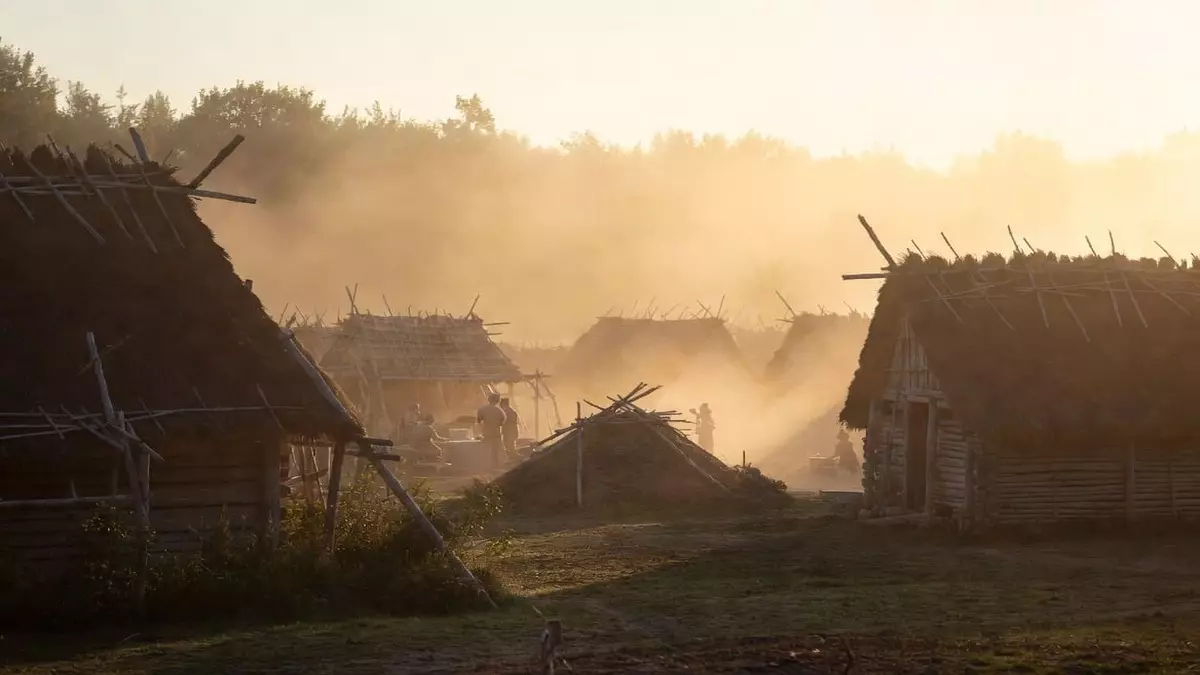
This 1,700-year-old discovery includes timber longhouses, specialized workspaces, and clear evidence of textile production, highlighting the self-sufficient nature of rural settlements along the Elbe River Valley.
Ancient Weaving Workshop Discovered in German Gravel Pit

### Major Find During Gravel Pit Excavation
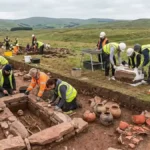
The settlement was identified in Liebersee, part of the Belgern-Schildau area in Saxony, as part of mandatory archaeological work before expanding gravel and sand mining. From December 2025 to April 2026, the State Office for Archaeology of Saxony excavated approximately 3,200 square meters. The location along the left bank of the Saxon Elbe Valley has long attracted human activity thanks to fertile soils and reliable water sources.
Researchers uncovered remains from the late Roman Imperial period through the early Migration Period. The finds include at least four large timber longhouses and three smaller pit houses, providing valuable insights into how people lived, worked, and organized their communities nearly 1,700 years ago.
### Longhouses and Pit Houses Reveal Settlement Layout
The longhouses represent the main residential structures. Some reached up to 20 meters in length and about 5 meters in width. Built with rows of wooden posts, these buildings likely served dual purposes as both living quarters for families and shelters for livestock — a common architectural style across Germanic regions during this era.
Smaller pit houses, dug partially into the ground and measuring between 7 and 12 square meters, probably functioned as workshops, storage spaces, or utility buildings. Their compact size and subterranean design offered protection from weather and helped maintain stable temperatures for various activities.
**One pit house stood out as a dedicated weaving workshop.** This discovery provides some of the clearest evidence of textile production from rural settlements of this period in the region.
### Evidence of Ancient Textile Production
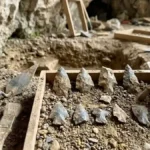
Inside the weaving workshop, archaeologists recovered 30 clay loom weights — rounded and flattened discs that once hung from vertical looms to maintain tension on warp threads. A clay spindle whorl was also found nearby. These tools were essential for spinning sheep’s wool into yarn, the primary material for clothing in pre-industrial Europe.
Textile production was a vital household industry during the late Roman and early Migration periods. Woolen garments provided essential protection against cold winters, while surplus cloth could be traded or used for social displays of skill and status. The concentration of weaving tools in one pit house suggests specialized production that may have gone beyond simple household needs.
A particularly interesting artifact — a large dark glass bead with pale wavy decorative lines — was recovered from a settlement pit. Similar beads frequently appear in women’s graves from the 4th and 5th centuries as jewelry. Its presence in a domestic context leads researchers to believe it may have been repurposed as a spindle whorl, demonstrating resourcefulness among the community.
### Daily Life in a Self-Sufficient Farming Community
The settlement paints a picture of a practical, self-reliant agricultural village. Fragments of everyday pottery dominated the finds, reflecting routine domestic activities. Burnt clay pieces likely came from wall plaster used on timber buildings, while charred grains indicate cereal storage for both food and future planting.
Reddish burnt clay and charred plant remains also suggest the settlement suffered at least one significant fire. Whether this event caused abandonment or if residents rebuilt remains under investigation. Ongoing analysis, including radiocarbon dating of charcoal and seeds, will help refine the timeline.
The community’s location in the fertile Elbe Valley supported mixed farming. Residents likely grew crops, raised animals, and engaged in small-scale crafts like weaving. This type of rural settlement formed the backbone of society during a time when larger Roman cities faced increasing pressure from migrations and economic shifts.
### Historical Context: Late Roman Empire to Migration Period
The 3rd to 5th centuries CE marked a transformative era in European history. As the Western Roman Empire weakened, frontier regions like the Elbe Valley experienced cultural blending between Roman influences and Germanic traditions. Trade networks still functioned, as evidenced by the glass bead, but communities increasingly relied on local resources and skills.
Longhouses and pit houses represent classic Germanic architectural traditions. These structures appear across northern and central Europe, showing continuity in building practices even as political boundaries shifted. The weaving workshop highlights how women’s labor in textile production contributed significantly to household economies and regional trade.
The discovery adds to our understanding of how rural populations adapted during uncertain times. Rather than focusing on battles and emperors, sites like Liebersee preserve the stories of farmers, craftspeople, and families navigating daily challenges.
### Significance for Saxon Archaeology
The Elbe Valley has yielded numerous ancient sites, but rescue excavations tied to modern development — such as gravel mining — often provide the best opportunities to study complete settlements. The Liebersee project protected important remains that would otherwise have been destroyed permanently.
Models of similar longhouses and pit houses are displayed at the State Museum of Archaeology Chemnitz, helping visitors visualize these ancient structures. The new finds from Liebersee will enhance these interpretations and contribute fresh data to regional research.
This excavation demonstrates the importance of developer-funded archaeology in Europe. By requiring surveys before construction or extraction projects, authorities ensure that traces of the past are documented rather than lost forever.
### What Life Was Like for Ancient Residents
Imagine a small village along the Elbe River around 1,700 years ago. Families lived in spacious longhouses that sheltered both people and animals during harsh winters. Women worked at vertical looms in pit houses, producing woolen cloth essential for clothing and trade. Children helped tend fields and livestock while adults managed crops and crafted tools.
The glass bead, whether used as jewelry or a spindle whorl, hints at connections beyond the village. Trade routes still brought small luxury items from Roman provinces or beyond, even as larger imperial systems declined.
The presence of multiple longhouses suggests a community of several households working together. Fires, while destructive, were common risks in timber settlements. Recovery and rebuilding showed resilience that helped these groups survive turbulent centuries.
### Broader Impact on Understanding Migration Period Europe
The Liebersee settlement contributes to a growing body of evidence about rural life during the transition from Roman to post-Roman Europe. While written histories focus on kings, battles, and migrations, archaeological sites reveal how ordinary people maintained traditions, adapted technologies, and sustained communities.
Textile production, in particular, played a crucial economic role. High-quality woolen goods were valued across Europe. Workshops like the one discovered here may have supplied local needs while producing surplus for exchange.
Future research will likely include detailed analysis of animal bones, pollen samples, and soil chemistry to reconstruct the local environment and diet. These studies will provide an even fuller picture of sustainability and adaptation strategies used by ancient Germanic communities.
### Preserving the Past Amid Modern Development
Gravel extraction provides essential materials for construction but often threatens buried heritage. The successful excavation at Liebersee shows how collaboration between archaeologists, developers, and government offices can balance economic needs with cultural preservation.
The State Office for Archaeology of Saxony continues to monitor similar projects across the region. Each new discovery adds pieces to the complex puzzle of Germany’s ancient history and enriches our shared European heritage.
### Conclusion
The ancient settlement uncovered in the Liebersee gravel pit offers an intimate look at rural life in eastern Germany during the 3rd to 5th centuries CE. From the weaving workshop with its clay loom weights to the sturdy longhouses and evidence of farming, the site reveals a resilient community navigating the final centuries of the Roman world.
This discovery enriches our understanding of daily existence during a transformative period in European history. It reminds us that history is not only written by emperors and generals but also by farmers, weavers, and families who built lives along rivers like the Elbe.
As further analysis continues, the Liebersee settlement will contribute important data to studies of the Migration Period and rural economies in late antiquity. Sites like this one connect us directly to our ancestors, showing both how much has changed and how universal many human experiences remain.
The careful work by Saxon archaeologists ensures these stories from nearly 1,700 years ago will continue to inform and inspire future generations. In a modern world of rapid change, such discoveries ground us in the deep roots of European cultural development.
## FAQ
**How old is the settlement found in the German gravel pit?**
The site dates from the 3rd to 5th centuries CE, spanning the late Roman Imperial period and early Migration Period.
**What evidence of textile production was discovered?**
Archaeologists found 30 clay loom weights and a spindle whorl inside a pit house, indicating a dedicated weaving workshop.
**What structures were uncovered at the Liebersee site?**
At least four timber longhouses up to 20 meters long and three smaller pit houses were identified during the excavation.
**Why was the excavation conducted?**
The work was required before expanding gravel extraction, which would have destroyed the buried archaeological remains.
**What does the glass bead suggest about the community?**
The decorative bead may have been repurposed as a spindle whorl, showing resourcefulness and possible trade connections.
**Where is the Liebersee settlement located?**
It lies along the Saxon Elbe Valley in Belgern-Schildau, Saxony, eastern Germany.
**What will happen to the artifacts from the site?**
Finds will undergo further analysis, with many expected to be preserved and potentially displayed in regional museums like the State Museum of Archaeology Chemnitz.