
Table of Contents
- 1. A Forgotten Rival Sealed in Time
- 2. Engineering the Forum: The Public Pool of Gabii
- 2.1. Gathering Around the Water
- 3. Secrets of the Basin: Ritual Offerings and Sacred Water
- 4. Thermal Anomalies and Future Exploration
- 5. Conclusion: Rewriting the Evolution of Roman Cities
- 6. Frequently Asked Questions
- 6.1. What makes the ancient city of Gabii historically significant?
- 6.2. How old is the newly discovered water basin, and what was it made from?
- 6.3. Why do archaeologists believe the basin had a spiritual purpose?
- 6.4. What is the “Area F Building” mentioned in the research?
- 6.5. Who manages the archaeological site today, and can it be studied further?
Giant Roman Water Basin Uncovered in Italy Reshapes Urban History
A monumental archaeological breakthrough just outside the Italian capital is shedding new light on the architectural origins of the Roman Empire. Deep within the ruins of a long-abandoned ancient city, researchers have exposed the remains of a massive, stone-lined public water basin. Dating back to approximately 250 BCE, this sprawling subterranean structure stands as one of the oldest surviving examples of non-religious public architecture ever recorded in the Roman world.
Discovered in the ancient city of Gabii, located roughly eleven miles east of Rome, the colossal basin represents a massive evolutionary leap in ancient civil engineering. Rather than a simple utility tank, this bedrock-cut masterpiece proves that long before Rome became a glittering metropolis of marble, its early builders were already masterfully experimenting with grand urban layouts to project civic power and establish a unified community identity.
Giant Roman Water Basin Uncovered in Italy Reshapes Urban History
A Forgotten Rival Sealed in Time
To understand why this discovery is sending shockwaves through the archaeological community, one must look at the unique, tragic history of Gabii itself. During the dawn of the first millennium BCE, Gabii was not a subordinate suburb; it was a powerful, fiercely independent city-state and a major geopolitical rival to Rome. However, as Rome’s imperial trajectory exploded, Gabii gradually faded into the background, becoming largely abandoned by 50 BCE.

+------------------------+----------------------------------------------------+
| City Attribute         | Historical and Archaeological Details              |
+------------------------+----------------------------------------------------+
| Geographic Location     | 11 miles east of Rome, Italy                       |
| Epoch of Construction  | Approximately 250 BCE (Middle Republic Era)        |
| Abandonment Horizon    | Circa 50 BCE                                       |
| Managing Institution   | Musei e Parchi Archeologici di Praeneste e Gabii   |
+------------------------+----------------------------------------------------+
Paradoxically, this ancient abandonment is precisely what makes Gabii an archaeological goldmine today. In Rome, early layers of history from the Republican era are buried beneath hundreds of feet of heavy imperial palaces, medieval churches, and modern subway lines.
Gabii, on the other hand, was left completely untouched. Its original streets, residential quarters, and civic plazas were sealed beneath centuries of soft agricultural soil, providing modern researchers with an uncompromised, pristine blueprint of a pristine early Roman urban landscape.
Engineering the Forum: The Public Pool of Gabii
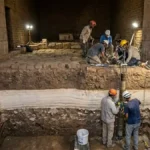
The excavation that brought this structure to light was spearheaded by Dr. Marcello Mogetta, a professor and chair of the Department of Classics, Archaeology, and Religion at the University of Missouri. Leading the international team of the Gabii Project, Mogetta and his colleagues exposed a massive architectural footprint that was partially carved directly into the volcanic bedrock of the region.
                    GABII'S EARLY URBAN FOOTPRINT

      [ Volcanic Crater Slope ] ==========> "Area F Building"
                                            (Terraced Public Complex)
                                                 ||
                                                 v
      [ Central Crossroads Area ] ========> Massive Stone Basin
                                            (Civic Forum Pool, ~250 BCE)
The physical location of the basin provides critical clues regarding its intended function. Situated right at the heart of Gabii’s central crossroads, the basin was not tucked away in an industrial quarter. Instead, evidence strongly indicates it formed a monumental public pool within the city’s forum—the bustling civic, commercial, and political epicenter of ancient Roman daily life.
Gathering Around the Water
By installing a water feature of this scale in the primary public plaza, early town planners were executing a deliberate strategy. The basin served as a grand social anchor where citizens would gather, conduct business, and socialize.
Architecturally, this reflects a period where Roman builders were drawing heavy inspiration from classical Greek models. Just as the Athenians used the Agora and the Parthenon to merge functional civic gatherings with awe-inspiring state authority, the Romans adapted these grand terraced landscapes to express their own growing political power and advanced technical innovation.
Secrets of the Basin: Ritual Offerings and Sacred Water
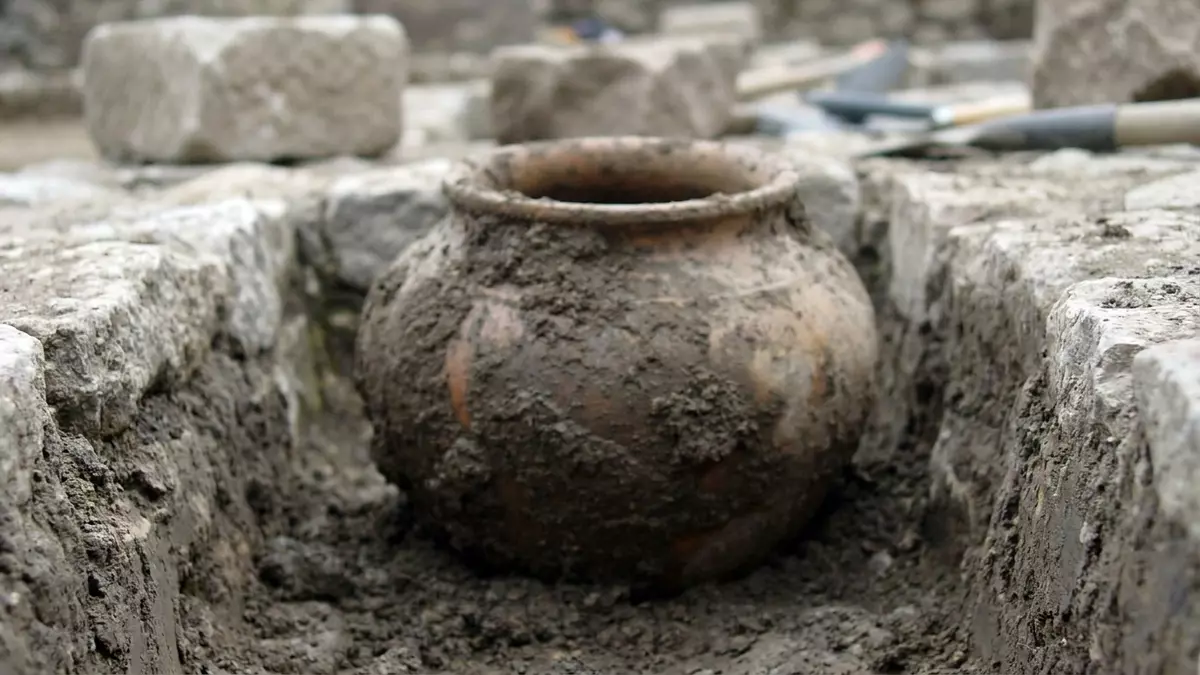
As the Gabii Project teams systematically excavated the thick layers of sediment sealed inside the basin, they unburied an eclectic assortment of beautifully preserved artifacts. The items recovered from the dark mud paint an intimate portrait of daily life and ancient spiritual beliefs:
Complete Ceramic Vessels: Intact storage jars and mixing bowls used by the local populace.
Ancient Oil Lamps: Terra-cotta lamps that once illuminated the evening gatherings around the forum pool.
Perfume Containers: Delicate glass and ceramic vessels designed to hold exotic oils and scents.
Marked Drinking Cups: Specialized cups featuring unusual, highly distinct markings that continue to be studied by epigraphers.
                 THE LIFE CYCLE OF THE GABII BASIN

  [ Construction: ~250 BCE ] ===> Masterfully cut into volcanic bedrock.
  [ Active Operation ]        ===> Served as a grand public pool in the civic forum.
  [ Ritual Closure: ~50 BCE ] ===> Filled with symbolic gifts (lamps, vessels, cups).
Crucially, the intentional placement of many of these objects suggests they were not discarded as simple garbage. Instead, residents appear to have placed these complete vessels inside the basin as deliberate ritualistic offerings.
In the ancient Mediterranean, water was deeply intertwined with religious concepts of purity, life, and the divine. When the basin was eventually decommissioned and closed around 50 BCE, the local community seemingly performed a sacred send-off, depositing precious items into the pool to honor the spiritual essence of the water that had sustained their city for generations.
Thermal Anomalies and Future Exploration
The discovery of the basin has opened up an entirely new chapter of exploration for Dr. Mogetta’s team. Supported actively by Italy’s Ministry of Culture—which has officially designated the site as a protected archaeological park—the international project is shifting its focus toward the immediate surroundings of the forum.
The team is currently preparing to investigate a major subterranean “anomaly” located right next to the basin, which was recently flagged by high-tech thermal imaging aerial surveys. Given its size and strategic position relative to the stone-paved plaza, archaeologists hypothesize that this hidden signature could represent a major temple foundation or an unrecorded civic administrative building. This nearby structure may hold the key to understanding the exact historical events that triggered the final closure of the basin in 50 BCE.
Conclusion: Rewriting the Evolution of Roman Cities
The ongoing discoveries generated by the Gabii Project are forcing historians to fundamentally re-evaluate how early cities evolved. For decades, an intense academic debate has centered on a classic “chicken-and-egg” scenario: Did ancient Roman communities build grand religious temples first, or did they prioritize secular, civic public spaces?
By proving that a massive public water basin and forum landscape existed as early as 250 BCE—long before many of the region’s grandest stone temples were erected—the stones of Gabii suggest that community-driven, secular spaces were at the absolute forefront of early Roman urban planning. This incredible basin stands as an enduring monument to human ingenuity, demonstrating that long before Rome ruled the world, its people were already using water, stone, and brilliant engineering to forge a collective identity that would echo across the millennia.
Frequently Asked Questions
What makes the ancient city of Gabii historically significant?
Gabii was a massive, powerful Latin city-state that once stood as an equal rival to early Rome. Its extreme historical significance stems from its rapid abandonment around 50 BCE, which effectively froze its streets, public forums, and buildings under the soil, preventing later generations from building over its original Republican-era architecture.
How old is the newly discovered water basin, and what was it made from?
The water basin is approximately 2,275 years old, dating specifically to around 250 BCE. It was masterfully constructed by cutting directly into the area’s natural volcanic bedrock and lining the interior chambers with heavy, expertly fitted stone blocks.
Why do archaeologists believe the basin had a spiritual purpose?
While the basin was highly functional, the discovery of intact oil lamps, fine perfume vessels, and uniquely marked drinking cups placed carefully at the bottom indicates a spiritual connection. These items are interpreted as intentional ritual offerings made to honor the symbolic and sacred qualities of water.
What is the “Area F Building” mentioned in the research?
The Area F Building is an expansive, terraced architectural complex previously uncovered by the Gabii Project. Carved directly into the interior slope of an extinct volcanic crater, it serves as another prime example of how early Roman engineers manipulated topography to construct grand public monuments.
Who manages the archaeological site today, and can it be studied further?
The site is protected as an official national archaeological park under the direct management of the Musei e Parchi Archeologici di Praeneste e Gabii. Active research continues via the international Gabii Project, with ongoing support provided by Italy’s General Directorate of Museums.