
Table of Contents
**10 Painted Coffins and Cat Mummies Discovered in Luxor Necropolis**
Archaeologists in Egypt have made a series of remarkable discoveries at the Abu el-Naga necropolis on Luxor’s West Bank, uncovering painted wooden coffins, a new priest’s tomb, and dozens of mummified cats. These finds are shedding fresh light on ancient Egyptian burial customs, temple rituals, and the lives of lesser-known officials across multiple historical periods.
The latest excavation season, led by the Egyptian archaeological mission of the Supreme Council of Antiquities, focused on an area long buried under debris. The results reveal how the Theban necropolis served as an active burial ground for centuries, reflecting evolving religious beliefs and social structures in one of ancient Egypt’s most important religious centers.
10 Painted Coffins and Cat Mummies Discovered in Luxor Necropolis
### Major Coffin Cache Found in Tomb of Baki
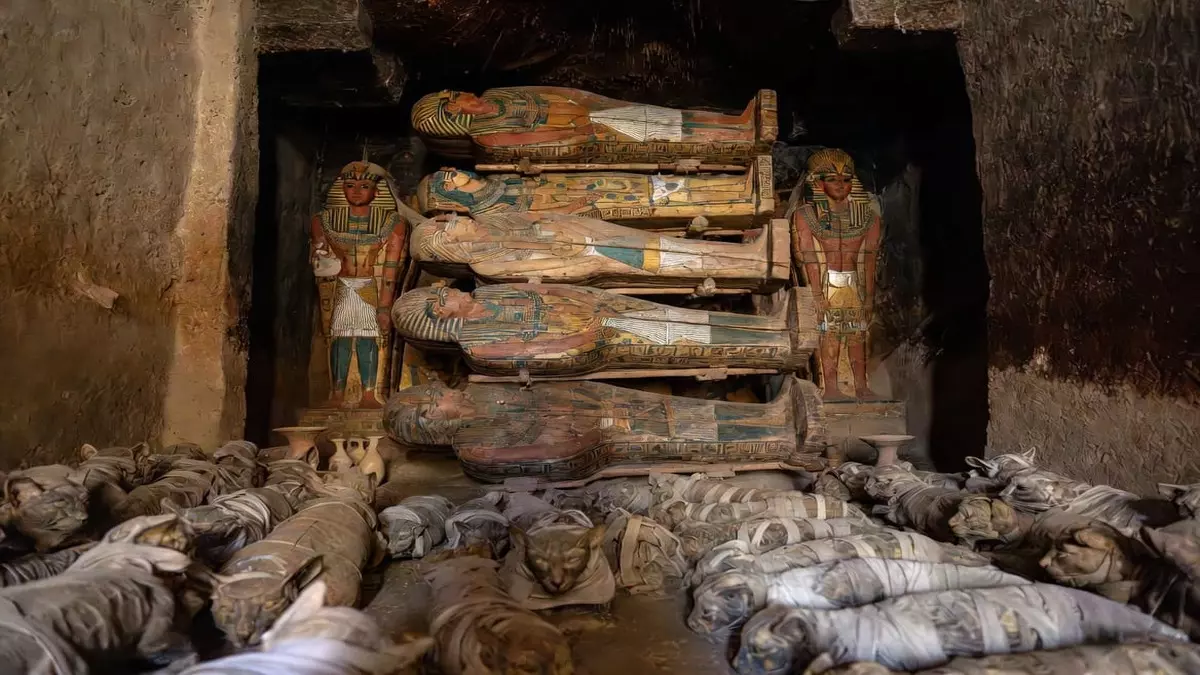
One of the standout discoveries came from a burial shaft in the courtyard of the tomb of Baki. Archaeologists recovered ten painted wooden coffins in relatively good condition, with vibrant scenes and hieroglyphic inscriptions still clearly visible. The coffins had been placed together as a cache, likely moved from original tombs for protection during times of political instability or tomb robbing.
Four of the coffins date to the Eighteenth Dynasty, including one belonging to a woman named Merit, who served as a chantress of the god Amun. Another coffin from the Ramesside or Twenty-First Dynasty belonged to a priest named Padi-Amun. The remaining examples belong to the Late Period. Many of the mummies inside showed signs of earlier damage, suggesting they had been disturbed before being carefully reburied in this collective shaft.
This type of secondary burial practice was common in ancient Thebes when older tombs faced threats. Priests and families worked to safeguard sacred remains and funerary equipment, preserving them for eternity. The painted decorations on these coffins typically included protective deities, offering scenes, and spells from the Book of the Dead designed to guide the deceased through the afterlife.
### Newly Discovered Tomb of Priest Aa-Shefi-Nakhtu
In the southern corner of Baki’s courtyard, the team uncovered the previously unknown tomb of Aa-Shefi-Nakhtu, a “Purifier Priest in the Temple of Amun.” The tomb complex includes a small open court, a rectangular shaft, an offering chamber with funerary texts, and a burial chamber. Inscriptions mention his father, who held the same priestly title, as well as two women named Isis and Ta-Kaft, both chantresses in the Temple of Amun.
These details provide valuable new information about priestly families connected to the powerful cult of Amun at Karnak Temple. Priests like Aa-Shefi-Nakhtu played important roles in daily temple rituals, maintaining purity and performing sacred ceremonies. The discovery of previously undocumented officials helps researchers better understand the administrative and religious hierarchy in ancient Thebes.
### Sandstone Pyramidion of Scribe Benji
Another significant find was a beautifully decorated sandstone pyramidion from a small tomb labeled DP91. The object features repeated scenes of worship and belonged to a man named Benji, who held the titles “scribe” and “nobleman.” Pyramidions typically crowned small mudbrick pyramids above tombs, serving as symbolic markers visible to the living.
Although Benji’s main tomb structure has not yet been located, the pyramidion’s position suggests it lies nearby. Scribes held respected positions in ancient Egyptian society, often managing records, taxes, and temple administration. Finding such artifacts helps map out the social landscape of the necropolis and identify individuals who left few traces in other historical records.
### Ptolemaic Cat Mummies Reveal Religious Practices
The team also unearthed a burial deposit containing more than 30 mummified cats, carefully wrapped in linen strips and tied with fabric bands. The collection included both domestic and wild cats of varying sizes and dates to the Ptolemaic Period, when animal mummies became extremely popular as votive offerings.
In ancient Egyptian religion, cats were closely associated with goddesses like Bastet and represented protection, fertility, and divine grace. Worshippers purchased mummified cats at temples to offer during rituals, hoping for favor from the gods. After ceremonies, priests collected these sacred animals and buried them in large deposits around holy sites. The Abu el-Naga find adds to a growing body of evidence about the scale of animal cult practices in the later periods of Egyptian history.
### Context of Abu el-Naga Necropolis
The Abu el-Naga area on Luxor’s West Bank formed part of the vast Theban necropolis, used continuously from the Middle Kingdom through the Roman Period. Tombs here belonged to nobles, priests, officials, and their families who wanted to be buried near the sacred landscape opposite Karnak and Luxor temples.
The current season, which began in November 2025, marks the eighth year of systematic work in this southeastern section near the tomb of Roy (TT255). Earlier excavations left significant debris that had concealed many features until now. The mix of Eighteenth Dynasty, Ramesside, Late Period, and Ptolemaic finds demonstrates how this part of the necropolis remained active and important for over a thousand years.
### Insights into Ancient Egyptian Burial Evolution
These discoveries highlight important changes in Egyptian funerary practices. During the New Kingdom, elite tombs featured elaborate wall paintings and rich grave goods. Later periods saw more reuse of older tombs and collective burials as resources became strained or security concerns increased. The careful reburial of coffins in the Baki shaft reflects both respect for the dead and practical responses to real-world challenges like tomb robbing.
The presence of chantresses and purifier priests underscores the central role of music, ritual purity, and temple service in Theban religious life. Women held significant positions as chantresses, performing sacred songs and dances that formed an essential part of temple ceremonies.
Animal mummies from the Ptolemaic era show how religious expression became more accessible. Ordinary people could participate by offering mummified animals, creating a direct connection to the divine without needing expensive tombs or priesthoods.
### Conservation and Future Research
The Egyptian mission is currently carrying out detailed conservation work on the painted coffins and other artifacts. Scientific studies, including CT scans of mummies, chemical analysis of pigments, and epigraphic recording of inscriptions, are planned to extract maximum information from the finds.
Several individuals identified this season, including Aa-Shefi-Nakhtu and Benji, were previously unknown in surviving records. New titles and family relationships revealed in the inscriptions will help scholars reconstruct social networks and career paths within ancient Thebes.
The Supreme Council of Antiquities emphasizes that Abu el-Naga continues to hold many secrets. Future seasons may locate Benji’s full tomb or additional caches that further illuminate life and death in one of Egypt’s greatest ancient cities.
### Why These Discoveries Matter
Finds like these bring ancient Egypt to life beyond famous pharaohs and pyramids. They reveal the stories of everyday priests, scribes, singers, and families who maintained religious traditions across centuries. The cat mummies remind us of the deep spiritual connection Egyptians felt with the natural world, while the reused coffins show practical adaptations to changing times.
Luxor’s West Bank remains one of the world’s richest archaeological zones. Each new discovery adds layers to our understanding of how beliefs about death, resurrection, and the afterlife shaped one of history’s most enduring civilizations.
For visitors to Luxor, these finds enhance appreciation of the West Bank’s vast necropolis. They demonstrate that even areas previously thought well-explored can still yield important surprises when modern methods and careful excavation are applied.
### The Enduring Legacy of Theban Burial Practices
The Abu el-Naga discoveries illustrate the remarkable continuity and adaptability of ancient Egyptian culture. From the height of the New Kingdom empire through foreign rule in the Ptolemaic Period, people maintained core beliefs about preserving the body and providing for the soul while adapting to new economic and political realities.
Painted coffins, inscribed tombs, and sacred animal offerings all served the same fundamental purpose: ensuring a successful transition to the afterlife and maintaining connections between the living and the dead. These practices influenced religious thought across the Mediterranean and continue to captivate people worldwide today.
As conservation and analysis continue, the latest finds from Luxor will contribute valuable data to ongoing studies of Egyptian religion, social history, and funerary archaeology. They remind us why Luxor remains a treasure trove of human heritage and why protecting these sites is essential for future generations.
## FAQ
**How many painted coffins were discovered in Luxor?**
Ten well-preserved painted wooden coffins were found in a burial shaft, dating from the Eighteenth Dynasty through the Late Period.
**Who was the priest Aa-Shefi-Nakhtu?**
A previously unknown “Purifier Priest in the Temple of Amun” whose tomb and family inscriptions were uncovered during the excavation.
**What do the cat mummies reveal about ancient Egyptian religion?**
They show the popularity of animal votive offerings during the Ptolemaic Period, particularly connected to cat goddesses like Bastet.
**Why were coffins moved into a cache?**
They were likely relocated for protection during periods of unrest or increased tomb robbing in antiquity.
**What titles did Benji hold?**
He was a “scribe” and “nobleman,” as recorded on his decorated sandstone pyramidion.
**When did the latest excavation season at Abu el-Naga begin?**
Work started in November 2025 as part of the ongoing Egyptian mission at the site.
**Will the public be able to see these new discoveries?**
Many artifacts will eventually be conserved and displayed in Luxor museums, while some tombs may be opened to visitors after full documentation and restoration.