
Table of Contents
- 1. The Surprising Archeology of a Disturbed Landscape
- 2. Reconstructing the Final Stand of the Irish Picquets
- 3. The Legal Fate of Foreign Regulars vs. Rebels
- 4. Elevating the Public Interpretation of Culloden
- 5. Frequently Asked Questions
- 5.1. What major discovery was made at Culloden Battlefield?
- 5.2. Who were the Irish Picquets?
- 5.3. Why was their last stand so important?
- 5.4. How did the Irish soldiers survive after surrendering?
- 5.5. Why was this specific area previously ignored by historians?
100+ Culloden Artifacts Reveal Valiant Last Stand of Irish Soldiers
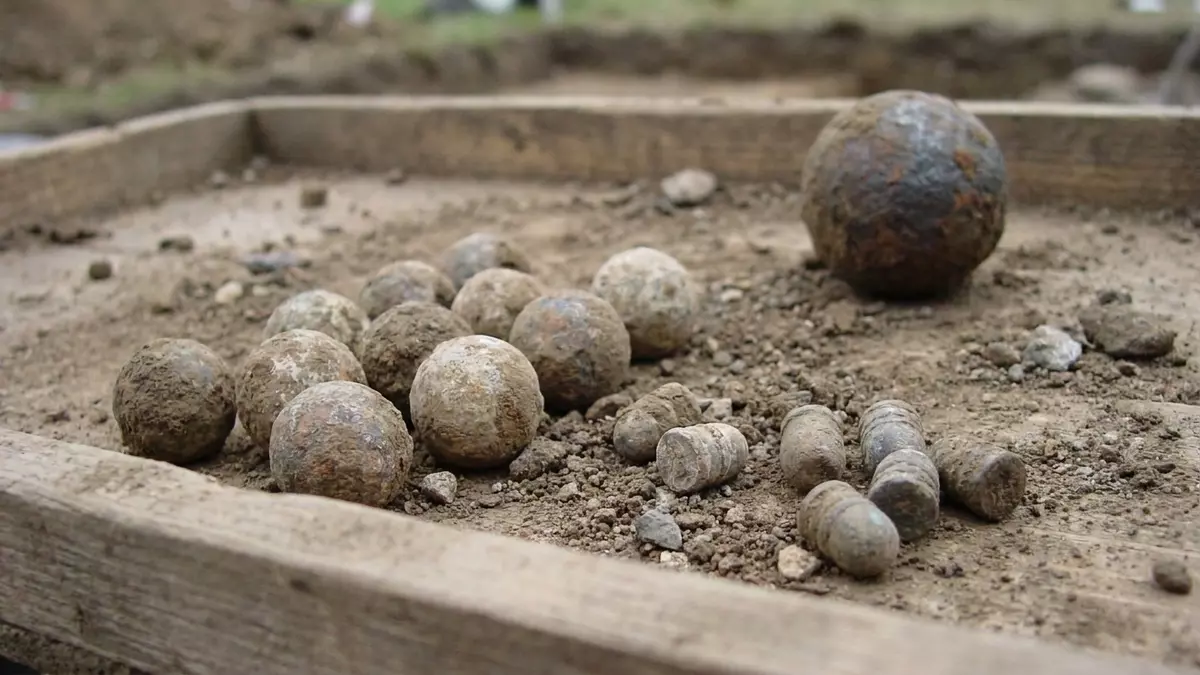
A groundbreaking archaeological excavation at Scotland’s historic Culloden Battlefield has yielded an extraordinary collection of combat relics, shedding new light on the final, desperate moments of the last major battle fought on British soil. While conducting specialized field surveys across an area long dismissed by historians as archaeologically empty, a research team uncovered a massive concentration of battlefield debris.
The extensive project, managed as a collaborative effort between the University of Glasgow and the National Trust for Scotland (NTS), successfully recovered over 100 lead musket balls, pistol rounds, and heavy artillery shot. This dramatic cluster of ammunition provides the first concrete, physical evidence pinpointing the exact location where a forgotten contingent of Irish troops staged a heroic rearguard defense. Their brave sacrifice ultimately held back charging government forces, buying invaluable time that allowed thousands of retreating Jacobite soldiers to escape certain slaughter.
100+ Culloden Artifacts Reveal Valiant Last Stand of Irish Soldiers

The Surprising Archeology of a Disturbed Landscape
The Battle of Culloden, fought on April 16, 1746, marked the bloody and definitive conclusion of the Jacobite Rising. The conflict pitted the outnumbered, exhausted Highland army of Charles Edward Stuart—popularly known as Bonnie Prince Charlie—against a heavily armed British government force commanded by the Duke of Cumberland. While the primary clash lasted less than an hour, it claimed the lives of roughly 1,600 men, mostly Jacobites, fundamentally breaking the clan system and permanently altering Highland society.
For centuries, researchers assumed that the physical footprints of this historic clash were restricted entirely to the well-mapped sectors surrounding the battlefield’s central memorial cairn. The newly targeted zone, situated directly north of the cairn, had been heavily modified by commercial forestry operations during the mid-20th century. Because the topsoil had been systematically churned, planted, and harvested by heavy machinery, mainstream historical models assumed that any primary archaeological data had been permanently obliterated.
       [CULLODEN NORTH SECTOR EXCAVATION GRID]

  [OLD FORESTRY ZONE] ──> Long dismissed as a ruined landscape
           │
           ├───> High-Sensitivity Metal Detector Sweeps
           ├───> Controlled Trial Trenching Matrix
           └───> *DISCOVERY OF 100+ COMBAT LEAD PROJECTILES*
To test these assumptions, the joint university and museum team deployed a highly thorough, multi-tiered survey strategy combining:
Advanced Metal Detector Sweeps: Executed by expert operators to map subsurface metallic anomalies without disturbing deep soil profiles.
Trial Trenching Matrix: Implemented to establish clear stratigraphic timelines across suspected target hotspots.
Test Pits: Utilured to evaluate the exact spatial distribution and density of the recovered ballistics.

The resulting field data completely surpassed all expectations. Instead of scattered, modern garbage or empty soil, the trenches exposed a dense, undisturbed pocket of 18th-century military ballistics, proving that vital historical evidence had survived intact beneath the roots of the modern forest.
Reconstructing the Final Stand of the Irish Picquets
The spatial distribution and varying calibers of the recovered lead projectiles allowed ballistics experts to reconstruct a frame-by-frame model of a ferocious skirmish that erupted during the final minutes of the battle. As the primary Jacobite line broke into a chaotic retreat, the Duke of Cumberland unleashed hundreds of elite, sabre-wielding horsemen from Kingston’s Horse and Cobham’s Dragoons to hunt down and eliminate the fleeing survivors.
To prevent a total massacre, a small, highly disciplined unit of roughly 150 Irish soldiers in official French military service—historically designated as the Irish Picquets—stepped forward to anchor the collapsing line. Commanded by the tactical officer Lieutenant-Colonel Walter Stapleton, these men deliberately positioned themselves directly between the charging British cavalry and the retreating Jacobite clansmen.
                  [THE RETREAT RESISTANCE TIMELINE]
                                  │
         ┌────────────────────────┴────────────────────────┐
         ▼                                                 ▼
   THE CAVALRY CHARGE                               THE IRISH DEPLOYMENT
• Cobham's Dragoons advance                      • 150 Irish Picquets form lines
• Kingston's Horse hunts survivors               • Volleys fired into charging horsemen
• Threat of total Jacobite rout                  • Defensive retreat to park walls
         │                                                 │
         └────────────────────────┬────────────────────────┘
                                  ▼
                     [CRUCIAL TIME SAVED FOR ESCAPE]
Standing their ground in the open field, the Irish Picquets delivered highly disciplined, synchronized musket volleys directly into the faces of the approaching horses, shattering the momentum of the initial government charge. After depleting their immediate ammunition, the unit executed a controlled fighting withdrawal, taking up defensive positions behind the stone boundary walls of Culloden Park. This localized, stubborn pocket of resistance acted as a strategic bottleneck, stalling the entire British cavalry wing long enough for hundreds of Bonnie Prince Charlie’s remaining men to successfully flee toward safety.
| Ammunition Type | Forensic Caliber Profile | Strategic Battlefield Function |
| Lead Buck & Ball | Standard Military Musket Size | Fired in mass volleys by infantry to break cavalry lines |
| Pistol Rounds | Small-Caliber Handgun Lead | Indicates close-quarters, desperate personal combat |
| Three-Pound Shot | Cast-Iron Cannonball | Evidence of localized Jacobite artillery support |
The Legal Fate of Foreign Regulars vs. Rebels
While the Irish Picquets were ultimately overrun by overwhelming numbers and suffered catastrophic casualties during the melee, their status as official, uniform-wearing soldiers in the French army completely altered their historical fate following their surrender.
Unlike the native Scottish Jacobites, who were viewed by the British crown as treasonous rebels and subjected to immediate execution, mass imprisonment, or forced penal transportation, the surviving Irish troops were legally classified as foreign prisoners of war.
+-----------------------------------------------------------------------+
|                    POST-BATTLE PRIVILEGE MATRIX                       |
|                                                                       |
|  [SCOTTISH JACOBITE CLANSMEN]             [IRISH PICQUET REGULARS]    |
|  • Classified as Traitorous Rebels        • Classified as French POWs |
|  • Subjected to Executions & Exile        • Spared Immediate Death    |
|  • Clan Culture System Destroyed          • Repatriated to France 1747|
+-----------------------------------------------------------------------+
Following their capture on the field, the surviving Irish soldiers were transferred under armed guard to London, where they were held on prison ships anchored in the River Thames. Because they operated under the legal protections of international military treaties between France and Great Britain, they were spared the gallows and were officially repatriated back to French soil in the early months of 1747.
Elevating the Public Interpretation of Culloden
The discovery of the 100+ musket balls and the identifying three-pound cannonball has provided the National Trust for Scotland with invaluable geographical data to completely revolutionize how the story of Culloden is shared with the public.
Derek Alexander, the Head of Archaeology for the NTS, expressed that the results have drastically redefined the known boundaries of the conflict, proving that history is still hiding just inches beneath the soil in the most unexpected corners of the landscape. Moving forward, the project directors plan to execute a comprehensive spatial distribution analysis, mapping the precise trajectory and impact deformation of every single recovered lead ball.
By calculating the exact angles at which the musket balls struck the earth or flattened against obstacles, researchers will be able to digitally map the precise firing lines, individual soldier movements, and defensive cover choices made by the Irish Picquets during their final moments. This high-resolution data will be integrated into updated multimedia exhibits, educational walking trails, and interactive museum displays at the Culloden Visitor Centre, ensuring that this legendary act of multi-national bravery is permanently preserved as a central pillar of Scotland’s national heritage.
Frequently Asked Questions
What major discovery was made at Culloden Battlefield?
Archaeologists uncovered over 100 lead musket balls, pistol rounds, and a three-pound cannonball. The unique cluster pinpointed the exact location of a fierce rearguard action fought during the final minutes of the 1746 battle.
Who were the Irish Picquets?
The Irish Picquets were a disciplined unit of approximately 150 Irish soldiers serving within the French military who traveled to Scotland to fight alongside the Jacobite army under the command of Lieutenant-Colonel Walter Stapleton.
Why was their last stand so important?
As the primary Jacobite army collapsed into retreat, the Irish Picquets stood their ground against charging British government cavalry. Their fierce musket volleys and defensive stand behind the walls of Culloden Park bought crucial time that allowed thousands of fleeing Jacobite soldiers to safely escape the field.
How did the Irish soldiers survive after surrendering?
Because they were regular, uniformed troops officially in French service, they were protected by international warfare treaties. Instead of being executed as rebels like the Scottish clansmen, they were treated as prisoners of war and eventually repatriated to France in 1747.
Why was this specific area previously ignored by historians?
The sector north of the memorial cairn had been heavily disturbed by commercial forestry operations and logging machinery during the mid-20th century. Historians long assumed that this industrial activity had completely destroyed the underlying archaeological layers.