
Table of Contents
Buried Church Bell Found in Poland After Decades Hidden
Construction workers in eastern Poland made a surprising historical discovery while installing new streetlights. They unearthed a well-preserved church bell buried beneath a roadside in the small village of Hostynne. This unexpected find has sparked renewed interest in the region’s layered past and the turbulent events that led to sacred objects being hidden for safekeeping.
The brass bell, silent for generations, offers a tangible link to Hostynne’s religious heritage. Experts believe it dates to the late 19th century, a period of significant change for churches in the area. Its recovery highlights how ordinary infrastructure projects can reveal important pieces of local history that were long forgotten

Buried Church Bell Found in Poland After Decades Hidden
### The Moment of Discovery
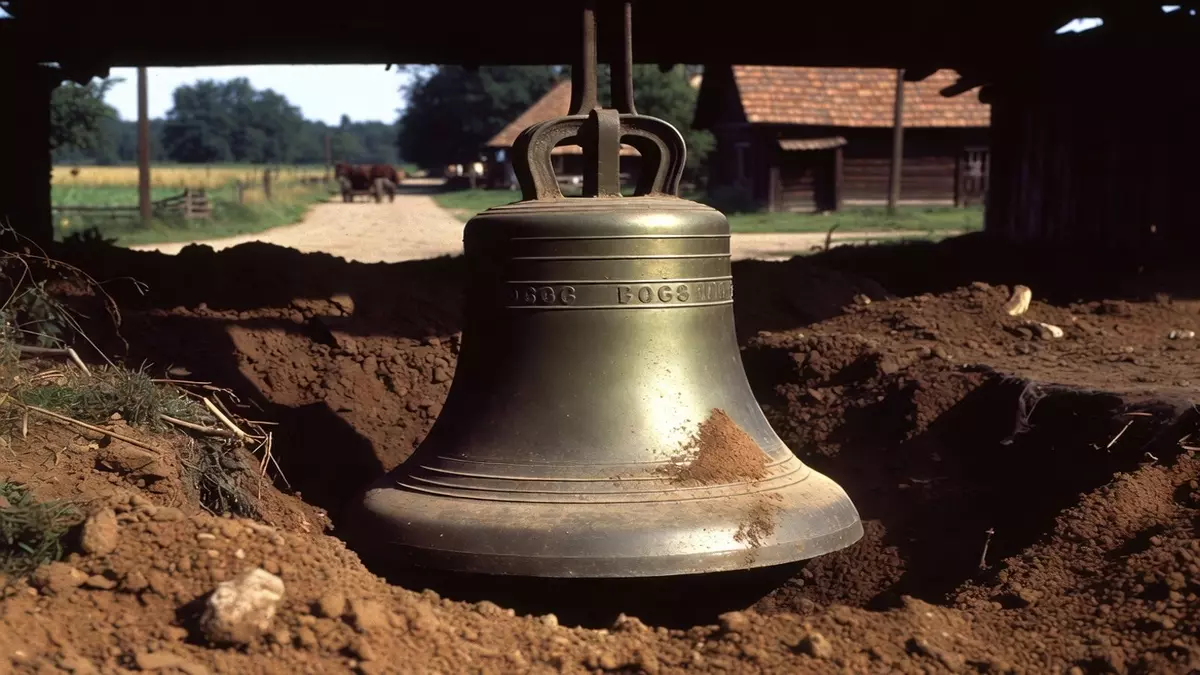
On May 22, 2026, contractors digging a trench for electrical cables along Municipal Road No. 111324L in the Werbkowice commune struck something metallic. They immediately stopped work and alerted local authorities. Heritage officials from the Lublin Voivodeship Conservator of Monuments quickly secured the site and examined the artifact in its original location.

The bell was found about 230 meters from Hostynne’s historic church. Despite decades of nearby farming and construction, no one had previously reported it. The object lay undisturbed beneath the roadside verge until modern development brought it back to light.
This type of discovery reminds us how much history remains buried just beneath the surface in Europe’s ancient villages. Similar finds of religious artifacts often occur during routine public works, turning everyday projects into archaeological opportunities.
### Detailed Examination of the Recovered Bell

Specialists describe the bell as being in remarkably good condition. Cast from brass, it measures 41 centimeters in height and 43 centimeters across at its base. An original iron clapper remains inside, and no major cracks or structural damage are visible.
Decorative elements still survive after years underground. A beautiful band of floral ornamentation encircles the crown, while raised rings and traces of additional designs appear near the lower edge. Some surface corrosion makes full identification challenging, but conservation experts hope cleaning will reveal a possible casting date or foundry marks hidden within the patterns.
The bell’s interior shows no clear inscriptions so far. Despite this, it still produces a clear, resonant tone when tested. Contact with the soil had slightly muffled its sound, but the overall quality remains impressive for an object of its age.
Church bells like this one served vital roles in rural communities. They marked time, called worshippers to services, announced births and deaths, and warned of danger. Their recovery often brings emotional resonance to local residents whose families attended services for generations.
### Hostynne’s Layered Religious History
The village of Hostynne has deep roots. Written records first mention it in 1394. By 1472, documents confirm the presence of a church, probably a simple wooden structure typical of the era.
That early building faced destruction during Tatar raids in the early 1500s. A new wooden church dedicated to St. George rose in 1732, supported by nobleman Jerzy Michał Sapieha. The 19th century brought major religious shifts. In 1875, the church became an Orthodox place of worship. Between 1889 and 1890, builders replaced the wooden structure with a sturdy brick church.
Experts believe the newly discovered bell likely dates to this late 19th-century period, when many churches received updated furnishings. Its size and style match those commonly installed during such renovations.
Poland’s religious architecture reflects centuries of political change, shifting borders, and cultural influences. From Catholic roots to periods of Orthodox dominance and back again, local churches often adapted to new realities while serving as anchors for community identity.
### Why Was the Bell Buried?
The exact reason the bell ended up underground remains a mystery, but historians have several plausible explanations tied to regional conflicts.
One strong possibility points to World War I. In 1915, Austro-Hungarian forces occupied the area and actively seized bronze and brass objects for wartime manufacturing. Local residents may have buried church valuables to protect them from confiscation, intending to retrieve them later. Many such hidden items were never recovered due to the chaos of war.
Other periods of unrest could also explain the burial. Anti-Orthodox campaigns in the 1920s and 1930s created tension, while World War II brought further destruction and displacement. The church itself suffered heavy damage during wartime, and the 1946 deportation of Hostynne’s Ukrainian population scattered families who might have known the bell’s hiding place.
Oral traditions about concealed church bells have circulated in the village for generations. These stories became harder to verify after population changes removed key witnesses. The recovery now gives new life to those old tales.
Similar stories appear across Eastern Europe, where communities often hid bells, icons, and other sacred objects during times of invasion or political repression. These acts of quiet resistance preserved cultural heritage through difficult eras.
### Conservation and Public Display Plans
Heritage officials are now preparing the bell for long-term preservation. After careful cleaning and conservation treatment, it will go on public display in Werbkowice. A specially designed shelter at the future Communal Crisis Management Centre will house the artifact, making it accessible to residents and visitors.
This approach balances protection with public education. Displaying the bell locally ensures the community maintains a direct connection to its history while allowing researchers to study it further.
The find also encourages broader archaeological awareness. Local authorities hope it inspires residents to report potential discoveries rather than disturbing them, following proper heritage protocols.
### The Cultural Significance of Church Bells in Polish History
Church bells hold deep symbolic meaning in Polish culture. Beyond their practical function, they represent faith, community resilience, and continuity through centuries of change. Many bells carry dedications, donor names, or biblical inscriptions that tell stories of generosity and devotion.
In rural areas like Hostynne, the sound of bells shaped daily rhythms. Their silence during periods of hiding or destruction often marked times of hardship. Rediscovering such objects helps heal historical wounds and reconnect people with their ancestors’ experiences.
Poland’s rich archaeological landscape continues to yield surprises. From medieval artifacts to wartime relics, each discovery adds depth to the nation’s complex narrative. The Hostynne bell joins a growing list of items that bridge past and present.
Advanced conservation techniques now allow experts to extract maximum information from such finds. X-ray imaging, material analysis, and careful restoration can reveal manufacturing details and even trace metal sources, offering insights into historical trade networks.
### Broader Context of Religious Artifacts in Eastern Europe
Eastern Poland’s borderland location made it a crossroads of cultures, empires, and faiths. This history of shifting control created layers of religious architecture and artifacts that reflect tolerance, conflict, and adaptation.
Similar bell discoveries have occurred in neighboring countries, often linked to the same 20th-century upheavals. These finds serve as powerful reminders of how communities protected their heritage during uncertain times.
The Hostynne case also highlights the importance of heritage protection laws. Poland’s system for safeguarding monuments ensures that accidental discoveries like this receive professional attention rather than being lost or sold privately.
**Conclusion**
The unearthing of this brass church bell in Hostynne, Poland, transforms a routine construction project into a meaningful connection with the past. After decades hidden beneath the roadside, the artifact has emerged to tell stories of faith, conflict, and resilience in a region shaped by centuries of change.
As experts clean and study the bell, it will likely reveal more details about its origins and journey. For now, its recovery brings joy to local residents and adds another chapter to Hostynne’s living history. This discovery reminds us that history often lies just beneath our feet, waiting for the right moment to resurface and enrich our understanding of who we are.
By preserving and displaying the bell in Werbkowice, the community ensures future generations can appreciate this tangible piece of their heritage. In a world of rapid change, such links to the past provide comfort, identity, and inspiration.
**FAQ**
**Q: When and where was the church bell discovered?**
A: Workers found the bell on May 22, 2026, while digging for street lighting cables in the village of Hostynne, Werbkowice commune, eastern Poland.
**Q: How big is the recovered church bell?**
A: The brass bell stands 41 centimeters tall and measures 43 centimeters wide at the base. It includes an original iron clapper and remains in good condition.
**Q: Why might the bell have been buried?**
A: It was likely hidden during World War I to protect it from Austro-Hungarian forces seizing metal for war efforts. Other conflicts in the 20th century could also explain its burial.
**Q: What is the history of the church in Hostynne?**
A: The village dates back to at least 1394. Churches existed there since the 15th century, with major changes in the 1700s and late 1800s when it became Orthodox before returning to Roman Catholic use.
**Q: Where will the bell be displayed?**
A: After conservation, it will be placed in a special shelter at the Communal Crisis Management Centre in Werbkowice for public viewing.
**Q: Does the bell still work?**
A: Yes. Tests confirm it produces a clear, even tone despite years underground, though the sound is slightly softened by soil contact.
**Q: What makes this discovery important?**
A: It provides a direct link to 19th-century religious life in the region and highlights how local communities protected cultural treasures during periods of war and political upheaval.