
Table of Contents
**How Persian and Greek Empires Transformed Central Asian Languages**
New research reveals how ancient Persian and Greek rule dramatically influenced writing systems across Central Asia more than 2,500 years ago. Historian Rachel Mairs’ detailed study shows that imperial languages shaped official documents and public inscriptions, while local communities continued speaking their own tongues. This fascinating look at language contact offers fresh insights into one of history’s most dynamic cultural crossroads.
The findings highlight a complex multilingual world where empires introduced new scripts and administrative languages that local societies cleverly adapted for their own needs. From the towering mountains of Bactria to the fertile valleys of Gandhara, writing became a powerful tool of governance, trade, and cultural exchange.
How Persian and Greek Empires Transformed Central Asian Languages
### The Rise of Imperial Languages in Central Asia
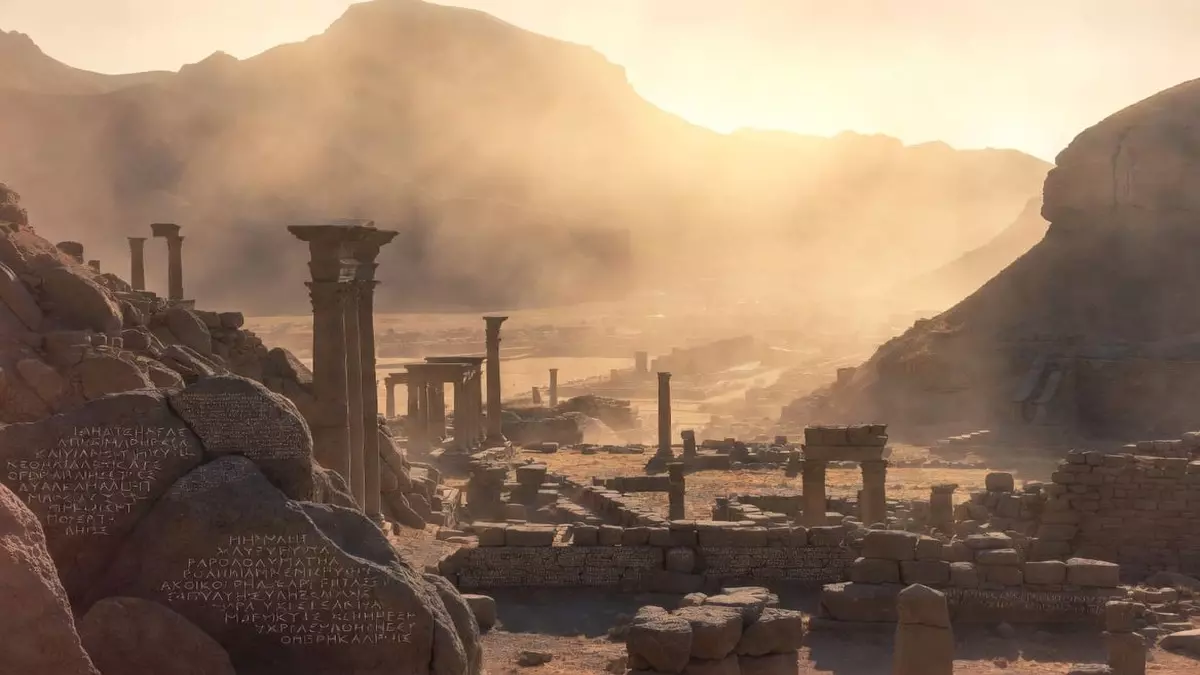
During the Achaemenid Persian Empire, which stretched from the 6th to 4th centuries BCE, officials relied heavily on Aramaic and Elamite for administration. These languages served as practical bridges across a vast territory that included modern-day Afghanistan, Uzbekistan, Tajikistan, and Pakistan. Aramaic, in particular, functioned as a common written standard that allowed communication between diverse regions far from the Persian heartland.
After Alexander the Great’s conquests in the late 4th century BCE, Greek emerged as the dominant language of power in the Hellenistic kingdoms that followed. Cities like Ai Khanoum became centers where Greek was used for public monuments, official records, and elite cultural expression. Meanwhile, in areas influenced by the Mauryan Empire, Prakrit gained prominence in written form.
Importantly, these imperial languages did not replace local speech. People likely continued using Iranian and Indo-Aryan languages in daily life, homes, and traditional settings. Writing served different purposes — formal, political, and economic — creating a clear divide between spoken and written communication that persisted for centuries.
### Evidence from Ancient Inscriptions and Documents
Mairs’ research draws on a wide range of surviving texts, including rock inscriptions, administrative papyri, and archaeological finds. Some of the earliest written materials from Central Asia date to the 4th century BCE and come from Bactria and Arachosia. These documents provide rare glimpses into how Persian imperial systems operated on the empire’s eastern frontiers.

The famous Behistun Inscription, commissioned by Darius I, exemplifies how Persian rulers used monumental writing to project power and list conquered territories. Similar practices extended into Central Asia, where officials recorded transactions, taxes, and commands in languages accessible to administrators trained across the empire.
Greek influence appears strongly in the Hellenistic period. Inscriptions from Ai Khanoum and other sites demonstrate how Greek served not only Greek settlers but also local elites who adopted it for status and integration into the new political order. However, using Greek did not necessarily mean adopting Greek identity. Many writers were likely local people who learned the language for practical advancement.
**Prakrit inscriptions linked to Mauryan influence**, such as those connected to the Heliodorus Pillar at Besnagar, further illustrate the layered linguistic landscape. Indian cultural elements blended with Persian and Greek traditions, creating unique hybrid expressions of power and devotion.
### How Scripts Evolved and Adapted Over Time
One of the study’s most compelling insights involves the separation between language and script. Scripts proved remarkably flexible and were repeatedly repurposed:
– Aramaic script was adapted to write Prakrit and various local Iranian languages.
– Greek letters later formed the basis for writing Bactrian, an Iranian language that flourished under the Kushan Empire.
This adaptability allowed communities to maintain cultural continuity while engaging with imperial systems. Writing technologies traveled along the same Silk Road networks that carried goods, ideas, and religions. Local scribes modified foreign scripts to better represent sounds in their own languages, creating new writing traditions that would influence later developments in the region.
The dry climates of Central Asia helped preserve these fragile documents, offering modern scholars a window into ancient bureaucratic practices. Administrative archives reveal details about taxation, land management, and legal matters that sustained complex societies.
### Daily Life in a Multilingual World
Central Asia during the Achaemenid and Hellenistic periods was far from isolated. It sat at the intersection of major civilizations. Merchants, soldiers, diplomats, and scholars moved through Bactria and Sogdiana, bringing languages into contact and creating opportunities for linguistic borrowing.
Local Iranian languages formed the spoken foundation for most residents. These everyday tongues handled family matters, agriculture, storytelling, and traditional rituals. Imperial languages, by contrast, dominated official spheres — court proceedings, military orders, and monumental displays meant to impress both locals and outsiders.
This situation resembles modern bilingual or diglossic societies where people switch between languages depending on context. A farmer might speak a local dialect at home but encounter Aramaic or Greek when dealing with tax collectors or regional governors.
The study emphasizes that language use reflected power dynamics. Those who mastered imperial scripts gained advantages in administration, trade, and social mobility. Yet the persistence of local languages in non-written forms preserved cultural identities through centuries of foreign rule.
### Key Sites That Illuminate the Past
Several important locations feature prominently in the research:
– **Ai Khanoum**: A Hellenistic city in modern Afghanistan that yielded Greek inscriptions and architectural remains showing strong Mediterranean influence.
– **Bactria and Sogdiana**: Regions with rich evidence of Persian administrative practices that continued under Greek and later Kushan rulers.
– **Gandhara and Arachosia**: Areas where Indian, Persian, and Greek elements mixed, producing remarkable artistic and textual hybrids.
These sites demonstrate how sanctuaries, palaces, and marketplaces became arenas for linguistic interaction. Inscriptions on pillars, coins, and temple walls served as public announcements, religious dedications, and markers of authority.
### Long-Term Impact on Central Asian Culture
The patterns established during Achaemenid and Hellenistic times had lasting effects. Later empires, including the Kushans, continued adapting scripts and blending traditions. The use of Greek script for Bactrian represents a direct legacy of Alexander’s campaigns that endured for centuries.
This linguistic flexibility contributed to Central Asia’s role as a cultural melting pot. Buddhism, Zoroastrianism, and Hellenistic philosophies all found expression through these adapted writing systems. Trade along emerging Silk Road networks benefited from common administrative languages that facilitated contracts and record-keeping across vast distances.
The incomplete nature of the surviving record presents challenges. Many documents were written on perishable materials that did not survive. What remains comes primarily from drier zones and official contexts, potentially skewing our view toward elite practices rather than everyday speech.
Despite these limitations, the available evidence paints a picture of remarkable resilience. Local communities selectively adopted imperial tools while maintaining their linguistic heritage beneath the surface.
### Why This Research Matters Today
Understanding ancient language contact helps us appreciate similar processes in our modern globalized world. Central Asia’s history shows how empires spread dominant languages while indigenous ones persisted in private spheres. This dynamic continues in many regions where colonial or global languages coexist with local ones.
Mairs’ work also challenges simplistic views of cultural imperialism. Rather than passive recipients, Central Asian societies actively reshaped imported scripts and languages to serve their needs. This creative adaptation strengthened rather than erased local identities.
For historians, linguists, and archaeologists, these findings open new avenues for research. Future discoveries of additional texts could further clarify how spoken languages evolved alongside written ones. Advanced imaging techniques and digital analysis may reveal faded inscriptions that add more pieces to this complex puzzle.
### The Human Story Behind the Scripts
Behind every inscription lies a human story. A scribe trained in Aramaic drafting a tax record. A local ruler commissioning a Greek dedication to honor both traditional and new gods. A merchant recording a trade deal in Prakrit. These acts of writing connected people across cultures and generations.
The study reminds us that language is never neutral. It carries power, identity, and history. In ancient Central Asia, choosing which language or script to use represented strategic decisions that shaped social relationships and political realities.
As we reflect on this distant past, we gain perspective on contemporary issues of linguistic diversity and cultural preservation. The adaptability shown by ancient Central Asians offers inspiring examples of resilience amid change.
### Conclusion
Rachel Mairs’ groundbreaking study demonstrates how Persian and Greek rule fundamentally influenced writing practices across Central Asia while local spoken languages endured. From the 5th century BCE to the 2nd century CE, the region functioned as a vibrant laboratory of linguistic innovation and cultural blending.
This research enriches our understanding of the ancient world and highlights Central Asia’s pivotal role in shaping broader Eurasian history. The surviving texts serve as enduring witnesses to human creativity and the complex ways societies navigate foreign influence while preserving their unique identities.
As archaeologists continue uncovering new inscriptions and documents, our picture of this multilingual past will grow even clearer. The story of ancient Central Asian languages ultimately reveals the enduring human capacity to adapt, communicate, and create meaning across cultural boundaries.
The legacy of these linguistic transformations can still be felt today in the rich diversity of languages and scripts found throughout the region. What began as tools of empire became instruments of local expression, proving once again that culture flows in multiple directions.
## FAQ
**How did Persian rule affect languages in Central Asia?**
Under Achaemenid control, Aramaic and Elamite became primary administrative languages, creating a common written system across the empire while local Iranian languages continued in daily speech.
**What role did Greek play after Alexander the Great?**
Greek became the language of administration, public inscriptions, and elite culture in Hellenistic kingdoms, though it coexisted with local languages rather than replacing them.
**Why were different scripts adapted in ancient Central Asia?**
Scripts like Aramaic and Greek were flexible tools that local communities modified to write their own languages, allowing cultural continuity amid imperial influence.
**Which regions does the study focus on?**
The research examines Bactria, Sogdiana, Arachosia, and Gandhara — areas spanning modern Afghanistan, Uzbekistan, Tajikistan, and Pakistan.
**Did people stop speaking local languages under foreign rule?**
No. The study shows communities maintained their spoken Iranian and Indo-Aryan languages while using imperial languages for official and written purposes.
**What is the main takeaway from Rachel Mairs’ research?**
Ancient Central Asia was a multilingual region where writing systems adapted to empire changes, but local societies actively reshaped them for their own cultural and practical needs.
**How long did these linguistic influences last?**
The patterns began in the 5th century BCE and continued evolving through the Hellenistic period into the early centuries CE, influencing later empires like the Kushans.