
Table of Contents
**Inca Ceramics Reveal Empire’s Religious and Political Power**
Deep in the Peruvian Andes, stunning discoveries on volcanic peaks are shedding new light on how the Inca Empire used everyday objects to strengthen its vast dominion. Around 500 years ago, the Incas elevated ceramics far beyond simple pottery. These carefully crafted vessels became powerful tools for religious rituals and political control, helping unify a territory that stretched across western South America.
Recent studies of artifacts found alongside child sacrifices on volcanoes like Misti and Ampato reveal the central role of ceramics in Inca ceremonies. A new bilingual book by Polish archaeologist Dr. Sylwia Siemianowska catalogs these finds, offering fresh insights into one of history’s most sophisticated ancient civilizations.
Inca Ceramics Reveal Empire’s Religious and Political Power
### The Capacocha Ritual and Inca Religious Practices
At the heart of Inca spiritual life stood the capacocha ceremony—a solemn ritual involving the sacrifice of children on high mountain summits. Young boys and girls, typically between 6 and 13 years old, were chosen as divine messengers. These children carried offerings and prayers to the gods, often linked to mountain deities known as apus.
Archaeologists have uncovered multiple capacocha sites on Misti and Ampato volcanoes. On Misti, researchers identified remains of eight to nine children accompanied by rich grave goods. Ampato yielded three child burials, including the world-famous Mummy Juanita, also called the Lady of Ampato—a remarkably preserved girl aged 12 to 15, sacrificed between 1440 and 1480.
These high-altitude burials, some at elevations exceeding 5,800 meters, demonstrate the Incas’ deep religious commitment and organizational strength. The children were often dressed in fine clothing and surrounded by offerings meant to please the gods and ensure the empire’s prosperity.
**Ceramics as Sacred Gifts to the Gods**
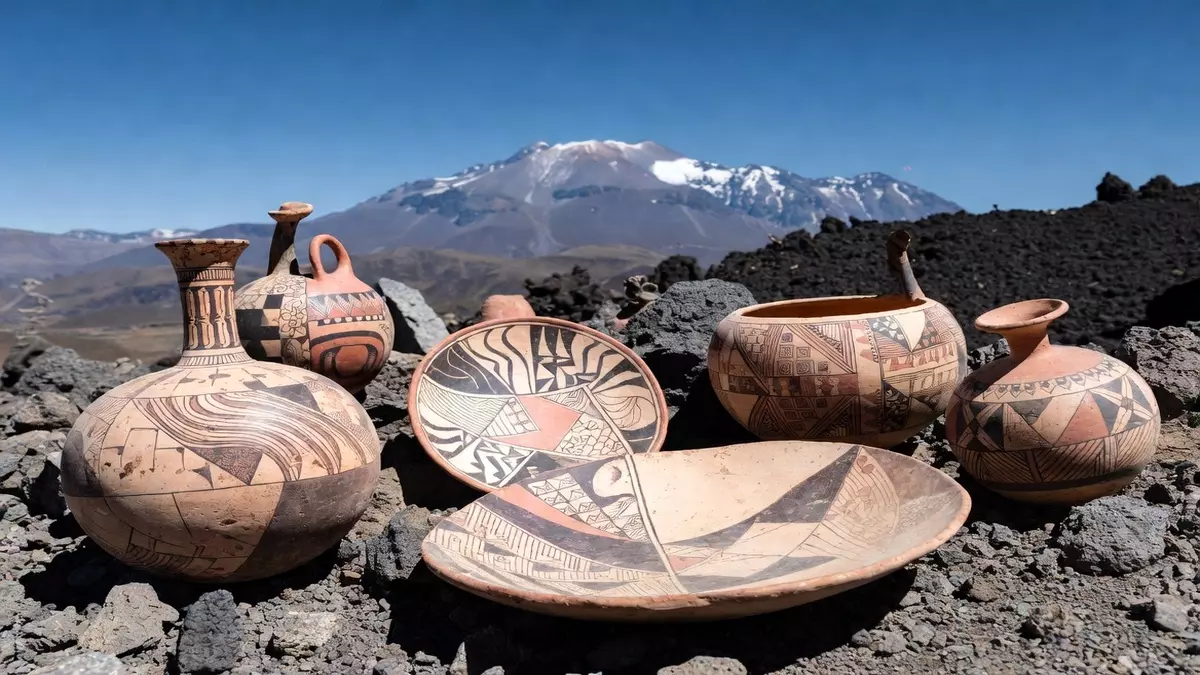
Ceramic vessels played an essential part in these rituals. Dr. Siemianowska’s research shows that pottery was not merely functional but carried profound symbolic meaning. The vessels found at these sites include distinctive Inca aryballos—tall amphorae used to store chicha, a fermented maize beer central to religious ceremonies.
During rituals honoring the sun or mountain gods, Inca priests would drink chicha from one cup and pour offerings from another. This act symbolized the bridge between the human world and the divine. “It is a kind of gift for a deity,” Siemianowska explained, highlighting how ceramics facilitated communication with powerful supernatural forces.
The book *Lo que pertenece a las divinidades* (What Belongs to the Divinities) details dozens of vessels recovered from these mountain tombs. On Misti, archaeologists found 32 ceramic items, while Ampato yielded 37. Many featured classic Inca designs: geometric patterns, wavy lines, and zigzags painted with mineral pigments after firing. Some vessels were deliberately broken during the ceremony, likely to “seal” the sacred space and release their spiritual power.
### How Ceramics Strengthened Inca Imperial Control
The Inca Empire, which flourished from the early 1400s until the Spanish conquest in the 1530s, governed a diverse population across rugged terrain. Military force alone could not maintain unity. Instead, the Incas blended political strategy with religious ideology, using standardized material culture to promote a shared identity.
Ceramics proved especially effective for this purpose. Their consistent shapes, decorative styles, and high-quality production reflected imperial standards that appeared from Ecuador to Chile. By distributing these items through state-controlled workshops, the Incas reinforced loyalty and cultural belonging across their realm.
Ritual vessels, including miniature versions made exclusively for ceremonies, lacked everyday utility. These special objects symbolized status, religious devotion, and connection to the state. Miniature plates, bowls, and aryballos found with the sacrificed children underscore how elites used material goods to display power and piety.
**Daily Life, Politics, and Religion Intertwined**
Beyond mountaintop rituals, ceramics featured prominently in Inca feasts, administrative systems, and household activities. Large aryballos stored chicha for communal celebrations that strengthened social bonds and political alliances. The ability to produce and distribute such items in large quantities demonstrated the empire’s sophisticated economy and labor organization.
Dr. Siemianowska notes that ceramics “carried ideas, symbolized belonging to a specific social group, and marked norms and customs.” This made them perfect instruments for ideological control. By embedding religious symbolism into practical objects, the Incas wove their worldview into the fabric of daily existence.
### Major Discoveries on Misti and Ampato Volcanoes
Excavations in 2020 by researchers from the University of Warsaw’s Andean Research Center uncovered remarkable treasures. On Misti, grave goods included 47 figurines crafted from gold, silver, and copper, along with stone vessels, Spondylus shell artifacts, and numerous ceramics. Ampato’s finds featured similar luxury items accompanying the child mummies.
Many vessels were found intact, preserving their original forms and decorations. Others showed signs of ritual breaking, suggesting intentional acts meant to transform the objects from physical items into spiritual offerings.
A particularly intriguing practice involved sealed vessels containing substitute offerings. These containers held mixtures of llama blood and powdered Spondylus shell, offered symbolically to the volcano when direct access to its core was impossible. Such creative solutions highlight Inca ingenuity in bridging the physical and spiritual worlds.
These artifacts are now preserved and displayed at the Museo Santuarios Andinos in Arequipa, Peru. They continue to draw researchers and visitors eager to understand this complex civilization.
### The Broader Context of Inca Expansion and Ideology
The Inca Empire emerged rapidly in the 15th century, conquering neighboring groups through a mix of warfare, diplomacy, and religious persuasion. Capacocha sacrifices often coincided with major imperial events—such as the ascension of a new emperor or responses to natural disasters—serving both religious and political purposes.
By performing these ceremonies on prominent peaks visible across wide territories, the Incas made their power literally visible from afar. The presence of high-status ceramics in these remote locations further demonstrated the reach of imperial resources and organization.
**Environmental and Cultural Adaptation**
The Andes presented formidable challenges: steep mountains, unpredictable weather, and diverse ethnic groups. The Incas responded with remarkable engineering, including extensive road networks, terraced agriculture, and ritual practices that honored the landscape itself. Mountains were viewed as living deities, and offerings to them helped legitimize Inca rule over newly acquired lands.
Ceramics supported this adaptation. Their durability and portability made them ideal for transport along mountain trails. Decorative motifs often drew from local traditions while maintaining core Inca styles, allowing for cultural integration without losing imperial identity.
### Modern Research and Preservation Efforts
Dr. Siemianowska’s work at the Institute of Archaeology and Ethnology of the Polish Academy of Sciences adds valuable European perspectives to Andean studies. Her bilingual book makes these findings accessible to both Spanish- and English-speaking audiences, broadening global understanding of Inca culture.
Ongoing collaboration between Polish, Peruvian, and international researchers ensures careful analysis and conservation of these sensitive artifacts. Many mummies and objects remain frozen in high-altitude conditions, offering unique opportunities for scientific study of Inca diet, health, and genetics.
These discoveries also raise important ethical questions about the display of human remains and sacred objects. Museums like the Museo Santuarios Andinos balance educational value with cultural respect for indigenous Andean communities.
### Why Inca Ceramics Still Matter Today
The story of Inca ceramics offers timeless lessons about how societies use material culture to express power, faith, and identity. In an era of globalization, their strategies for cultural unification resonate with modern discussions about soft power and ideological influence.
For history enthusiasts, these artifacts humanize the Inca Empire. Behind the grand narratives of conquest lie personal stories—of children chosen for sacrifice, artisans crafting sacred vessels, and communities participating in elaborate rituals.
Tourism to sites like Arequipa and the volcanoes continues to grow, bringing economic benefits to local communities while raising awareness of Peru’s rich pre-Columbian heritage. The ceramics serve as tangible links to a sophisticated civilization that thrived long before European contact.
### Conclusion: Ceramics as Windows into an Ancient Empire
The Inca use of ceramics in religious and political life reveals a nuanced approach to governance that went far beyond military might. Through beautifully crafted vessels found alongside child sacrifices on Misti and Ampato, we see how the Incas wove ideology into the objects of daily and sacred life.
Dr. Sylwia Siemianowska’s groundbreaking research and book illuminate these connections, showing ceramics as vital instruments of imperial control and spiritual expression. As researchers continue to study these high-altitude finds, our understanding of the Inca world grows richer and more complex.
These 500-year-old artifacts remind us of humanity’s enduring impulse to connect with the divine and assert meaning through material things. In the shadow of the Andes, Inca ceramics still speak—telling stories of faith, power, and the remarkable civilization that once dominated South America.
## FAQ
**What was the capacocha ceremony?**
Capacocha was an Inca ritual involving the sacrifice of children on mountain peaks as offerings to the gods. The children were seen as messengers carrying prayers for the empire’s well-being.
**What role did ceramics play in Inca rituals?**
Ceramics served as symbolic gifts to deities. Vessels like aryballos held chicha for offerings, while plates and bowls accompanied sacrifices. They embodied religious and political ideologies.
**Where were the Inca ceramic vessels discovered?**
Major finds come from high-altitude sites on Misti and Ampato volcanoes in Peru. Dozens of vessels were recovered alongside child mummies and other grave goods.
**Who is Dr. Sylwia Siemianowska?**
She is a researcher at the Institute of Archaeology and Ethnology of the Polish Academy of Sciences. Her book *Lo que pertenece a las divinidades* catalogs Inca ceramics from these ritual sites.
**What other artifacts were found with the child sacrifices?**
Discoveries include gold, silver, and copper figurines, Spondylus shells, stone vessels, and textiles. Some vessels contained symbolic offerings like powdered shells and llama blood.
**Why were some ceramic vessels deliberately broken?**
Breaking vessels during rituals was likely intended to release their spiritual power and seal the sacred space, marking the completion of the ceremony.
**Where can visitors see these Inca artifacts today?**
Many of the ceramics and mummies are displayed at the Museo Santuarios Andinos in Arequipa, Peru, where they continue to educate the public about Inca culture.