
Table of Contents
**Major Ancient Discoveries Span 8,000 Years at Newark Road Site**
Archaeologists have made exciting breakthroughs during preparations for a major UK road improvement project, uncovering a rich tapestry of human history stretching back thousands of years near Newark, England. The finds include ancient burials, a Roman well, and a rare Anglo-Saxon dwelling, offering fresh insights into how people lived, worked, and honored their dead across millennia in the Nottinghamshire countryside.
This significant discovery highlights how even modern infrastructure projects can reveal hidden chapters of Britain’s past, turning routine groundwork into a window on our ancestors’ lives.
Major Ancient Discoveries Span 8,000 Years at Newark Road Site

### Massive Excavation Ahead of A46 Newark Bypass
National Highways is moving forward with plans to widen sections of the busy A46, construct a new flyover, and build a bridge over the A1 to ease chronic traffic congestion around Newark. Before heavy machinery arrives, a thorough archaeological investigation was required to document and protect any buried heritage.
A dedicated team of 30 archaeologists from Archaeological Management Solutions spent 22 weeks carefully excavating five fields totaling more than 23 acres (9.63 hectares). Their meticulous work revealed evidence of human activity dating from around 6000 BCE right through to the post-Medieval era, proving this landscape has supported communities across vastly different historical periods.

The results paint a picture of repeated settlement and land use over 8,000 years, from prehistoric hunter-gatherers to Roman farmers, early medieval settlers, and even those caught up in 17th-century conflicts.
### Remarkable Find: Seven Ancient Burials
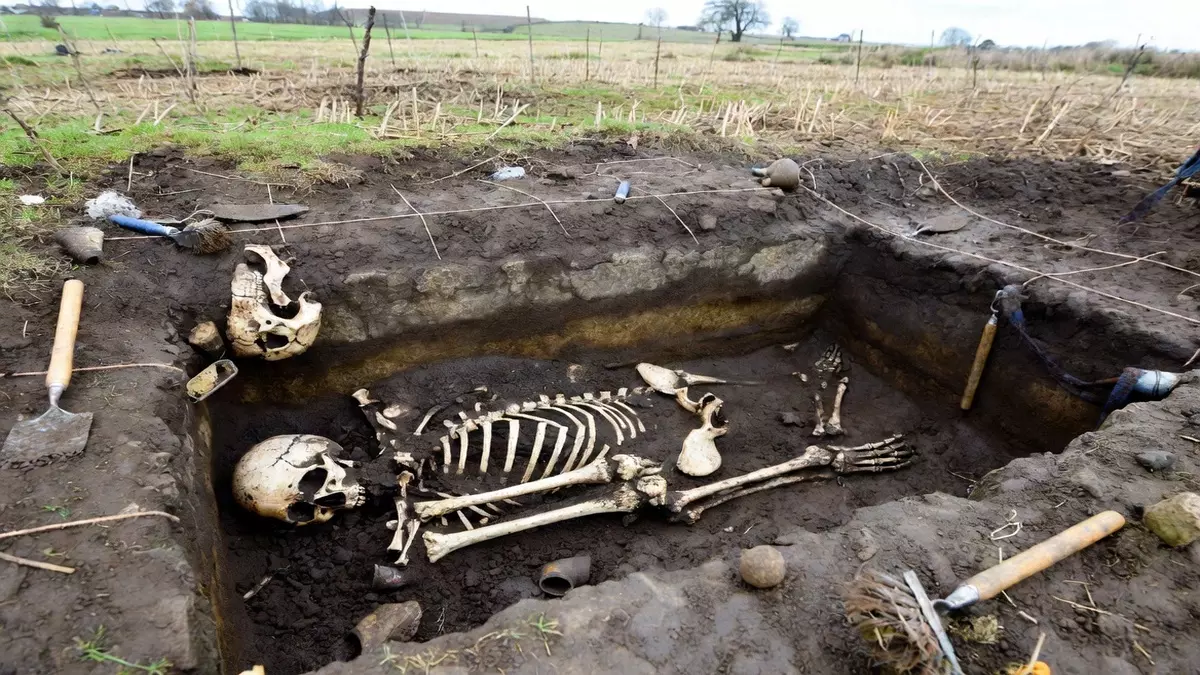
One of the most compelling discoveries came from a field close to the existing A46 route. Archaeologists uncovered a burial site containing the remains of seven individuals. Experts believe these graves could date to the Iron Age, Roman, or Anglo-Saxon periods, though further analysis of bones and associated artifacts is underway to narrow down the timeline.

Such burial clusters provide invaluable clues about ancient beliefs, health, and social structures. Studying these remains could reveal information about diet, disease, migration patterns, and burial rituals from a time when this part of Britain was undergoing significant cultural changes.
Mid-excavation photos show the careful, respectful process used to document these sensitive finds, ensuring they can contribute to scientific understanding while honoring those laid to rest long ago.
### Rare Anglo-Saxon Sunken-Floor House
In the same vicinity, the team identified the remains of a probable Anglo-Saxon *grubenhaus*—a distinctive sunken-floored building typical of early medieval settlements. These structures often served as homes, workshops, or storage spaces, with the dug-out floor helping with insulation and stability.
Grubenhäuser are relatively uncommon discoveries in Nottinghamshire, making this example particularly valuable for regional archaeology. It suggests early medieval communities were actively establishing roots in this area, contributing to our knowledge of post-Roman settlement patterns in the English Midlands.
### Roman Life: Wells, Enclosures, and Daily Artifacts
Further southwest near Kelham village, excavations exposed multi-period layers that tell a story of long-term occupation. Key features include a rectangular Roman enclosure, a Roman well, and the stone foundations of a later farmhouse. Together, these indicate sustained farming and settlement activity spanning centuries.
The Roman well stands out as an engineering feat, providing reliable water access that supported agriculture and daily life. Roman enclosures like this often marked property boundaries or livestock areas, reflecting organized land management under Roman influence.
Smaller finds bring the human element to life. The dig produced 163 pottery fragments, many featuring beautiful decoration or glazing, primarily from Roman and Iron Age contexts. Other treasures include prehistoric flint arrowheads and a Neolithic saddle quern—a heavy stone tool used to grind grains into flour by hand.
Even traces from the English Civil War in 1642 emerged, showing how this same land witnessed battles and upheaval nearly 2,000 years after the Romans.
### What These Discoveries Reveal About Ancient Life
The variety of artifacts helps reconstruct daily routines across eras. Neolithic tools point to early farming communities transitioning from hunting to agriculture. Iron Age and Roman pottery suggests thriving trade networks and skilled craftsmanship. The Anglo-Saxon house indicates continuity of settlement even after the fall of Roman Britain.
Sean Tiffin of Archaeological Management Solutions, who led the project, emphasized how these results enhance our understanding of Nottinghamshire’s settlement history. The finds fill important gaps, showing previously unknown levels of activity during prehistoric, Roman, and early medieval times in this corridor of the East Midlands.
This landscape, now dominated by modern roads and fields, was clearly a desirable location for generations—likely due to fertile soils, proximity to waterways, and strategic positioning along ancient routes.
### Why Road Projects Matter for British Archaeology
Large infrastructure schemes like the A46 Newark Bypass routinely require archaeological evaluations under UK planning rules. These “developer-funded” excavations have become one of the richest sources of new discoveries in recent decades, often revealing sites that might otherwise remain hidden forever.
In this case, the 22-week investigation balanced the needs of future road users with respect for cultural heritage. All finds have been carefully recorded, with plans for some artifacts to go on public display in Newark, allowing local residents and visitors to connect directly with their area’s deep history.
National Highways has shared photographs and videos online, showcasing everything from delicate pottery sherds to the excavation process itself. These efforts help engage the public and demonstrate how archaeology and engineering can work hand in hand.
### Broader Historical Context and Significance
Nottinghamshire sits at an important crossroads in British history. From Neolithic farmers grinding grain with stone querns to Roman soldiers and settlers introducing new building techniques and pottery styles, the region has seen waves of cultural influence.
The Anglo-Saxon period marks another pivotal chapter, as Germanic settlers established communities that laid foundations for medieval England. Discovering a grubenhaus here adds to the growing evidence of how these groups adapted to and shaped the British landscape.
The presence of Civil War-era material reminds us that this area continued to play a role in national events much later. Newark itself was a key Royalist stronghold during the 1640s conflicts, making these traces especially relevant to local heritage.
Overall, the project demonstrates remarkable continuity. The same fields that hosted prehistoric tool-making, Roman farming, Anglo-Saxon homes, and later conflicts are now part of 21st-century Britain’s transport network.
### Modern Technology and Traditional Methods Combine
Modern archaeology blends careful manual digging with scientific analysis. Specialists will now study the human remains using techniques like radiocarbon dating, isotope analysis for diet reconstruction, and DNA testing where possible. Pottery and tools undergo detailed examination to determine origins and manufacturing methods.
This multidisciplinary approach maximizes what we can learn from each discovery, turning fragments of the past into meaningful stories about resilience, innovation, and community.
### Conclusion: Connecting Past and Present
The excavations for the A46 Newark Bypass have delivered far more than anyone anticipated, uncovering a remarkable 8,000-year story of human presence in Nottinghamshire. From ancient burials and a Roman well to a rare Anglo-Saxon house and everyday artifacts, these finds enrich our understanding of how generations shaped—and were shaped by—this landscape.
As construction moves forward, these discoveries ensure that the region’s heritage is documented and celebrated rather than lost. They remind us that beneath our modern roads and fields lie countless stories waiting to be told, linking today’s communities with ancestors who faced their own challenges and left their mark on the land.
**FAQ: A46 Newark Bypass Archaeological Discoveries**
**Q: What is the most significant find from the Newark excavations?**
A: The burial area with seven individuals and the rare Anglo-Saxon grubenhaus stand out as particularly important for understanding regional history.
**Q: How long did the archaeological work last?**
A: The team of 30 archaeologists spent 22 weeks excavating over 23 acres across five fields.
**Q: What time periods do the discoveries cover?**
A: Finds range from around 6000 BCE (Neolithic) through Iron Age, Roman, Anglo-Saxon, and even English Civil War periods in 1642.
**Q: Will the public be able to see the artifacts?**
A: Yes, some items are expected to go on display in Newark, with photographs and videos already available online from National Highways.
**Q: Why excavate before building a road?**
A: UK law requires archaeological surveys for major projects to record and preserve historical remains before construction begins.
**Q: What was a grubenhaus used for?**
A: These sunken-floored Anglo-Saxon buildings typically served as homes or workshops, offering practical insulation and space.
**Q: Where exactly were the discoveries made?**
A: The sites are located along the planned A46 route near Newark and Kelham village in Nottinghamshire.