
Table of Contents
**Rare Roman Villa Mosaic Discovered in Devon Countryside**
Archaeologists are racing against time to save a remarkable Roman villa in Devon before modern farming destroys it forever. This exciting five-year project is uncovering stunning mosaics, bathhouse remains, and other treasures that shed new light on wealthy Roman life in southwest Britain nearly 2,000 years ago.
The site near Halberton represents one of the few confirmed Roman villas in Devon, making every discovery especially valuable for understanding how Roman culture took root in this corner of the empire.
Rare Roman Villa Mosaic Discovered in Devon Countryside
### Launch of the SHARE Project to Protect Ancient Remains
The initiative, known as Saving Halberton’s Ancient Roman Environment (SHARE), aims to document and study the threatened villa complex before further agricultural damage occurs. Decades of plowing have already harmed buried structures, prompting urgent action.
Funded by the National Lottery Heritage Fund, the project brings together experts from the University of Exeter, Tiverton Archaeological Group, Sampford Peverell Society, Devon County Council’s Historic Environment Team, and Cotswold Archaeology. This collaboration combines academic research, professional excavation, and enthusiastic local volunteers.
Roman villas were elegant countryside homes that symbolized status, wealth, and Romanization in Britain. While common in southern and eastern England, they remain rare in the rugged southwest. The Halberton site offers a rare chance to explore how Roman settlers adapted to Devon’s landscape during the occupation.
### How the Villa Was First Found
The story began in 2004 when a local metal detectorist stumbled upon Roman artifacts in the fields. Subsequent fieldwalking, metal detecting, and geophysical surveys revealed multiple phases of activity, including at least three Roman buildings, enclosures, land boundaries, walls, and floor surfaces.
Excavations have yielded an impressive array of finds: Roman coins, brooches, pottery sherds, ceramic building materials, worked slate, industrial waste, and thousands of tiny tesserae—the colored cubes used to create intricate mosaic floors.
These artifacts paint a picture of a thriving, high-status settlement occupied from the mid-2nd to the 4th century CE, a period when Roman Britain reached its height of prosperity and cultural blending.
### The Standout Discovery: Britain’s Westernmost Polychrome Mosaic
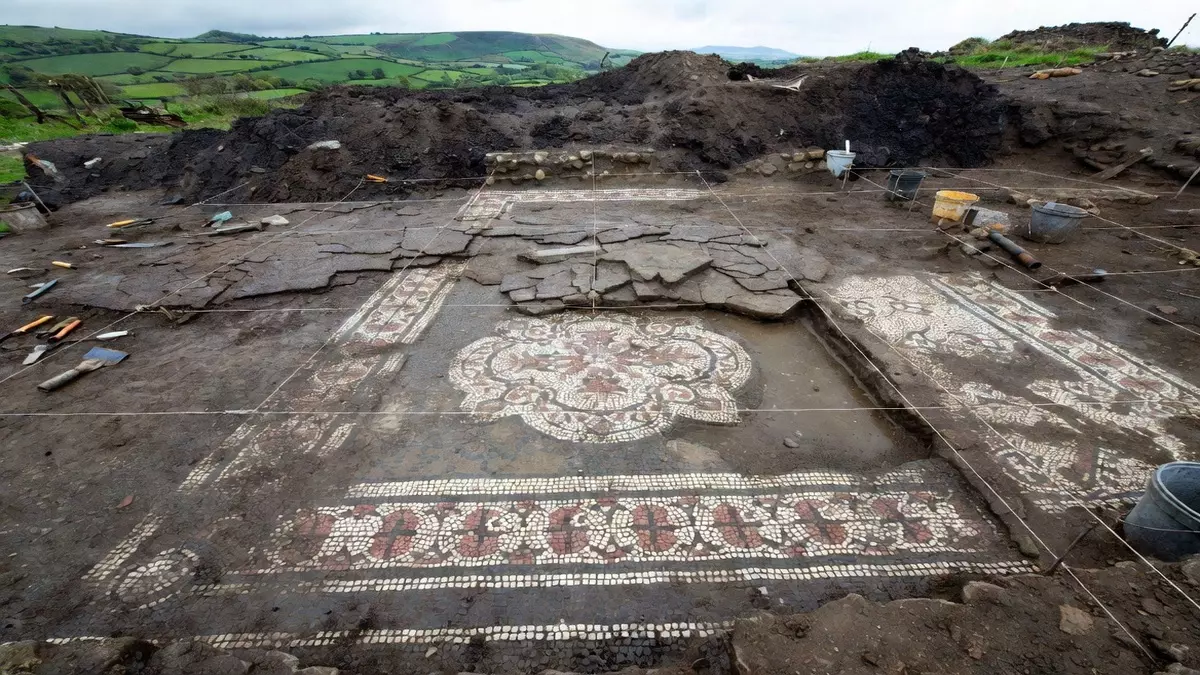
One of the most thrilling moments came in 2021 during trial trenching, when archaeologists uncovered fragments of a Roman mosaic floor. Though heavily damaged by centuries of plowing, surviving sections revealed a beautiful polychrome design using red, white, and black tesserae.
This mosaic is currently the westernmost example of its kind found in Britain. Mosaics were luxury features, affordable only to the wealthiest villa owners. Their presence, along with possible evidence of a hypocaust underfloor heating system, confirms this was no ordinary farmstead but a comfortable residence for a prosperous family or official.
Aerial views from recent evaluation trenches show the scale of the complex, with substantial wall foundations emerging from the soil. Some walls show signs of “robbing out,” where later inhabitants removed stone for reuse in new buildings—a common practice across post-Roman Britain.
### Signs of Luxury: Possible Roman Bathhouse Uncovered
The latest excavations have revealed even more signs of Roman sophistication. In one trench, archaeologists found a tank-like structure lined with *opus signinum*, a durable waterproof concrete made from lime mortar mixed with crushed pottery, brick, or tile.
The Romans used this material extensively in baths, cisterns, and water features. Its discovery here strongly suggests part of a private bathhouse connected to the villa, another marker of high status and comfortable living. Roman bathhouses were social and hygienic centers, featuring hot, warm, and cold rooms that reflected Mediterranean lifestyle influences even in cooler Britain.
Additional trenches uncovered ditches and pits that likely defined field boundaries and managed the surrounding agricultural landscape, helping researchers reconstruct how the villa estate operated economically.
### A Race Against Agricultural Damage
The Halberton villa faces ongoing threats from modern farming practices. Repeated plowing disturbs fragile remains, scatters artifacts, and accelerates erosion. The SHARE project’s five-year timeline allows for systematic recording and recovery of information before more is lost.
The first year included a successful two-week evaluation dig involving university researchers, professional archaeologists, students, and local volunteers. Two new trenches produced substantial wall remains from previously unknown buildings, expanding understanding of the site’s layout.
Further work is scheduled from May through July, with University of Exeter students participating for four weeks followed by a month of community volunteer excavations. This hands-on approach not only advances research but also builds public connection to Britain’s Roman heritage.
### Life in a Roman Villa in Southwest Britain
Roman villas in Britain varied widely, but high-status examples like Halberton typically included living quarters, agricultural buildings, and luxury features. Owners often combined Roman architectural styles with local traditions, creating unique cultural blends.
Residents enjoyed imported goods, sophisticated cuisine, and comforts like mosaics and heated floors. The estate likely supported itself through farming, with surplus produce possibly supplied to nearby Roman towns or military sites.
Devon’s Roman story is less documented than other regions, partly due to its distance from major centers like Londinium. Discoveries like this help fill gaps, showing that Roman influence extended into the far west through trade, administration, and settlement.
### Why This Matters for Understanding Roman Britain
This project contributes significantly to our knowledge of Roman expansion and daily life. The presence of a polychrome mosaic so far west challenges assumptions about the limits of Roman luxury in Britain. It suggests wealthier residents imported skilled craftsmen or materials to create impressive homes far from the empire’s core.
The industrial waste and building materials also point to on-site production and resource management. Combined with coins and personal items like brooches, these finds offer glimpses into the people who lived here—their fashion, economy, and connections across the province.
As climate and land use continue changing, projects like SHARE demonstrate the importance of proactive heritage protection. They ensure that fragile archaeological resources survive for future generations to study and enjoy.
### Community and Educational Opportunities
One of the project’s strengths is its strong community focus. Local volunteers and students gain direct experience in archaeological methods while contributing to meaningful research. Public engagement events and future displays will help share the excitement of these discoveries with wider audiences.
Cotswold Archaeology and partner organizations emphasize making the science accessible, turning technical excavations into stories that resonate with people interested in history, archaeology, and local heritage.
### Looking Ahead: More Seasons of Discovery
With several years of work remaining, researchers hope to uncover additional structures, more mosaic sections, and evidence of daily routines. Advanced techniques such as environmental sampling, 3D modeling, and detailed artifact analysis will provide even deeper insights.
The ultimate goal is to create a comprehensive picture of this Roman estate before agricultural pressures cause irreversible loss. Each season promises new surprises from a site that continues to reward careful investigation.
### Conclusion: Preserving Devon’s Roman Legacy
The Halberton Roman villa stands as a testament to the enduring appeal of Britain’s ancient past. From its stunning mosaic floors to the sophisticated bathhouse remains, the site reveals a world of comfort, status, and cultural exchange that thrived nearly two millennia ago.
Through the dedicated SHARE project, archaeologists, students, and volunteers are working together to rescue this threatened heritage. Their efforts not only protect fragile evidence from further farming damage but also bring Roman Devon vividly back to life for modern audiences.
As more discoveries emerge, this villa complex will deepen our appreciation for the diversity of Roman Britain and the remarkable lives once lived in these quiet Devon fields.
**FAQ: Halberton Roman Villa Discoveries**
**Q: Why is the Halberton villa site so important?**
A: Roman villas are rare in Devon, and this one features Britain’s westernmost known polychrome mosaic along with possible bathhouse remains, offering unique insights into Roman life in southwest Britain.
**Q: When was the site first discovered?**
A: A metal detectorist found Roman artifacts in 2004, leading to years of surveys and the current major excavation project.
**Q: What does the mosaic tell us about the villa owners?**
A: Mosaics were expensive luxury items, indicating the residents were wealthy and embraced Roman cultural tastes and status symbols.
**Q: What is opus signinum and why does it matter here?**
A: It’s a waterproof Roman concrete used in baths and water features. Its discovery suggests the villa had a private bathhouse, another sign of high status.
**Q: How long will the SHARE project last?**
A: The five-year initiative includes ongoing excavations, with major fieldwork planned each summer involving students and volunteers.
**Q: Can the public get involved?**
A: Yes, the project welcomes community volunteers and offers opportunities for students and locals to participate in digs and learning activities.
**Q: What other artifacts have been found?**
A: Discoveries include Roman coins, brooches, pottery, tesserae, and evidence of industrial activity, helping reconstruct daily life on the estate.