
Table of Contents
**8-Year-Old Boy Discovers Rare Roman Statuette in Israeli Desert**
An 8-year-old boy from Israel has made an extraordinary archaeological find that is capturing international attention. While hiking with his family in the dramatic Ramon Crater, Dor Wolynitz spotted a small stone fragment that turned out to be a 1,700-year-old Roman statuette piece, offering a fascinating glimpse into ancient desert life along historic trade routes.
This remarkable discovery highlights how everyday adventures can uncover pieces of history and shows the rich cultural layers hidden across the Negev Desert.
8-Year-Old Boy Discovers Rare Roman Statuette in Israeli Desert

### The Exciting Moment of Discovery
Dor Wolynitz, from Rehovot, was exploring the ground for interesting rocks during a family weekend outing organized for a paratrooper reserve unit. Something about a striped stone caught his eye among the desert landscape. He picked it up, sensing it looked different from the surrounding rocks.
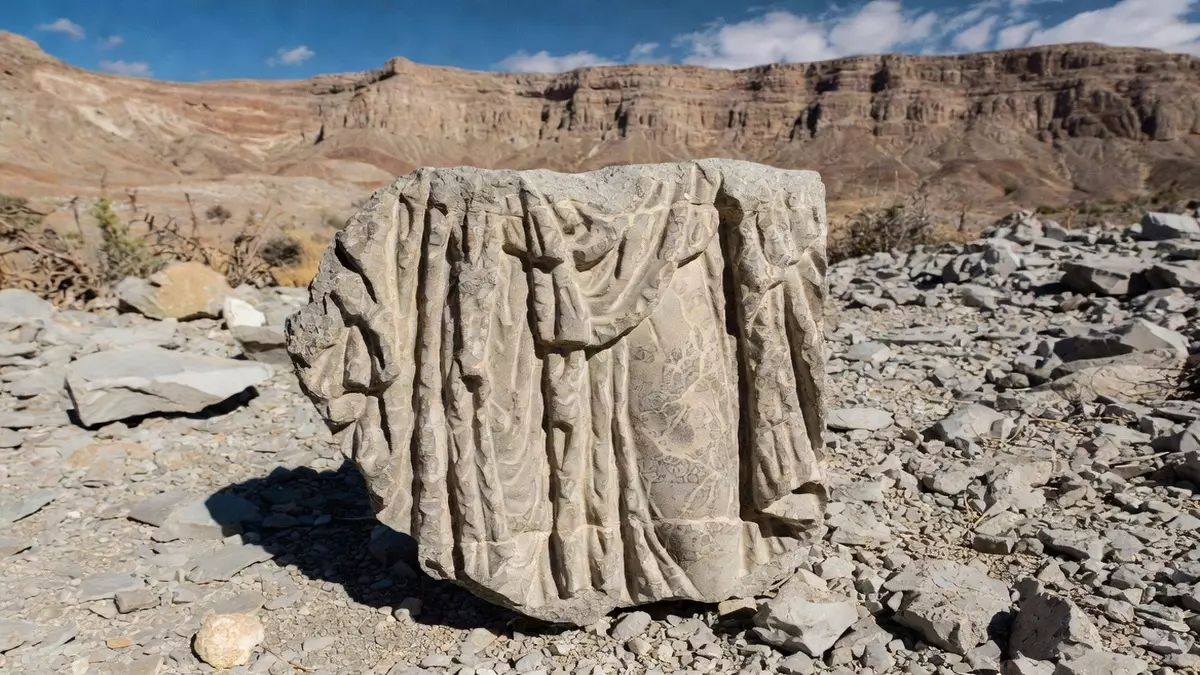
His instincts proved correct. The object was soon examined by Israel Antiquities Authority archaeologist Akiva Goldenhersh, who immediately recognized its significance. What Dor had found was a carefully carved fragment of a small figurine, measuring about 6 by 6 centimeters. Though only part of the body remains, it clearly shows detailed folds of draped clothing, suggesting a standing human figure wrapped in a cloak.
The back side of the statuette fragment. Credit: Emil Aladjem, Israel Antiquities Authority
Geologist Dr. Nimrod Wieler analyzed the material and identified it as light phosphorite, a mineral common in the Negev region. This local origin suggests the statuette was likely crafted nearby rather than imported, pointing to skilled artistic production in ancient desert communities.
### Understanding the Roman-Era Artifact
Archaeologists date the fragment to the Roman period, approximately 1,700 years ago. The artistic style features a himation—a heavy outer garment typical in Greek and Roman sculpture—with no visible undergarment. The quality of the carving is impressive, especially given the delicate nature of the phosphorite stone used by the sculptor.
Researchers cannot definitively identify the full figure due to missing pieces, but stylistic clues point to two compelling possibilities. It may represent Jupiter, the chief god of the Roman pantheon, or Zeus-Dushara, a fusion deity combining the Greek god Zeus with Dushara, an important Nabataean god. This blend reflects the cultural mixing that occurred in the region through trade and interaction between local populations and the broader Greco-Roman world.
Such figurines were more than decorative items. They often held religious or personal significance, placed in homes, shrines, or carried during travel for protection and devotion.
### The Historical Importance of Ramon Crater
The Ramon Crater, part of Israel’s stunning Makhtesh Ramon, lies along the ancient Incense Route—a vital trade network that connected the Far East with Mediterranean ports. For centuries, caravans transported spices, incense, frankincense, and luxury goods through this harsh desert environment.
During Nabataean and Roman times, this route was not just about commerce. It also spread ideas, religions, artistic styles, and technologies across vast distances. The discovery of this statuette fragment adds valuable evidence of human activity and cultural exchange in the Negev during late antiquity.
Objects like this small piece help archaeologists reconstruct daily life, belief systems, and artistic traditions in remote desert settlements. Even though the fragment is modest in size, it contributes to a bigger picture of how Roman influence extended into arid frontier regions.
Dor Wolynitz with the statuette fragment he found. Credit: Akiva Goldenhersh, Israel Antiquities Authority
### Why Citizen Discoveries Matter in Archaeology
Dor and his family promptly handed the artifact over to the Israel Antiquities Authority’s National Treasures Department. Officials praised the responsible action, awarding the young finder a certificate of recognition.
Many significant archaeological finds in Israel come from hikers, travelers, and local residents rather than professional excavations. When discoveries are reported promptly and turned over to authorities, they become available for proper study, preservation, and public appreciation instead of remaining in private collections.
The Israel Antiquities Authority encourages everyone exploring the country’s landscapes to keep an eye out for unusual objects and report them. This collaborative approach between citizens and experts continues to enrich our understanding of the region’s deep history.
### Life Along the Ancient Incense Route
The Incense Route thrived under Nabataean control before coming under Roman influence. Nabataean traders mastered desert survival, creating sophisticated water systems, caravan stops, and settlements. When the Romans incorporated the area, they brought their own administrative systems, architecture, and religious practices.
The possible Zeus-Dushara identification perfectly symbolizes this cultural fusion. Dushara was the chief deity of the Nabataeans, associated with mountains and protection. Syncretizing him with Zeus allowed local traditions to continue while adopting elements familiar to Roman soldiers, merchants, and administrators.
Small statuettes like this one were likely affordable to traders, soldiers, or local families, serving as personal devotional items in a challenging environment. The advanced carving technique on local stone also demonstrates that artistic skills existed even in frontier areas, not just in major urban centers like Petra or Caesarea.
### Broader Context of Roman and Nabataean Heritage
The Roman period in the Negev (roughly 2nd to 4th centuries CE) saw increased settlement, agriculture, and trade. Desert communities adapted Roman building techniques, pottery styles, and religious customs while maintaining local traditions.
Finds such as this statuette complement larger excavations at sites along the Incense Route, including ancient waystations and burial grounds. They help scholars understand how religion, economy, and daily life intertwined for people living at the edge of empire.
The phosphorite material itself is noteworthy. Using local stone reduced transportation costs and allowed for more widespread production of religious and decorative items. Laboratory analysis confirming the source strengthens the case for regional craftsmanship.
### Educational Value and Future Study
The artifact is now safely preserved and will undergo further detailed study at the National Treasures Department. Advanced imaging and comparative analysis with similar finds may provide additional clues about its exact date, original appearance, and cultural context.
For young Dor Wolynitz, this experience offers an unforgettable lesson in history, responsibility, and curiosity. Stories like his inspire other children and families to explore the outdoors mindfully and appreciate the layers of history beneath their feet.
Israel’s desert regions continue to yield surprises despite harsh conditions and centuries of exploration. Protected areas like Ramon Crater serve as natural museums, where wind and erosion sometimes reveal artifacts that have remained buried for millennia.
### Protecting Desert Archaeological Sites
Discoveries in sensitive environments like the Ramon Crater underscore the need for responsible tourism and heritage protection. While hiking and family outings are encouraged, visitors must follow guidelines to avoid disturbing potential sites and to report finds appropriately.
The Israel Antiquities Authority works to balance public access with preservation, ensuring that important artifacts contribute to collective knowledge rather than disappearing into private hands.
### Conclusion: A Child’s Find Connects Us to Ancient Worlds
The 1,700-year-old Roman statuette fragment discovered by an 8-year-old boy in Ramon Crater represents far more than a lucky find. It serves as a tangible link to the merchants, travelers, and families who navigated the ancient Incense Route, blending cultures and beliefs in one of the world’s most challenging landscapes.
This story celebrates curiosity, quick thinking, and civic responsibility while highlighting the ongoing work to uncover and preserve Israel’s rich archaeological heritage. As researchers continue studying the piece, it will add valuable insights into Roman and Nabataean life in the Negev Desert.
Dor’s discovery reminds us that history is all around us, waiting to be noticed by those with open eyes and willing hands. In a world often focused on the present, moments like this reconnect us to the deep human story that stretches across time and geography.
**FAQ: Roman Statuette Discovery in Ramon Crater**
**Q: How old is the statuette fragment found by the boy?**
A: The artifact dates back approximately 1,700 years to the Roman period, around the 3rd or 4th century CE.
**Q: What material is the statuette made from?**
A: It is carved from local phosphorite, a light mineral common in the Negev Desert, suggesting it was produced regionally.
**Q: Who might the figurine represent?**
A: Experts believe it could depict Jupiter or the syncretic deity Zeus-Dushara, combining Roman and Nabataean religious traditions.
**Q: Why is the location significant?**
A: Ramon Crater lies along the ancient Incense Route, a major trade network that carried goods, ideas, and cultural influences across the desert.
**Q: What happened after Dor found the artifact?**
A: His family immediately reported it to the Israel Antiquities Authority. Dor received a certificate of appreciation for his responsible action.
**Q: Are finds by children or hikers common in Israel?**
A: Yes, many important discoveries come from ordinary people exploring the outdoors. Proper reporting allows these items to be studied and preserved for everyone.
**Q: Where will the statuette be kept?**
A: It is now part of the National Treasures collection, where specialists will continue research and ensure its long-term preservation.