
Table of Contents
**2,300-Year-Old Iron Age Riverside Structure Discovered in Germany**
Archaeologists in Germany have made a stunning discovery that is reshaping our understanding of Iron Age life along one of Europe’s important waterways. A massive wooden and stone structure, dating back more than 2,300 years, has been uncovered beneath the modern city of Aschaffenburg along the banks of the Main River. This rare find offers an unprecedented look at early engineering, settlement patterns, and economic activity during the La Tène period.
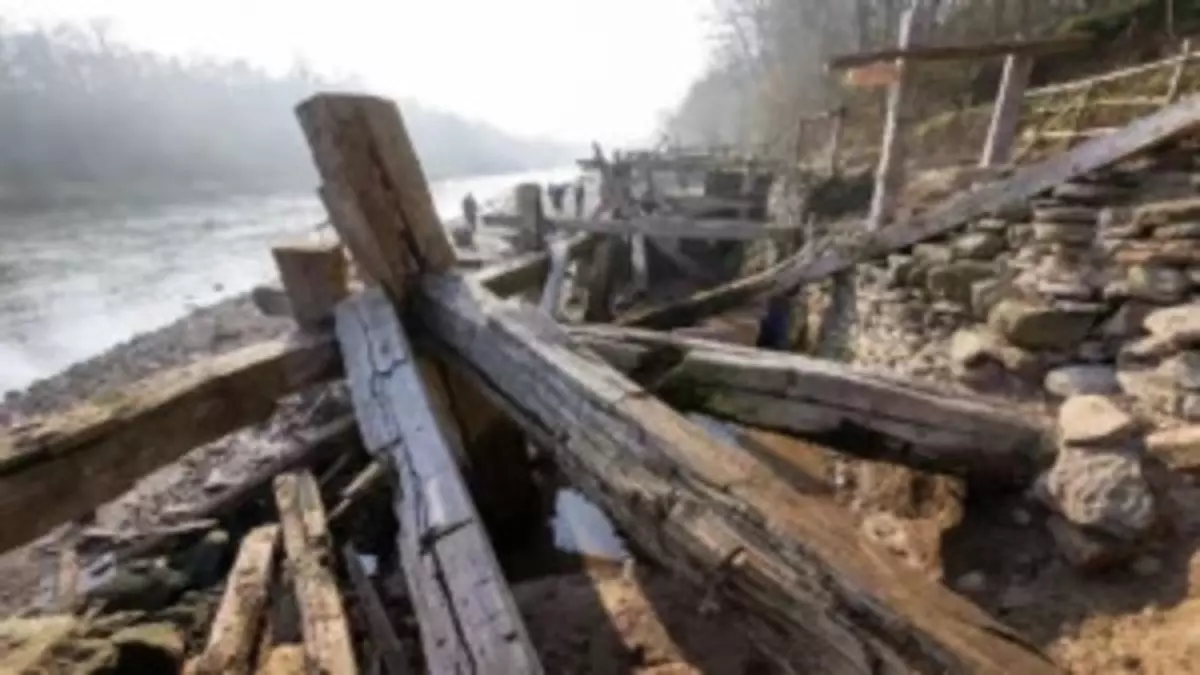
The remarkable structure came to light during routine construction work for a new stormwater overflow basin north of the Willigis Bridge. What began as a routine infrastructure project quickly turned into a major archaeological event when crews encountered large oak timbers nearly eight meters below the surface.

2,300-Year-Old Iron Age Riverside Structure Discovered in Germany
### Extraordinary Preservation in Waterlogged Soil
The exceptional condition of the ancient timbers initially puzzled researchers. The waterlogged riverbank sediments created perfect anaerobic conditions that preserved the oak beams for more than two millennia. At first, experts from the Bavarian State Office for Monument Protection (BLfD) thought the remains might date to the early modern period due to their remarkable survival.

Advanced dendrochronological analysis at the BLfD’s laboratory in Thierhaupten changed everything. By studying the growth rings in the oak timbers and comparing them with regional reference chronologies, scientists determined the trees were felled in the 4th century BCE. This firmly places the structure in the Early La Tène period of the Iron Age, making it one of the most significant discoveries of its kind in Bavaria.
**Technical Sophistication of Iron Age Builders**
The structure combines massive oak beams with dry-stone wall elements — a combination rarely seen in Iron Age contexts in southern Germany. Thick oak timbers form a complex framework, while the river-facing side features a carefully constructed stone wall directly along the Main River. This hybrid design demonstrates advanced engineering knowledge and resource management during a time when many communities relied primarily on wood and earthworks.
### Why This Discovery Is So Important for Iron Age Studies
Iron Age settlements in Bavaria have often been difficult to study due to limited preservation and modern development. Most evidence comes from scattered artifacts or burial sites. The Aschaffenburg structure stands out because of its scale, location, and excellent preservation. Dr. Stefanie Berg from the BLfD described the find as unique due to its riverside position, technical construction, and rare use of stone masonry.
Stone features from the Iron Age are uncommon in this region and usually appear in defensive contexts, such as hillfort ramparts. The Aschaffenburg structure does not clearly match known defensive patterns, leading researchers to consider other possible functions.
**Potential Purposes of the Riverside Structure**
Experts believe the building may have served multiple roles connected to the river:
– **Trade and Transport Hub**: Its position along the Main River would have provided direct access to one of the region’s key waterways for moving goods and people.
– **Elite or Administrative Center**: The investment in large timbers and stonework suggests it may have been associated with high-status activities or local leaders.
– **Flood Protection or Landing Platform**: The robust construction could have helped manage seasonal flooding while creating a stable riverside facility.
– **Defensive Element**: While not a classic fortress, it may have protected river access during times of conflict.
The discovery strengthens the theory that a significant La Tène settlement existed beneath modern Aschaffenburg’s old town. Previous finds in the area, including a gold finger ring and an animal-head fibula, already pointed to a prosperous community. This riverside structure now provides the strongest architectural evidence yet for an organized settlement center.
### The La Tène Culture and Iron Age Life in Bavaria
The La Tène period (roughly 450–50 BCE) represents a dynamic phase of the European Iron Age. Named after a famous site in Switzerland, La Tène culture is known for distinctive art styles, advanced metalworking, and expanding trade networks that reached from the Mediterranean to northern Europe.
Communities along rivers like the Main benefited from fertile lands and transportation routes. Rivers served as lifelines for trade in salt, metals, pottery, and agricultural products. The Aschaffenburg structure highlights how Iron Age people engineered their environment to take full advantage of these waterways.
**Daily Life and Economy Along the Main River**
People during this period practiced mixed farming, raised livestock, and developed specialized crafts. The construction of large riverside features required coordinated labor, skilled woodworkers, and access to quality timber. Oak was a preferred material due to its strength and durability, especially in wet environments.
The presence of such a substantial structure suggests a level of social organization and economic activity that goes beyond small farming villages. It points to a community with connections to wider exchange networks that would later influence Celtic and Germanic societies.
### Challenges of Urban Archaeology in Aschaffenburg
Excavating at depths of up to ten meters in an active construction pit presents significant challenges. Archaeologists must work closely with engineers and city officials to maintain safety while carefully documenting the remains. Despite difficult conditions, teams have produced detailed 3D models of the entire feature and continue to study the timbers still embedded in the riverbank sediments.
The BLfD has emphasized the importance of balancing modern infrastructure needs with heritage protection. This collaborative approach allows important discoveries to emerge even in densely developed urban areas.
**Modern Technology Meets Ancient Engineering**
The project demonstrates how contemporary tools enhance archaeological understanding. High-resolution 3D documentation creates permanent digital records that researchers worldwide can study. These models also help the public visualize the structure as it once appeared along the ancient riverbank.
### Broader Impact on European Iron Age Research
This find adds valuable data to ongoing discussions about settlement patterns, river use, and technological development during the Iron Age. Similar riverside structures have been documented in other parts of Europe, but examples with combined wood-and-stone construction remain rare in southern Germany.
The discovery may encourage more targeted surveys along the Main and other major rivers. As climate change and urban development continue to reshape landscapes, such emergency excavations become increasingly important for preserving hidden chapters of European prehistory.
**Connecting Past and Present**
For many people today, especially those with European heritage, discoveries like this create a tangible link to distant ancestors. The skill and planning required to build such a structure more than 2,300 years ago highlight the ingenuity of Iron Age communities often overlooked in popular narratives focused on later Roman or medieval periods.
### Future Research and Public Presentation
Excavation work continues as researchers analyze samples and study construction techniques in greater detail. Scientists hope further study will clarify the structure’s exact function and provide insights into the daily lives of the people who built and used it.
City officials and heritage authorities are already considering ways to incorporate the discovery into public education. Interpretive displays or digital reconstructions could allow residents and visitors to Aschaffenburg to experience this remarkable piece of local history.
### Conclusion: A Window into Iron Age Innovation
The 2,300-year-old riverside structure discovered beneath Aschaffenburg represents far more than ancient timber and stone. It offers a rare glimpse into the engineering capabilities, economic networks, and community organization of Iron Age people living along the Main River during the Early La Tène period.
This extraordinary find enriches our understanding of Bavaria’s prehistoric past and demonstrates how modern cities continue to reveal secrets from thousands of years ago. As research progresses, the structure will help illuminate how early European societies harnessed rivers for trade, survival, and cultural development.
The discovery stands as a powerful reminder that significant chapters of human history often lie just beneath our feet, waiting to be uncovered through careful investigation and collaboration between archaeologists, engineers, and local communities.
## FAQ
**How old is the Iron Age structure found in Aschaffenburg?**
The structure dates to the 4th century BCE, making it approximately 2,300–2,400 years old and belonging to the Early La Tène period of the Iron Age.
**What makes this discovery unusual?**
It combines large oak timbers with dry-stone wall construction, which is rare for Iron Age sites in Bavaria. Most known stone features from this period are defensive structures.
**Why was the wood so well preserved?**
Waterlogged riverbank sediments created anaerobic conditions that prevented decay, preserving the oak beams in remarkable condition for over two millennia.
**What was the purpose of the structure?**
Researchers believe it may have served as a trade, transport, or elite facility along the Main River, though its exact function is still being investigated.
**Will the public be able to see the discovery?**
Plans are being developed to document and potentially display aspects of the find as part of the city’s heritage initiatives, alongside ongoing research.
**What other evidence exists of Iron Age settlement in Aschaffenburg?**
Previous finds include high-status items like a gold finger ring and an animal-head fibula, supporting the idea of a significant La Tène community in the area.
**Who is leading the excavation?**
The Bavarian State Office for Monument Protection (BLfD) is directing the emergency investigations in cooperation with the city of Aschaffenburg.