
Table of Contents
Ancient DNA Reveals 700km Migration Before Inca Empire
Ancient DNA from Peru has uncovered surprising evidence of long-distance coastal movement in the Andes. A new study shows that people traveled more than 700 kilometers along Peru’s Pacific coast as early as the 13th century, centuries before the Inca Empire rose to power. This discovery challenges traditional views of isolated pre-Inca societies and highlights dynamic networks of migration, marriage, and cultural exchange.
The research, focused on the Chincha Valley in southern Peru, provides one of the clearest pictures yet of how ancient coastal communities connected distant regions. By analyzing genetic material from 21 individuals, scientists have revealed family stories of relocation, adaptation, and continuity that reshape our understanding of South American history before the Inca.
Ancient DNA Reveals 700km Migration Before Inca Empire
### The Groundbreaking Ancient DNA Study
An international research team extracted and analyzed DNA from people buried in cemeteries across the Chincha Valley. The results were striking: many individuals carried strong genetic ancestry from Peru’s distant north coast, over 700 kilometers away. Early migrants showed nearly pure northern ancestry, indicating they moved as distinct groups before gradually mixing with local populations.
Later generations displayed increased genetic ties to neighboring coastal communities. This pattern suggests sustained interaction and intermarriage that continued for centuries, even into the Spanish Colonial period. The findings demonstrate that coastal societies maintained active social networks long before the Inca unified the region under their empire.
Published in *Nature Communications*, the study combines genetic data with archaeological evidence and improved radiocarbon dating. It offers fresh insights into the Chincha Kingdom, which thrived between the 13th and 15th centuries before becoming part of the Inca Empire.
### Understanding the Chincha Valley and Its Ancient Kingdom
The Chincha Valley, located in southern Peru, was home to a prosperous society known for skilled fishing, agriculture, and maritime trade. During its peak, the Chincha Kingdom controlled important coastal resources and maintained complex social structures. The discovery of northern ancestry here reveals that this kingdom formed through migration and integration rather than purely local development.
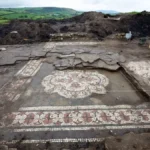
Archaeologists have long recognized the Chincha as influential players in pre-Inca politics. However, many assumed coastal groups lived relatively isolated lives. This ancient DNA evidence overturns that idea, showing regular movement and connection between distant communities along the Pacific shore.
The migrants arrived by the 13th century and remained in the valley for at least 200 years. Their genetic signature persisted across generations, pointing to strong cultural continuity even as they formed new relationships with local groups.
### Cultural Practices That Traveled With the Migrants
Burial customs provided additional proof of the migrants’ northern origins. Several individuals showed intentional skull modification, a practice where boards or bindings shaped the head during infancy. This distinctive tradition matches earlier burials on Peru’s north coast.
Other rituals included covering skulls with red pigment after death and threading human vertebrae onto reed sticks. These practices, rarely seen in southern Peru before this period, strongly suggest that groups carried their cultural and religious traditions southward during the migration.
Such shared customs indicate more than simple movement of people. They point to the transfer of beliefs, social identities, and knowledge systems across hundreds of kilometers of coastline.
### Solving Dating Challenges in Coastal Archaeology
Dating ancient coastal sites in Peru presents unique difficulties. Diets rich in seafood introduce older carbon into human remains, making standard radiocarbon results appear older than they actually are. To overcome this, researchers developed a sophisticated Bayesian statistical model.
This model incorporated genetic evidence of family relationships alongside estimates of marine food consumption. The refined timeline confirms that northern migrants reached the Chincha Valley by the 13th century CE, providing precise chronological anchors for the migration event.
This methodological advance improves accuracy for future studies of ancient coastal populations throughout the Andes and other maritime regions.
### Family Relationships and Social Strategies
One burial site revealed particularly intimate details. Genetic analysis identified close biological relatives, including evidence of consanguineous unions where family members had children together. Researchers interpret this as a strategy to maintain control over land, labor, and resources within tight-knit kin groups known as ayllus or parcialidades.
These practices helped preserve family power and cultural identity during periods of movement and social change. All sampled individuals retained some northern ancestry, suggesting successful long-term integration while keeping connections to their original homeland.
### Possible Reasons Behind the Major Coastal Migration
Several factors likely motivated people to travel such long distances along the Peruvian coast. Climate instability during this period may have disrupted traditional food sources and agricultural patterns. The expansion of the powerful Chimú state in northern Peru could have created pressure, pushing groups southward in search of new opportunities.
Access to valuable resources also played a role. Seabird guano, prized as a highly effective fertilizer in Andean farming, was abundant in certain coastal areas. Control over guano deposits may have attracted migrant families seeking economic advantages.
Whatever the combination of push and pull factors, the migration reflects the adaptability and mobility of ancient Andean coastal societies. These groups navigated challenging environments and built extensive networks that later influenced the Inca Empire’s approach to governance and integration.
### How This Discovery Changes Views of Pre-Inca Societies
Traditional archaeological models often portrayed pre-Inca coastal communities as relatively self-contained. The ancient DNA results from Chincha Valley demonstrate the opposite: vibrant connections spanning hundreds of kilometers, with people, genes, ideas, and traditions flowing between regions.
This mobility likely strengthened resilience against environmental challenges and facilitated the exchange of technologies, such as advanced fishing techniques, irrigation systems, and textile production. The findings add important depth to our understanding of the social landscape that the Inca encountered and eventually incorporated into their vast empire.
The study also highlights the growing importance of ancient DNA research in South America. By revealing personal stories hidden in genetic code, scientists can reconstruct population movements, family structures, and cultural persistence with unprecedented detail.
### Broader Implications for Andean History
The Chincha migration occurred during a dynamic period of Andean prehistory. As various regional powers rose and fell, coastal routes served as vital corridors for human connection. The Pacific Ocean provided both challenges and opportunities, with its rich marine resources supporting large populations while unpredictable climate patterns encouraged movement.
This research connects to other ancient DNA studies across the Andes, building a more comprehensive picture of how modern South American populations formed. It emphasizes continuity — northern genetic and cultural elements survived and blended in southern valleys, creating the diverse heritage visible today.
As more ancient genomes are sequenced, researchers expect to uncover additional migration events and social patterns that shaped the region long before European contact.
### The Significance of Modern Scientific Collaboration
This project represents successful international scientific cooperation. Teams combined expertise in genetics, archaeology, radiocarbon modeling, and Andean history to produce robust conclusions. Such multidisciplinary approaches set new standards for studying complex ancient societies.
The preservation of ancient DNA in the dry coastal environment of Peru enabled this detailed analysis. Similar conditions in other desert regions worldwide offer promising opportunities for future genetic research into early human movements.
**Conclusion**
The revelation of a 700-kilometer coastal migration in 13th-century Peru through ancient DNA analysis marks a significant advance in Andean archaeology. Far from isolated communities, pre-Inca coastal societies maintained extensive networks of movement, marriage, and cultural exchange that helped shape the region’s rich history.
This discovery not only pushes back the timeline of major coastal migrations but also humanizes the past by revealing personal stories of families who traveled vast distances, preserved traditions, and built new lives in unfamiliar territories. As the Inca Empire later expanded across these same landscapes, they encountered societies already connected by deep genetic and cultural threads.
The Chincha Valley findings remind us that human history is defined by movement and adaptation. Thanks to advances in ancient DNA technology, we continue to uncover the dynamic connections that linked ancient Peruvians across time and distance, offering fresh appreciation for the resilience and complexity of pre-Inca civilizations.
**FAQ**
**Q: How far did ancient people migrate along Peru’s coast?**
A: Genetic evidence shows migration of more than 700 kilometers from Peru’s north coast to the Chincha Valley in the south.
**Q: When did this coastal migration occur?**
A: Migrants reached the Chincha Valley by the 13th century CE, well before the Inca Empire expanded into the region.
**Q: What cultural practices did the migrants bring?**
A: They practiced intentional skull modification, used red pigment on skulls, and created ritual objects with human vertebrae, traditions linked to northern coastal groups.
**Q: Why is radiocarbon dating difficult on Peru’s coast?**
A: Seafood-heavy diets introduce older carbon, making dates appear too old. Researchers used advanced Bayesian modeling to correct for this marine reservoir effect.
**Q: What does consanguineous endogamy mean in this context?**
A: It refers to unions between close biological relatives, likely used to maintain family control over resources and cultural identity during migration.
**Q: How does this discovery affect our view of the Inca Empire?**
A: It shows the Inca incorporated already well-connected coastal societies with established migration networks and shared traditions.
**Q: Why is this ancient DNA study important?**
A: It provides direct genetic evidence of long-distance movement and challenges assumptions about isolated pre-Inca communities, deepening our understanding of Andean social history.