
WWII Mass Grave of 14 German Soldiers Found in Poland
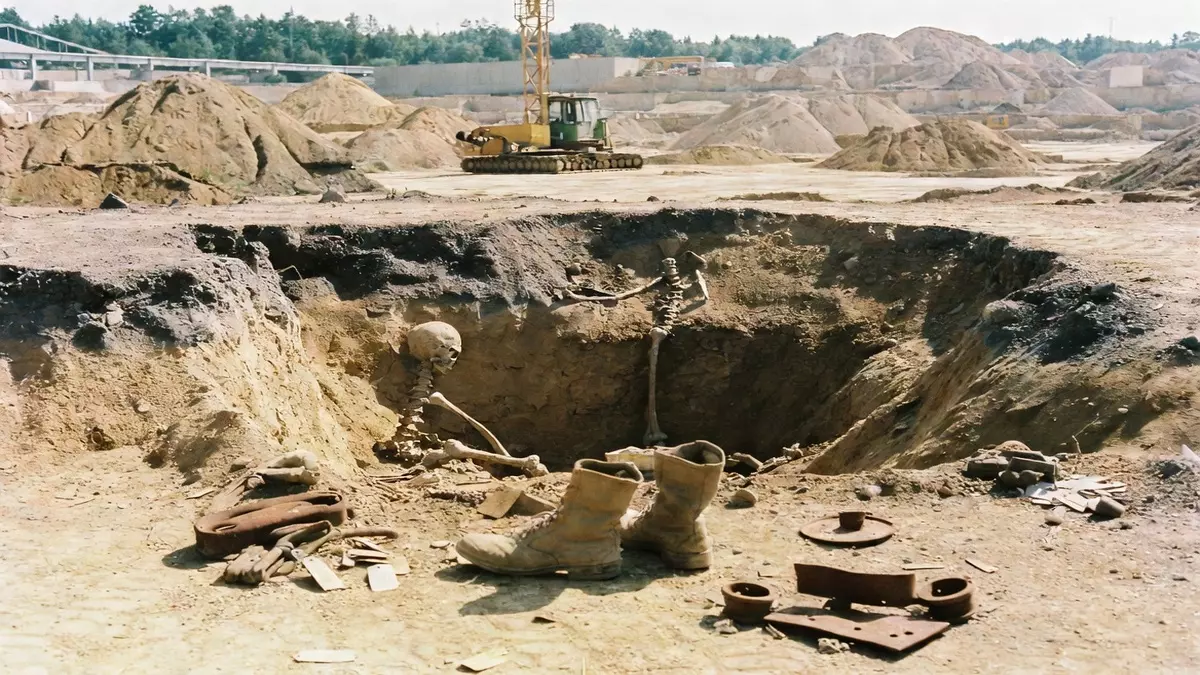
Construction workers at a quarry in western Poland have uncovered a previously unknown mass grave containing the remains of 14 German soldiers from World War II. The discovery, made on May 26 during routine earthmoving operations, adds a poignant new chapter to the region’s wartime history and highlights how modern industrial activity continues to reveal hidden stories from the final days of the conflict.
This unexpected find near the village of Bolemin provides fresh evidence of the chaotic and brutal fighting that swept across western Poland as Soviet forces advanced toward Germany in 1945. With no existing records of the burial in archives, archaeologists and investigators are now working to identify the soldiers and understand the circumstances of their deaths.
WWII Mass Grave of 14 German Soldiers Found in Poland
### The Moment of Discovery at the Bolemin Quarry
The grave came to light when quarry operator Paweł Gontarczyk, working for the company Efekt-Silikaty, noticed human bones and military footwear near the surface while driving a wheel loader. Recognizing the significance of the find, he immediately stopped operations and alerted authorities.
Police from the District Prosecutor’s Office in Gorzów Wielkopolski launched a formal investigation. Forensic archaeologists and exhumation specialists were brought in to carefully examine the shallow wartime grave. Their initial assessment confirmed the remains belonged to 14 individuals, all apparently German soldiers from the late stages of World War II.
What makes this discovery particularly notable is the complete absence of any prior documentation. Unlike many known battlefield cemeteries, this mass grave had remained hidden for eight decades, likely due to rapid postwar landscape changes and the chaos of the final German retreat.
### Historical Context of Fighting in Western Poland
The area around Bolemin saw intense military activity during the closing months of World War II. As the Red Army pushed westward in early 1945, German forces mounted desperate defensive actions. Many soldiers died in small skirmishes or during retreats, and hasty burials were common when proper military funerals were impossible.

Western Poland, then part of the former German Reich, became a deadly battlefield corridor. The discovery fits into a broader pattern of wartime losses in the region, where thousands of soldiers from both sides remain unaccounted for. Mass graves from this period often contain men who fell during the chaotic final offensive that helped bring the war in Europe to an end.
The presence of German soldiers in this location aligns with the movement of Wehrmacht units attempting to slow the Soviet advance while protecting retreating civilians and strategic positions. Many such burials were never formally registered amid the collapsing German command structure.
### Artifacts Recovered from the Mass Grave
Excavators recovered several important artifacts alongside the human remains. Most significantly, an intact military identification tag (Erkennungsmarke) was found, offering a strong possibility of identifying at least one soldier. Another object bearing the name “Dechriste” provides an additional clue that researchers hope will help match names to remains.
These personal items are crucial in WWII grave investigations. Identification tags were designed to survive battlefield conditions and typically carried a soldier’s name, unit, and service number. When well-preserved, they allow modern investigators to connect archaeological finds with official military records and surviving family members.
Other military equipment, including fragments of uniforms and footwear, further confirmed the identity of the deceased as German soldiers. The relatively shallow nature of the grave suggests it was dug quickly under difficult conditions, possibly during active combat or immediate retreat.
### Challenges of Preserving Wartime Sites in Changing Landscapes
The Bolemin quarry, operated by Efekt-Silikaty for silicate production, has dramatically altered the local terrain over decades. Former meadows and open fields have been transformed through extensive earth extraction, sometimes creating artificial water reservoirs. This industrial activity both reveals and threatens historical sites.
Quarrying operations frequently uncover forgotten remains from World War II. While such discoveries provide valuable opportunities for historical research, they also pose risks to archaeological integrity if not handled properly. In this case, the prompt action by the machine operator helped ensure the site received professional treatment.
Poland has become increasingly active in documenting and honoring WWII graves. Government agencies, historical institutes, and volunteer groups work together to locate, excavate, and respectfully rebury soldiers from all nations who fell on Polish soil. This latest find adds to a growing list of similar discoveries that continue to surface as the country develops.
### The Identification and Investigation Process
The remains and artifacts from the Bolemin mass grave are currently undergoing detailed laboratory examination. Forensic anthropologists are analyzing bones to determine age, cause of death, and any signs of trauma. DNA sampling may be used where traditional identification methods prove insufficient.
German authorities and international organizations specializing in missing soldiers are expected to assist in cross-referencing records. Successful identification could allow families to receive closure more than 80 years after the war ended. In cases where names cannot be confirmed, the soldiers may receive dignified reburial in a military cemetery with appropriate honors.
This process reflects growing cooperation between Poland and Germany in addressing the shared legacy of World War II. Both nations have committed to locating and properly commemorating fallen soldiers regardless of nationality.
### Broader Significance of WWII Mass Grave Discoveries
Mass graves from World War II serve as powerful reminders of the conflict’s devastating human cost. Each discovery like the one at Bolemin helps historians reconstruct the final chaotic months of the war in Eastern Europe. They also contribute to a more complete understanding of military movements, casualty patterns, and the experiences of ordinary soldiers caught in large-scale operations.
In Poland, thousands of undocumented graves are believed to still exist. Agricultural work, construction projects, and natural erosion occasionally bring them to light. These finds often generate significant public interest and emotional responses, particularly among local communities whose families lived through the war years.
The Bolemin discovery also raises important questions about battlefield archaeology. How many more such sites remain hidden? What stories of bravery, suffering, and survival do they hold? Modern technology, including ground-penetrating radar and careful landscape analysis, is improving the ability to locate these forgotten graves before they are accidentally destroyed.
### Remembering the Human Stories Behind the Statistics
While the soldiers in the Bolemin grave remain unidentified for now, each represents an individual life cut short. Many German soldiers in the final months of the war were young conscripts or exhausted veterans fighting in increasingly hopeless conditions. Their hasty burial reflects the breakdown of normal military procedures as defeat became inevitable.
For Polish residents living near former battlefields, these discoveries often stir complex emotions. The region suffered heavily under German occupation before becoming a major combat zone during the Soviet advance. Finding and honoring the dead helps facilitate reconciliation and historical understanding between former enemies.
Educational programs connected to such finds help younger generations learn about the war’s impact. Museums and memorials across Poland incorporate new discoveries into their exhibits, ensuring the human cost of World War II is not forgotten.
**Conclusion**
The unearthing of a previously unknown WWII mass grave containing 14 German soldiers at a quarry in Bolemin, Poland, serves as a sobering reminder of the war’s lingering presence beneath the modern landscape. This discovery, made through the vigilance of a quarry worker, adds important details to our knowledge of the final phase of fighting in western Poland and demonstrates how industrial activity can unexpectedly connect us to the past.
As specialists continue examining the remains and artifacts, there is hope that at least some of these soldiers will regain their names and identities. Their story contributes to the broader effort to document and honor all victims of World War II, fostering greater historical awareness and reconciliation. Every such find reinforces the importance of preserving wartime heritage and remembering the human lives behind the historical events that shaped Europe.
The Bolemin mass grave stands as both a tragic memorial and an archaeological opportunity — one that enriches our understanding of the conflict while honoring those who never returned home.
**FAQ**
**Q: When and how was the WWII mass grave in Bolemin discovered?**
A: The grave was found on May 26 by quarry worker Paweł Gontarczyk while operating heavy machinery. He noticed bones and military footwear near the surface and immediately reported it.
**Q: How many German soldiers were found in the Polish mass grave?**
A: The shallow grave contained the remains of 14 German soldiers from the final stages of World War II.
**Q: Were any identification items recovered?**
A: Yes. Investigators found an intact military identification tag and an object with the name “Dechriste,” which may help identify some of the soldiers.
**Q: Why was this mass grave not previously known?**
A: No records of the burial existed in archives. The area’s landscape has been heavily altered by decades of quarrying, which likely concealed the site for decades.
**Q: What will happen to the remains from the Bolemin discovery?**
A: The remains and artifacts are undergoing forensic examination. Efforts are being made to identify the soldiers so they can receive proper reburial with military honors.
**Q: Why are WWII graves still being found in Poland today?**
A: Intense fighting in 1945 left many hasty burials undocumented. Modern construction and quarrying activities continue to uncover these forgotten sites across the region.
**Q: How common are discoveries of German soldier graves in Poland?**
A: Relatively common. Poland has an active program to locate and commemorate wartime graves from all sides of the conflict as part of ongoing historical reconciliation efforts.