
Table of Contents
**WWII Mass Grave in Poland Identifies German Officer Killed in 1945 Battle**
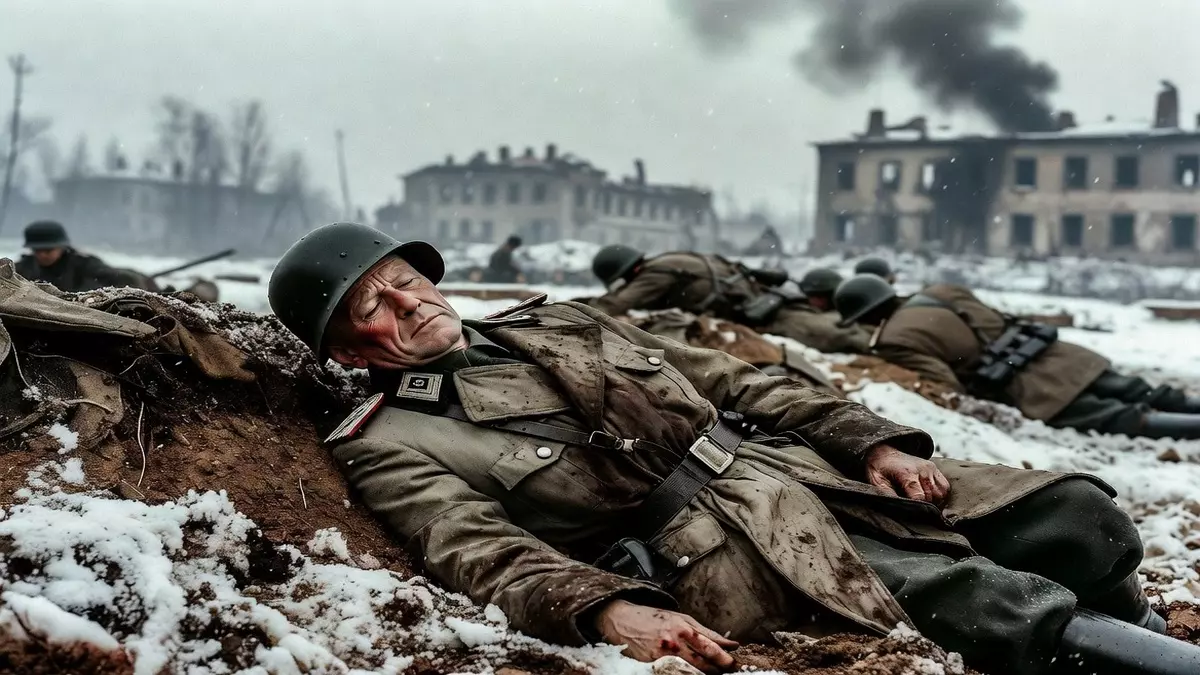
Archaeologists in southwestern Poland have made a poignant discovery in a World War II mass grave: the remains of Hubert Gomolka, a reserve lieutenant who died defending the town of Lauban during the final months of the war. This identification sheds new light on one of the last desperate German counterattacks on the Eastern Front and highlights the human cost of the conflict’s closing chapters.
The find comes from Lubań, a town in Lower Silesia formerly known as Lauban. Excavations near the site of a former hospital on Zawidowska Street revealed the bodies of several wartime defenders. Among them, one set of remains stood out — wrapped carefully in a military coat bearing officer insignia. Through careful forensic work and historical records, researchers confirmed these were the remains of Hubert Gomolka.
WWII Mass Grave in Poland Identifies German Officer Killed in 1945 Battle
### Who Was Hubert Gomolka?
Hubert Gomolka lived a life that spanned two world wars. A veteran of World War I, he returned to civilian life as a dentist in Lauban after the first conflict ended. By early 1945, as Soviet forces advanced rapidly through eastern Germany, Gomolka found himself drawn back into military service despite his age and a disabled left hand.
German authorities, facing overwhelming pressure on the Eastern Front, formed Volkssturm units — last-ditch militia groups made up of older men, teenagers, and civilians with minimal training. Gomolka took on a leadership role, organizing and commanding around 200 local residents starting on February 10, 1945. Historical accounts describe him actively participating in the town’s desperate defense preparations.
On March 1, 1945, during intense fighting, Gomolka was killed near the intersection of Ratuszowa and Podwale streets. He was buried alongside other fallen defenders in a mass grave that was later concealed in the postwar period.
### The Battle of Lauban: A Late German Counterattack
The Battle of Lauban took place in February and March 1945 as part of Germany’s final efforts to slow the Soviet advance. German forces briefly recaptured the town in a counteroffensive before Soviet troops resumed their westward push. Though ultimately unsuccessful in changing the war’s outcome, the battle became one of the last significant engagements in Lower Silesia.
For the civilian defenders and older reservists like Gomolka, the fighting represented a grim final stand. The Volkssturm units were poorly equipped and hastily assembled, yet they were thrown into combat against battle-hardened Soviet forces. The discovery of these remains provides a human face to the chaotic final months of the war in eastern Germany.
### How Researchers Identified the Remains
The identification process combined archaeological expertise with historical research. The elderly man’s remains were wrapped in a military coat with officer insignia, immediately distinguishing them from other soldiers in the grave. Personal evidence recovered during excavation, along with wartime records, helped link the bones to Gomolka.
Dog tags found with other soldiers in the same grave provided additional confirmation. Researchers worked closely with historian Arkadiusz Wilczyński, whose detailed studies of the Battle of Lauban proved invaluable. The Association of Upper Lusatia Enthusiasts also supported the project, helping preserve and document recovered artifacts.
So far, excavations in Lubań have uncovered the remains of 22 soldiers. Experts believe many more identifications will be possible as surviving documents and personal objects are analyzed.
### The Broader Historical Significance
This discovery offers more than just the identification of one soldier. It contributes to our understanding of civilian involvement in the final defense of Nazi Germany. The Volkssturm represented a desperate measure by a regime facing total defeat, often sending unprepared men into hopeless battles.
Mass graves from this period are common across Eastern Europe, but detailed forensic and historical work like this helps restore individual stories. Each identified soldier adds depth to the historical record and provides closure for descendants where possible.
The site near the former hospital is particularly significant. Hospitals during the war often became focal points for both medical care and desperate last stands. The presence of multiple defenders buried together reflects the chaotic nature of urban fighting in 1945.
### Challenges of Excavating WWII Sites in Poland
Working on WWII mass graves in Poland involves complex legal, ethical, and technical challenges. Researchers must balance respect for the dead with the need for historical documentation. Polish authorities and international teams increasingly collaborate on such projects to ensure proper recovery, analysis, and reburial where appropriate.
Modern forensic techniques — including DNA analysis, artifact studies, and detailed record cross-referencing — have greatly improved identification success rates. Projects like this one demonstrate how archaeology continues to resolve mysteries from the war even eight decades later.
### Life in Lauban During the Final Months of War
In early 1945, towns like Lauban were caught between advancing Soviet armies and retreating German forces. Civilians faced bombing, food shortages, and the constant threat of violence. The decision by older men like Gomolka to join the Volkssturm was often driven by a mix of duty, fear of reprisals, and hope of protecting their families and homes.
Gomolka’s story — a dentist returning to military service despite physical limitations — illustrates how total war affected every segment of society. His leadership of local Volkssturm units reflects both the regime’s desperation and the willingness of some civilians to resist the approaching Red Army.
### Ongoing Work at the Lubań Site
The current phase of excavations continues to yield important finds. Researchers hope to identify more of the 22 soldiers already recovered. Each new identification adds valuable personal context to the broader military history of the Battle of Lauban and the final defense of Silesia.
The project also serves as a reminder of the importance of preserving these sites. Urban development and time itself threaten many wartime graves. Systematic archaeological work ensures these stories are documented before they are lost forever.
**Conclusion**
The identification of Hubert Gomolka’s remains in a Polish mass grave brings a sense of closure to one small chapter of World War II history. From dentist to Volkssturm commander, his story captures the complex realities faced by ordinary people caught in the final, desperate months of the conflict. As excavations continue in Lubań, more names and stories will likely emerge, further illuminating this turbulent period.
These discoveries remind us that behind military statistics and battle maps are individual human lives. Gomolka’s return to service at an advanced age, despite physical challenges, reflects both the tragedy and resilience of those who lived through the war’s end. Through careful archaeological work, we continue to honor their memory and deepen our understanding of this pivotal moment in European history.
### FAQ About the Hubert Gomolka Discovery
**Who was Hubert Gomolka?**
A World War I veteran and dentist who served as a reserve lieutenant in the Volkssturm during the final months of World War II. He was killed on March 1, 1945, during the Battle of Lauban.
**When and where were his remains found?**
The remains were discovered in a mass grave in Lubań (formerly Lauban), Poland, near the site of a former hospital on Zawidowska Street.
**How was Gomolka identified?**
Through a combination of military coat insignia, personal evidence from the grave, wartime records, and dog tags recovered alongside other soldiers.
**What was the Battle of Lauban?**
A late German counterattack in February-March 1945 on the Eastern Front. German forces briefly recaptured the town before the Soviet advance continued westward.
**Why did older men like Gomolka join the Volkssturm?**
The Volkssturm was a last-ditch militia formed by Nazi authorities as Soviet forces approached. It included older men, teenagers, and civilians with little training.
**How many soldiers have been found in Lubań so far?**
Excavations have uncovered the remains of 22 soldiers. Researchers hope to identify many more through ongoing analysis of documents and artifacts.
**What happens to identified remains from WWII graves?**
Following identification, remains are typically reburied with appropriate military honors, often in coordination with historical associations and descendants when possible.