
Table of Contents
**Rare 19th-Century Bone Dental Bridge Discovered in Portugal**
Archaeologists in Portugal have uncovered a remarkable piece of dental history — a handmade bone dental bridge from the early 19th century. This rare find offers a fascinating glimpse into early cosmetic dentistry and how people addressed tooth loss long before modern dental techniques existed.
The discovery, detailed in the *International Journal of Osteoarchaeology*, represents the first documented fixed bone dental bridge recovered from a Portuguese archaeological site. It highlights both the ingenuity of historical dental practices and the social importance placed on appearance even centuries ago.
Rare 19th-Century Bone Dental Bridge Discovered in Portugal

### The Discovery at Porto’s Historic Carmo Burial Site
The dental prosthetic was found during excavations at the burial ground of the 3rd Order of Our Lady of Carmo hospital in Porto. Researchers dated the burial to between 1801 and 1831 based on the grave context and an associated crucifix. The remains belonged to a young adult, likely female, though skull and jaw damage prevented definitive sex determination.
The individual had suffered significant tooth loss well before death. Empty sockets in the upper jaw showed clear signs of healing, indicating the teeth had been missing for some time. Only two loose lower teeth remained with the skeleton. The bone dental bridge was recovered near the skull, suggesting it had been placed in the mouth during life.

### Detailed Description of the Ancient Prosthetic
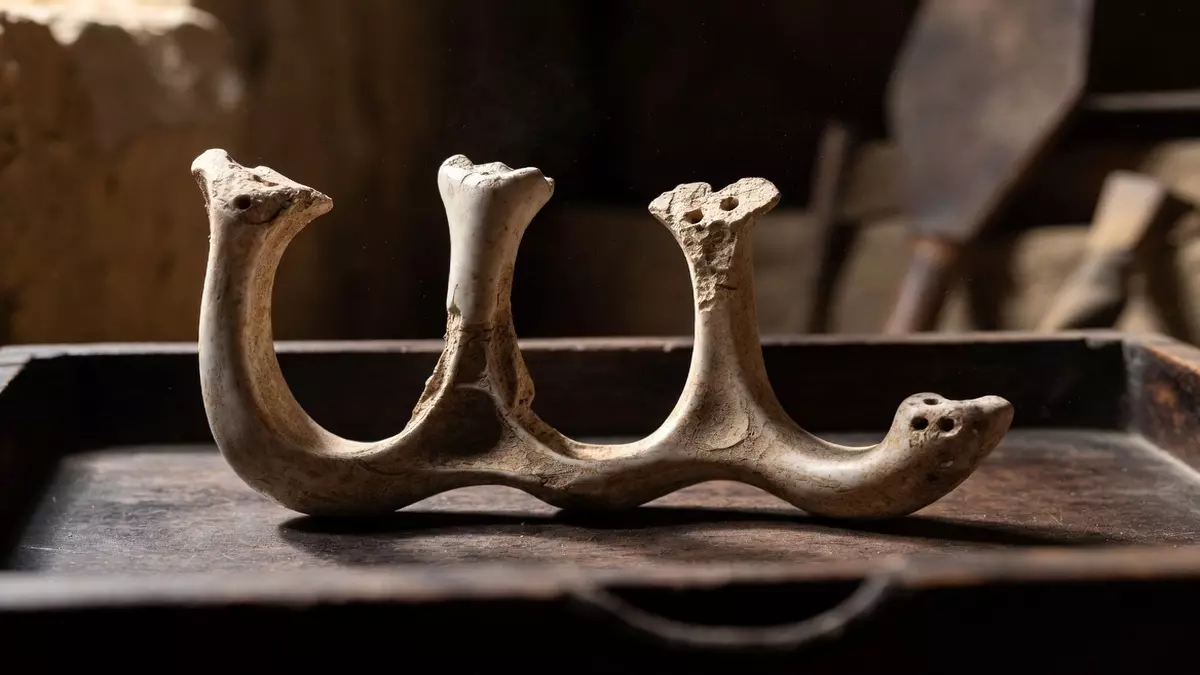
The device measures approximately 24 millimeters long, 6 millimeters wide, and 12 millimeters high. Craftsmen carved it into three rough U-shaped teeth that gradually increase in size. Small perforations at each end indicate it was likely secured in place using thread or wire.
Advanced laboratory analysis revealed important details about its construction and materials. Scientists used non-destructive techniques including micro-CT scanning, X-ray diffraction, stereomicroscopy, and Zooarchaeology by Mass Spectrometry (ZooMS) to study the artifact without causing damage.
### What Was the Dental Bridge Made Of?
The bridge was crafted from animal bone belonging to the Bovidae family, which includes cattle, bison, and certain antelopes. Cattle bone seems the most probable source given its widespread availability in Europe at the time. However, Portugal’s extensive trade networks with Africa leave open the possibility of an antelope bone origin.
One particularly interesting feature is a small cube-shaped material embedded in one corner. Chemical analysis identified this as lead compounds, primarily pyromorphite and cerussite. Researchers believe the lead was added to strengthen or repair the attachment holes. While lead was commonly used in historical crafts and medicine, its toxicity raises questions, though no direct link to the individual’s death was found.
### Cosmetic Function Over Practical Use
The bridge’s thin structure and simple design suggest it provided little chewing support. Instead, it likely served a primarily cosmetic purpose. By covering the visible front teeth, it would have helped conceal gaps, discoloration, or missing teeth — concerns that mattered deeply in social settings. It may also have improved speech by filling spaces in the mouth.
This focus on appearance rather than full function reflects broader historical attitudes toward dental prosthetics. While chewing ability was important, hiding tooth loss was often a higher priority for those who could afford such devices.
### Historical Context of Dental Care in Portugal
Dental prosthetics from earlier Portuguese contexts remain extremely rare. Previous discoveries include a wire dental ligature from the late 15th century and an ivory bridge from the 16th–17th centuries. More sophisticated crowns and dentures only became common during the professionalization of dentistry in the 19th and 20th centuries.
Dental care during this period was expensive and typically available only to wealthier individuals. The presence of a customized bone dental bridge strongly suggests the person buried with it belonged to a higher social class. This aligns with the Carmo hospital’s connections to religious and possibly more affluent communities in Porto.
The find comes as part of the BeFRAIL project, which examines health, frailty, and living conditions in 19th-century Porto. The burial grounds were active during a turbulent era marked by cholera outbreaks and military conflicts, providing valuable insights into public health challenges of the time.
### Scientific Techniques Used in the Study
Researchers employed a range of modern analytical methods to understand the bridge:
– **Micro-CT imaging**: Revealed internal structure and the embedded lead material
– **X-ray diffraction**: Identified chemical composition
– **Stereomicroscopy**: Provided detailed surface examination
– **ZooMS**: Confirmed the animal bone source
These non-invasive approaches allowed thorough study while preserving the delicate artifact for future research.
### What This Discovery Reveals About the Past
This bone dental bridge adds important detail to the history of dentistry and personal care. It demonstrates that people in early 19th-century Portugal actively sought solutions for tooth loss, using available materials and craftsmanship to maintain appearance and quality of life.
The find also underscores how archaeological discoveries continue to reshape our understanding of daily life in the past. While grand historical events often dominate textbooks, small personal items like this dental device reveal intimate aspects of human experience — including concerns about health, beauty, and social perception.
Future excavations at the Carmo site may uncover additional dental prosthetics, further enriching our knowledge of how individuals coped with dental problems before modern dentistry.
**Conclusion**
The 19th-century bone dental bridge from Porto represents far more than an old medical device. It offers a touching connection to a young person who lived nearly 200 years ago and cared enough about their appearance to invest in a custom prosthetic. This rare artifact highlights the ingenuity of early dental practices and reminds us that concerns about smiles and self-image are timeless.
As researchers continue studying health and daily life in historical Portugal, finds like this bridge help paint a richer, more human picture of the past. They show that even in challenging times, people found creative ways to maintain dignity and confidence — one carved tooth at a time.
### FAQ About the Portuguese Bone Dental Bridge
**How old is the dental bridge?**
The bridge dates to the early 19th century, specifically between 1801 and 1831, based on burial context and associated artifacts.
**What was the dental bridge made from?**
It was carved from animal bone, most likely from cattle, though an African antelope source cannot be ruled out due to trade connections.
**Was the bridge functional for eating?**
Probably not. Its thin design suggests it was mainly cosmetic, intended to improve appearance and possibly speech rather than chewing ability.
**Why is this discovery important?**
It is the first documented fixed bone dental bridge from a Portuguese archaeological site and provides rare evidence of early cosmetic dentistry practices.
**Who likely owned the dental bridge?**
The customized nature of the prosthetic and the burial context suggest the individual came from a higher social class, as dental care was expensive at the time.
**How was the bridge held in place?**
Small holes at each end indicate it was tied or wired into position. Lead compounds may have been used to reinforce these attachment points.
**Will more dental devices be found?**
Researchers involved in the BeFRAIL project hope future excavations at the Carmo site will uncover additional examples, shedding more light on historical dental practices.