
Table of Contents
**Pioneering Women Who Changed Archaeology Forever**
Archaeology has long captured our imagination with its tales of discovery and lost civilizations. Yet for much of its history, the field was viewed as a man’s world. Behind the scenes, however, remarkable women broke barriers, led major expeditions, and reshaped how we understand the past. These pioneering women in archaeology faced skepticism, limited funding, and societal expectations—but their determination created lasting legacies that still influence the discipline today.
From decoding ancient scripts to excavating legendary sites, these trailblazers proved that groundbreaking science knows no gender. Here are thirteen extraordinary women whose work transformed archaeology and opened doors for future generations.
Pioneering Women Who Changed Archaeology Forever
### Early Trailblazers in Egypt and the Mediterranean
**Margaret Alice Murray (1863–1963)**
Margaret Murray stands as one of the first prominent female figures in British archaeology. Born in India to an Anglo-Indian family, she moved to England and became the first woman appointed as an archaeology lecturer at University College London. Between 1898 and 1935, she taught and conducted fieldwork across Egypt, Malta, England, Minorca, and Palestine.
Murray participated in key excavations and championed women’s suffrage alongside her academic career. While her theories on European witchcraft remain controversial, her methodical approach to fieldwork and her role in professionalizing the field left an indelible mark. She continued contributing until her death just after turning 100.
**Gertrude Caton-Thompson (1888–1985)**
Gertrude Caton-Thompson brought scientific rigor to Egyptian and African archaeology. After a transformative trip to Egypt in 1911, she volunteered at digs and quickly rose as a respected expert. Her work spanned Egypt, Malta, Zimbabwe, and South Arabia, where she refined excavation techniques still used today.
She specialized in Paleolithic to Predynastic periods and became a member of prestigious societies like the Prehistoric Society. After retiring from fieldwork following World War II, she published her autobiography *Mixed Memoirs* in 1983. Caton-Thompson’s careful, evidence-based methods helped establish archaeology as a serious science.
### Revolutionizing Biblical and Levantine Archaeology
**Dame Kathleen Kenyon (1906–1978)**
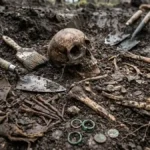
Often called one of the 20th century’s most influential archaeologists, Kathleen Kenyon specialized in Neolithic cultures of the Fertile Crescent. Her meticulous excavations at Jericho revealed it as one of the world’s oldest continuously occupied settlements. From 1952 to 1958, she led digs at Tell es-Sultan, uncovering layers of human history stretching back to the Stone Age.
Kenyon also worked at sites in Jerusalem and Sabratha. She served as Principal of St Hugh’s College, Oxford, and as a long-term Trustee of the British Museum. Her collections and archives now reside at institutions like Baylor University and the Manchester Museum, preserving her contributions for ongoing research.
### Explorers and Diplomats of the Middle East
**Gertrude Bell (1868–1926)**
Gertrude Bell combined archaeology with diplomacy and exploration in ways few others matched. Born into a wealthy English family, she excelled at Oxford and traveled extensively across Europe, the Middle East, and Asia. Her deep knowledge of Arab cultures and languages made her invaluable during World War I.
Bell conducted important archaeological surveys and founded the Iraq Museum in Baghdad while serving as Honorary Director of Antiquities. Her books, letters, and photographs remain vital resources for understanding the region’s heritage. Her multifaceted career continues to inspire those interested in both archaeology and cultural preservation.
### Breaking New Ground in Prehistory
**Dorothy Garrod (1892–1968)**
Dorothy Garrod shattered glass ceilings when she became the first woman to hold the Disney Professorship of Archaeology at Cambridge University. A leading expert on the Paleolithic period, she conducted landmark excavations in Gibraltar, Kurdistan, and Mount Carmel in Palestine.
Her work at Mount Carmel uncovered crucial evidence of early human cultures, bridging Paleolithic and Mesolithic eras. Garrod’s research provided essential tools and frameworks that modern archaeologists still rely on when studying human origins.
**Harriet Boyd Hawes (1871–1945)**
American Harriet Boyd Hawes made history on the island of Crete. After studying classics at Smith College, she funded her own explorations and discovered significant Iron Age sites. She participated in the excavation at Knossos and later focused on everyday life rather than just elite treasures.
Hawes became one of the first women to address the Archaeological Institute of America and balanced archaeology with nursing and relief work. Her people-centered approach helped shift the field toward understanding ancient societies more holistically.
### French and American Innovators
**Jane Dieulafoy (1851–1916)**
Jane Dieulafoy, a French archaeologist and explorer, embarked on daring expeditions with her husband across Iran. Together they documented ancient sites through extensive photography and led major excavations at Susa. Their discoveries, now displayed in the Louvre, expanded knowledge of Persian history.
Decorated with the Legion of Honor, Dieulafoy also worked as a journalist and author. She challenged gender norms by wearing men’s clothing during travels, making her expeditions safer and more practical in conservative regions.
**Hetty Goldman (1881–1972)**
Hetty Goldman became a trailblazing American archaeologist and the first woman on the faculty of the Institute for Advanced Study. From a prominent New York family, she earned degrees from Bryn Mawr and Columbia before conducting excavations in Greece and the Middle East.
Her meticulous work on terracottas and ancient sites earned her the Archaeological Institute of America’s Gold Medal. Goldman’s career helped normalize women leading major research projects in classical archaeology.
### Specialists in Ancient Scripts and Monuments
**Tatiana Proskouriakoff (1909–1985)**
Tatiana Proskouriakoff, a Russian-American scholar, made enormous strides in deciphering Maya hieroglyphs. After immigrating to the United States, she studied architecture before joining expeditions to Piedras Negras, Copán, and Chichen Itza.
Her innovative methods for dating Maya monuments and interpreting historical patterns laid the foundation for later breakthroughs in reading the ancient script. Working at the Carnegie Institution and Harvard’s Peabody Museum, she transformed our understanding of Maya civilization.
**Theresa Bathsheba Goell (1901–1985)**
Theresa Goell dedicated decades to the monumental site of Nemrud Dağı in Turkey. One of the first Western women to explore the remote Kurdish regions, she faced harsh conditions to uncover the sanctuary of ancient Commagene kings.
Her excavations from 1953 to 1973 revealed stunning sculptures and insights into Hellenistic and Persian cultural blending. Goell’s papers now support continued research at Harvard institutions.
### Roman Archaeology Pioneers
**Esther Boise Van Deman (1862–1937)**
Esther Boise Van Deman became the first woman to specialize in Roman field archaeology. Her keen observation of building materials—particularly bricks and concrete—revolutionized how scholars date ancient Roman structures.
After earning her PhD from the University of Chicago, she spent years in Rome studying construction techniques. Her methods became standard practice and remain fundamental to Roman archaeology today.
**Edith Hayward Hall Dohan (1877–1943)**
Edith Hall Dohan was among America’s earliest female archaeologists. She excavated in Crete alongside Harriet Boyd Hawes and earned Bryn Mawr’s first PhD in classical archaeology. Later, as curator at the Penn Museum, she specialized in Etruscan and Italic tombs.
She also served as editor of the *American Journal of Archaeology*, advancing scholarly standards in the field.
### Conservation and Public Education Leaders
**Ione Gladys Gedye (1907–1990)**
Ione Gedye founded the conservation department at London’s Institute of Archaeology. Working with pioneers like Kathleen Kenyon, she developed techniques for preserving artifacts and influenced early BBC archaeology broadcasts.
Her decades of teaching and practical work professionalized conservation practices. The UCL Institute of Archaeology still awards the annual Ione Gedye Award in her honor.
### Why These Women’s Stories Still Matter
These pioneering women in archaeology didn’t just dig up artifacts—they challenged assumptions about who could contribute to science. Their persistence expanded the field’s scope, improved methodologies, and brought fresh perspectives focused on daily life, conservation, and cultural context.
Today, women make up roughly half of practicing archaeologists. The barriers these trailblazers overcame remind us how far the discipline has come while highlighting the importance of continued diversity and inclusion.
**Conclusion**
The stories of these thirteen remarkable women demonstrate the power of curiosity and courage. From desert expeditions to deciphering forgotten scripts, they enriched our understanding of human history while paving the way for today’s archaeologists. Their legacies encourage young explorers—especially girls—to imagine themselves uncovering the next great discovery. By remembering these pioneers, we honor not only their individual achievements but the collective progress they inspired in revealing humanity’s shared past.
### FAQ About Pioneering Women in Archaeology
**Who was the first woman to become a professor of archaeology at Cambridge?**
Dorothy Garrod achieved this milestone in 1939, becoming the Disney Professor of Archaeology and breaking significant gender barriers at Oxbridge.
**What made Gertrude Bell famous beyond archaeology?**
Bell played a key political role in the Middle East after World War I, helping establish modern Iraq while founding its national museum.
**Which woman revolutionized dating techniques in Roman archaeology?**
Esther Boise Van Deman developed groundbreaking methods based on construction materials that became standard for dating ancient Roman buildings.
**Did any of these archaeologists work on Maya sites?**
Yes, Tatiana Proskouriakoff made major contributions to understanding and deciphering Maya hieroglyphs and historical records.
**How did these women impact modern archaeology?**
They introduced more scientific methods, emphasized conservation, focused on everyday life, and opened the field to greater gender diversity.