
Table of Contents
2,300-Year-Old Greek Mask Discovered in Croatian Cave
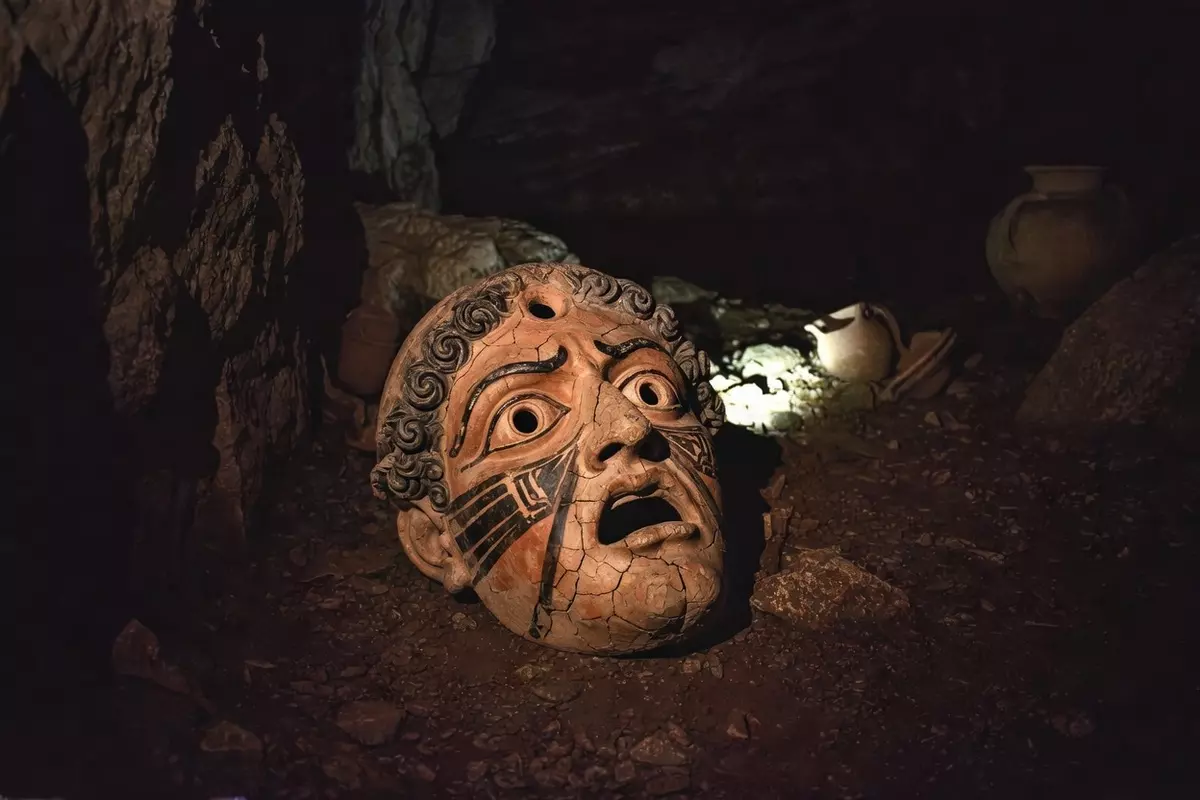
Archaeologists have made a striking discovery inside Crno Jezero Cave on Croatia’s Pelješac Peninsula: a well-preserved terracotta Greek theatrical mask dating back over 2,300 years. The find offers compelling new evidence of ritual practices in an ancient Illyrian sanctuary and highlights deep cultural connections between local Illyrian communities and the Greek world during the 4th and 3rd centuries BCE.
This rare artifact, found during systematic excavations led by the Dubrovnik Museums, is shedding fresh light on religious life along the eastern Adriatic coast. It reveals how Illyrian groups incorporated Greek artistic and religious elements into their own spiritual traditions, creating a unique blend of cultures in one of the region’s most intriguing prehistoric caves.
2,300-Year-Old Greek Mask Discovered in Croatian Cave

### The Dramatic Discovery Inside Crno Jezero Cave
The hollow terracotta head, shaped as a Greek theatrical mask, was uncovered in a side chamber near the cave entrance. A small hole at the top indicates it was likely hung on a wall as part of a ritual display. The protected location within the cave helped preserve the delicate object in remarkable condition for more than two millennia.
Greek theatrical masks were closely tied to the worship of Dionysus, the god of wine, theater, and ecstasy. Their presence in an Illyrian cave suggests that local communities participated in Dionysian-influenced ceremonies, possibly involving wine consumption, performance, or symbolic offerings. This discovery strengthens the idea that Crno Jezero functioned as a sacred space where Greek cultural influences merged with indigenous Illyrian beliefs.

Archaeologist Domagoj Perkić, who leads the project, emphasized that the mask came from a carefully sealed context, making its archaeological value exceptionally high. The artifact adds to a growing collection of Greek-style objects recovered from the site, pointing to sustained contact and cultural exchange across the Adriatic Sea.
### The Changing Role of Crno Jezero Cave Through Time
Crno Jezero Cave has a long and complex history that reflects shifting human needs over thousands of years. Research conducted in 2025 revealed distinct phases of use:

– **Bronze Age Refuge (2nd millennium BCE)**: Early inhabitants used the cave as a temporary shelter during times of conflict, bad weather, or seasonal movements.
– **Iron Age Necropolis (c. 1012–481 BCE)**: The site later served as a burial ground for more than five centuries, with numerous human remains deposited inside.
– **Illyrian Sanctuary (late 4th century BCE to mid-1st century BCE)**: After funerary use ended, the cave transformed into a religious center. This phase aligns perfectly with the theatrical mask and other Greek-influenced artifacts.
The transition from cemetery to sanctuary marks an important shift in how local communities viewed and interacted with the cave. During its sacred period, people left numerous miniature ceramic vessels as offerings. These included imported Greek items such as small amphorae, bowls, and drinking cups (kantharoi), alongside locally made pottery. Such vessels were luxury goods in Illyrian society, often associated with status, feasting, and ritual wine consumption.
### Evidence of Greek-Illyrian Cultural Blending
The theatrical mask is not the first Greek-related discovery at Crno Jezero. Previous seasons yielded fragments of a ceramic head and partial bust of a Greek deity from the Classical period (4th century BCE). Together, these objects paint a picture of active cultural exchange between Illyrian populations and Greek colonies along the Adriatic coast.
Illyrians, the indigenous people of the western Balkans, maintained extensive trade and social networks with Greek city-states. Greek merchants brought wine, pottery, and religious ideas that local elites adopted and adapted. The presence of Dionysian symbols like theatrical masks suggests that Illyrian religious practices may have incorporated elements of Greek mystery cults and theatrical traditions.
This blending of cultures was common in border regions of the ancient Mediterranean. Local deities could take on Greek attributes, while Greek gods were reinterpreted through an Illyrian lens. The cave likely served as a sacred space where these syncretic rituals took place, combining indigenous traditions with imported religious symbolism.
### Why This Find Is So Significant
Crno Jezero Cave stands out because only three confirmed Illyrian sanctuaries are known in the broader Dubrovnik region. The other two — Spila Cave in Nakovana and Vilina Cave near the Ombla spring — have also produced important evidence of ritual activity. Together, these sites offer rare opportunities to study Illyrian religion, which remains one of the least understood aspects of ancient Balkan history due to limited written records.
The theatrical mask adds a new dimension to this research. Its connection to theater and Dionysus points to performative rituals that may have included music, dance, or storytelling as part of religious ceremonies. Such practices would have strengthened community bonds and reinforced social hierarchies within Illyrian society.
The discovery also contributes to broader understanding of the eastern Adriatic during the Hellenistic period. As Greek influence spread through trade and colonization, local groups selectively adopted foreign elements that enhanced their own cultural and religious systems.
### The Excavation Team and Ongoing Research
The project brings together specialists from multiple fields. The team includes archaeologists Domagoj Perkić and Krešimir Grbavac, conservator-restorer Sanja Pujo from the Dubrovnik Museums, and experienced speleologists Hrvoje and Nataša Cvitanović along with Mirna Šandrić. Their interdisciplinary approach combines careful excavation techniques with detailed artifact analysis to reconstruct the cave’s long history.
Future work at Crno Jezero will focus on expanding excavations, analyzing additional organic remains, and studying the spatial organization of ritual deposits. Researchers hope to better understand how different areas of the cave were used for specific ceremonies and offerings.
### The Wider Context of Illyrian Sanctuaries
Illyrian religion featured sacred natural places such as caves, springs, and mountain peaks. These locations often served as interfaces between the human and divine worlds. Offerings of pottery, weapons, and personal items helped maintain relationships with ancestral spirits and deities.
The integration of Greek elements, such as theatrical masks and wine-related vessels, shows how Illyrian communities actively engaged with Mediterranean cultural networks. Rather than passive recipients, they appear to have creatively adapted foreign influences to suit local needs and beliefs.
This discovery enriches Croatia’s archaeological heritage and contributes to ongoing discussions about cultural identity in the ancient Balkans. It demonstrates that the region was never isolated but formed part of dynamic exchange networks connecting the Adriatic, Aegean, and inland Europe.
### Conclusion
The Greek theatrical mask found in Crno Jezero Cave represents far more than an artistic object. It serves as powerful evidence of ritual activity in an ancient Illyrian sanctuary and highlights centuries of cultural interaction between local communities and the Greek world. From its early use as a shelter and burial site to its later role as a sacred space, the cave tells a story of continuity and transformation spanning thousands of years.
As research continues, Crno Jezero promises to reveal even more about Illyrian religious practices, their adaptation of Greek traditions, and the complex social dynamics of the eastern Adriatic during the Hellenistic period. This remarkable discovery not only deepens our understanding of Croatia’s ancient past but also celebrates the rich cultural exchanges that shaped the Mediterranean world more than two thousand years ago.
The terracotta mask, once suspended in a shadowy cave chamber, now brings ancient voices back to life — reminding us of the enduring human desire to connect with the divine through art, ritual, and shared cultural experiences.
**FAQ**
**Q: How old is the Greek theatrical mask found in Croatia?**
A: The terracotta mask dates to the 4th to 3rd centuries BCE, making it approximately 2,300 to 2,400 years old.
**Q: What makes Crno Jezero Cave special?**
A: The cave served multiple roles over time — as a Bronze Age refuge, an Iron Age burial site, and later an Illyrian sanctuary — providing a rare continuous record of human activity.
**Q: Why is the theatrical mask significant?**
A: It links Illyrian religious practices to Greek Dionysian worship and theater, showing cultural blending and ritual use of symbolic objects in the cave sanctuary.
**Q: What other Greek artifacts were found in the cave?**
A: Excavators recovered miniature Greek vessels used as offerings and fragments of a ceramic head and bust of a Greek deity from the Classical period.
**Q: How many Illyrian sanctuaries are known in the Dubrovnik region?**
A: Crno Jezero is one of only three confirmed Illyrian sanctuaries in the wider area, alongside Spila Cave and Vilina Cave.
**Q: What does the discovery tell us about Illyrian-Greek relations?**
A: It demonstrates sustained cultural contact, trade, and religious exchange, with Illyrians selectively adopting and adapting Greek artistic and ritual elements.
**Q: Where is Crno Jezero Cave located?**
A: The cave is situated on the Pelješac Peninsula in southern Croatia, near the city of Dubrovnik.