
Table of Contents
- 1. Unlocking Prehistoric Secrets with 73 Ancient Canines
- 2. The Bronze Age Tech-Boom and the Canine Convoy
- 3. The 11,000-Year-Old Roots of the Siberian Husky
- 4. A Shared Evolution of Movement and Innovation
- 5. Frequently Asked Questions
- 5.1. What did the new genetic study discover about dogs?
- 5.2. How many ancient dog genomes were analyzed in this research?
- 5.3. Why is the inclusion of ancient Chinese dog DNA significant?
- 5.4. What happened to dog populations during China’s Bronze Age?
- 5.5. How far back does the link to modern Siberian Huskies go?
New Ancient DNA Mapping Reveals 11,000 Years of Human-Dog Migration
A groundbreaking international genetic study has revealed that the deep history of man’s best friend is inextricably linked to the great prehistoric migrations of humanity. Published in the prestigious journal Science, the research demonstrates that almost every major cultural transition in human history—from the foraging treks of ancient hunter-gatherers to the expansions of early agriculturalists and Bronze Age nomadic herders—was accompanied by a parallel, distinct movement of canine populations.
By analyzing thousands of years of biological data, the research team proved that dogs were never passive companions sitting idly by the campfire. Instead, they were active, adaptive partners embedded within the structural fabric of early human societies. As human tribes packed up their lives to settle new frontiers, trade with neighboring cultures, or replace competing factions, their dogs walked right alongside them across the massive landmass of Eurasia.
New Ancient DNA Mapping Reveals 11,000 Years of Human-Dog Migration
Unlocking Prehistoric Secrets with 73 Ancient Canines
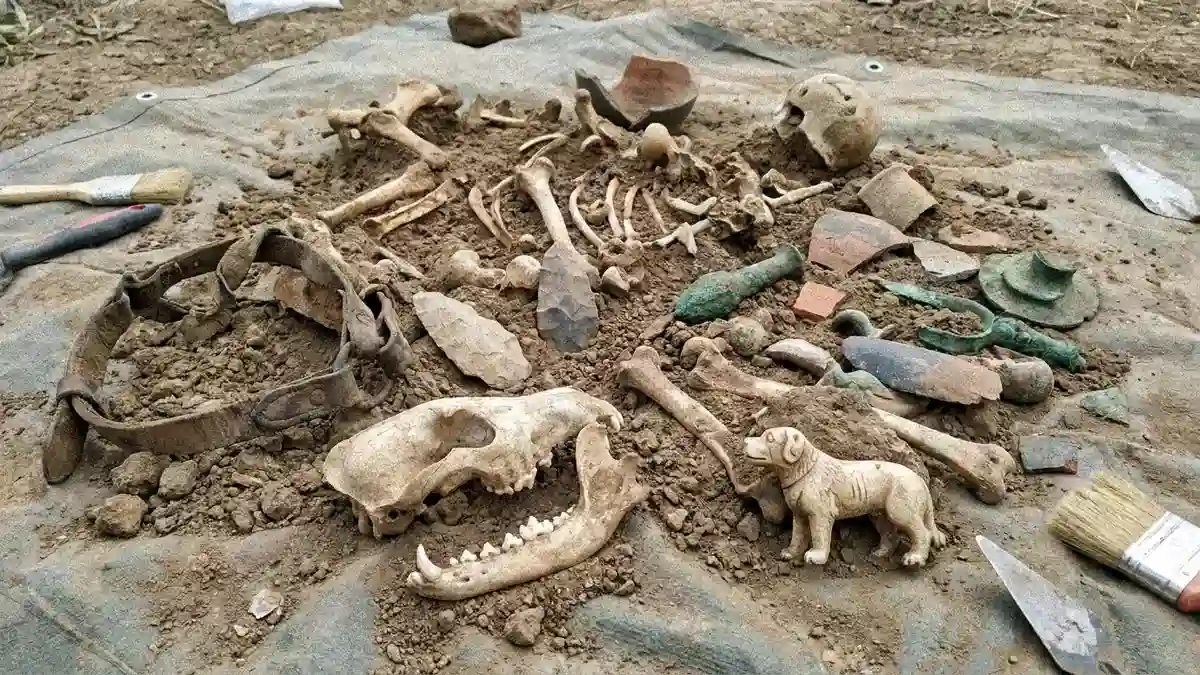
To reconstruct this epic multi-millennial journey, a global coalition of geneticists and archaeologists assembled an unprecedented biological dataset. The team extracted and analyzed the DNA of 73 ancient dog genomes sourced from diverse archaeological dig sites stretching all the way from the islands of East Asia to the sweeping expanses of the Western Eurasian Steppe.
The biological remains examined in the study belonged to animals that lived between 9,700 and 870 years ago. Crucially, this study marks the historic first time that ancient canine specimens from China were successfully sequenced and integrated into a global comparative dataset. To ensure complete accuracy, these 73 ancient sequences were meticulously cross-referenced against dozens of previously mapped genomes from both prehistoric and modern dogs.
The resulting data revealed an unmistakable, crystal-clear genetic mirror: whenever a distinct human population shifted or migrated across Eurasia, a matching genetic shift occurred in the local dog populations.
       [EURASIAN CANINE GENETIC ANCESTRY MATCHES]
                          │
  ┌───────────────────────┼───────────────────────┐
  ▼                       ▼                       ▼
Ancient            Eastern Hunter-         Steppe Pastoral Nomads
Paleo-Siberians    Gatherer Clusters       (Bronze Age Tech-Spread)
The Bronze Age Tech-Boom and the Canine Convoy
One of the most spectacular examples of this synchronized movement occurred during China’s Early Bronze Age, roughly 4,000 years ago. During this transformative epoch, nomadic pastoralist populations from the vast Eurasian Steppe began migrating eastward into western China, bringing advanced metalworking technologies and metallurgy with them.
The genetic record shows that these technological pioneers did not travel alone; they brought their herd and guardian dogs with them. Once these western Steppe dogs arrived in western China, their distinct genetic signatures spread through local canine populations with astonishing speed. This swift genetic turnover proves that the introduction of metallurgy was not merely a passive trade of ideas or objects, but a physical migration of families, livestock, and their trusted animals.
| Historical Era | Human Cultural Group | Canine Genetic Connection | Archaeological Impact |
| Early Holocene (~11,000 Years Ago) | Northern Eurasian Hunter-Gatherers | Ancestors of modern Siberian Huskies | Early cultural networks prior to farming |
| Early Bronze Age (~4,000 Years Ago) | Western Eurasian Steppe Pastoralists | Rapid spread of Steppe canine DNA into China | Coincides with the physical spread of metallurgy |
The 11,000-Year-Old Roots of the Siberian Husky
The deeper the researchers looked into the genetic timeline, the further back the co-migration trend extended into antiquity. The oldest signals of shared geographical dispersal between humans and canines date back at least 11,000 years into the deep past, long before the invention of agriculture, the domestication of livestock, or the rise of complex urban civilizations.
+-------------------------------------------------------------+
|               THE HOLOCENE CO-DISPERSAL TIMELINE            |
|                                                             |
|   11,000 Years Ago                              4,000 Years Ago
|   [ EARLY HOLOCENE ] <──────────────────────> [ BRONZE AGE ]|
|   • Forager Networks                           • Metallurgists  |
|   • Siberian Husky Ancestors                   • Steppe Herders |
|   • Deep Pre-Farming Roots                     • Rapid DNA Mix  |
+-------------------------------------------------------------+
During this post-glacial period, northern Eurasian hunter-gatherer communities were already operating extensive, long-distance trade and cultural exchange networks. The DNA reveals that these mobile foraging groups regularly exchanged dogs that were incredibly close genetic relatives of modern-day Siberian Huskies. This indicates that even in pre-agricultural times, high-performance working dogs were highly valued assets, traded across vast distances to assist with hunting, sledding, protection, and survival in some of the harshest environments on Earth.
A Shared Evolution of Movement and Innovation
Ultimately, this comprehensive genomic study underscores that the story of domestic dogs cannot be separated from the story of human civilization. Canines did not simply follow humans around like passive scavengers; they were an essential component of human expansion, survival, and innovation.
As Eurasian cultures transformed over the course of millennia—inventing new tools, adopting farming, and exploring uncharted territories—the biological makeup of their dogs evolved directly alongside them. This historic genetic mapping reminds us that our modern canine companions are the living legacy of an extraordinary, 11,000-year-old journey of mutual cooperation, shared hardship, and unbreakable long-term partnership.
Frequently Asked Questions
What did the new genetic study discover about dogs?
The study discovered that the genetic history and movements of dog populations over the last 11,000 years perfectly mirror the major migrations, trade routes, and cultural transitions of human societies across Eurasia.
How many ancient dog genomes were analyzed in this research?
An international team of scientists analyzed 73 ancient dog genomes, which included 17 newly sequenced specimens from archaeological sites ranging from East Asia to the Western Eurasian Steppe. These animals lived between 9,700 and 870 years ago.
Why is the inclusion of ancient Chinese dog DNA significant?
This study marks the first time that ancient canine specimens from China were successfully integrated into a global genetic dataset, allowing researchers to accurately track the East-West movement of human-dog lineages for the very first time.
What happened to dog populations during China’s Bronze Age?
Around 4,000 years ago, pastoralist groups from the Eurasian Steppe migrated into western China to introduce metalworking technologies. Genetic data shows they brought their dogs with them, whose ancestry quickly integrated into and spread throughout the local Chinese canine populations.
How far back does the link to modern Siberian Huskies go?
The shared genetic lineage extends back at least 11,000 years. Northern Eurasian hunter-gatherers were actively breeding and exchanging dogs closely related to modern Siberian Huskies, using them as vital working assets long before farming or complex cities ever existed.