
Table of Contents
**King Tut’s Tomb Discovery: 1922’s Greatest Find**
The 1922 discovery of King Tutankhamun’s tomb stands as one of archaeology’s most breathtaking moments. Nearly 3,300 years after his death, this modest burial site in Egypt’s Valley of the Kings revealed a stunning collection of treasures that captivated the world and brought ancient Egypt vividly back to life. Unlike many other pharaohs’ tombs stripped by robbers long ago, Tut’s final resting place offered an almost intact glimpse into royal burial customs, artistry, and daily splendor from the New Kingdom period.
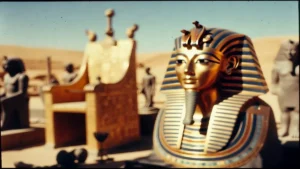
King Tut’s Tomb Discovery 1922’s Greatest Find
### Who Was King Tutankhamun?
Tutankhamun, affectionately called King Tut, ruled ancient Egypt for roughly ten years during the late 18th Dynasty of the New Kingdom. Born around 1341 BCE, he ascended the throne at just nine years old following the death of his father, the controversial pharaoh Akhenaten, and two short-lived rulers in between.
His reign came during a turbulent time of religious transformation. Akhenaten had upended centuries of tradition by promoting worship of a single god, Aten, and abandoning the traditional pantheon. This era, known as the Amarna Period, created significant upheaval. Young Tutankhamun played a key role in restoring balance by reinstating the old gods, particularly Amun. To reflect this dramatic shift, he changed his name from Tutankhaten to Tutankhamun, while his queen, Ankhesenpaaten, became Ankhesenamun.
Genetic studies and archaeological evidence confirm Tut married his half-sister Ankhesenamun. The couple had no surviving children. His life ended abruptly at around 18 or 19 years old, making him one of history’s youngest pharaohs. The exact cause of death remains a subject of fascination and debate among experts, with possibilities including injuries from a chariot accident, a blow to the head, or even a dangerous encounter with a hippopotamus.

### The Royal Family and Historical Context
Family connections proved crucial in understanding Tutankhamun’s story. Modern DNA analysis has clarified relationships that ancient records left ambiguous. These tests confirmed his parentage and identified two mummified fetuses found in his tomb as his daughters, with their mother likely being Ankhesenamun, whose remains appear linked through KV21.
This restoration of traditional religion helped stabilize Egypt after years of disruption. Tut’s short reign focused on repairing temples, reviving old practices, and reestablishing diplomatic ties that had suffered under his father’s rule. Though he died young, his decisions helped set the stage for the powerful 19th Dynasty that followed.
### Where Is King Tut’s Tomb Located?
King Tutankhamun’s tomb, officially designated KV62, sits in the eastern branch of the Valley of the Kings, nestled between the much larger tombs of Ramses II and Ramses IV. Its position on the valley floor proved fortunate. Over centuries, debris from floods and nearby tomb construction naturally buried the entrance, protecting it from detection by ancient thieves and later explorers.
The Valley of the Kings served as the primary burial ground for New Kingdom pharaohs, chosen for its remote, easily guarded location west of the Nile near modern Luxor. By the early 20th century, many archaeologists believed they had exhausted the site’s potential. Yet one determined explorer refused to give up hope.
### The 1922 Discovery by Howard Carter
English archaeologist Howard Carter led the team that finally uncovered Tutankhamun’s tomb in November 1922. Backed by British aristocrat Lord Carnarvon, Carter had searched the Valley of the Kings for years. By 1914, most experts assumed all major royal tombs had been found. Carter disagreed and persisted despite growing frustration and near-cancellation of funding.
In 1922, after six seasons of work, workers discovered a stone step beneath ancient workmen’s huts. This led to a staircase and sealed doorway. On November 26, Carter, Carnarvon, and others peered into the antechamber. What they saw left them speechless: room after room filled with golden treasures untouched for over 3,000 years. Carter famously replied to Carnarvon’s question about what he saw with the words, “Wonderful things.”
Large crowds soon gathered at the site as news spread globally. The discovery sparked worldwide fascination with ancient Egypt and launched “Tut-mania” in popular culture.
### Architecture and Design of Tutankhamun’s Tomb
Unlike the grand, elaborately decorated tombs of other pharaohs, KV62 is relatively small and simple. This may reflect its possible original design for a high official before being adapted hastily for the young king’s sudden death.
The tomb features a descending corridor, an antechamber, an annex, a burial chamber, and a treasury. Doorways were originally sealed with limestone and plaster bearing official impressions. Ancient robbers had entered but left most contents behind, and priests later repaired the damage.
**Key Features of the Layout:**
– A staircase of sixteen steps (the lower six temporarily removed during burial to move large items)
– An east-west corridor leading to the antechamber
– Four chambers total, with the burial chamber and treasury possibly added later
– Walls in the burial chamber decorated with scenes from the Amduat and other funerary texts
– Unique artwork showing Amarna-style proportions on some walls, mixed with traditional styles on others
The burial chamber contains striking paintings: Tutankhamun’s funeral procession on the east wall, Ay performing the Opening of the Mouth ceremony on the north wall, and the king with various gods. The west wall features twelve baboons representing the hours of the night from the Amduat.
### Incredible Treasures Found Inside the Tomb
The tomb contained nearly 5,000 artifacts, carefully cataloged over ten years by Carter’s team. Items included:
– Magnificent furniture, including the famous golden throne covered in gold and inlaid with silver
– Chariots, model boats, weapons, and jewelry
– Personal items like sandals and clothing
– Canopic jars and ritual objects
– Statues guarding the chambers, including two life-sized sentinel figures
The burial chamber held the greatest treasures. Three nested coffins protected the mummy, with the innermost made of solid gold. The famous gold funerary mask, weighing over 10 kilograms and inlaid with semi-precious stones like lapis lazuli, quartz, and obsidian, has become an iconic symbol of ancient Egypt. An inscription from the Book of the Dead appears on the shoulders.
Tutankhamun’s mummy was found in poor condition due to chemical reactions in the wrappings, but it provided valuable insights through modern examination. Two tiny mummified fetuses, likely stillborn daughters, were also discovered, offering moving evidence of the young king’s personal tragedies.
Objects filled every space, from dismantled chariots in the antechamber to stacked furniture and shrines around the sarcophagus. The careful arrangement reflected the need to fit everything into a smaller-than-average royal tomb.
### The Enduring Legacy of King Tut
The discovery transformed our understanding of ancient Egyptian burial practices, art, and royal life. It provided an unprecedented look at the wealth and craftsmanship of the 18th Dynasty. Today, artifacts from the tomb draw millions of visitors to museums worldwide, particularly the Egyptian Museum in Cairo.
King Tut’s story continues to fascinate because it combines mystery, tragedy, and incredible beauty. His short life and spectacular afterlife treasures remind us of the enduring power of one of history’s greatest civilizations.
**Conclusion**
The unearthing of Tutankhamun’s tomb remains a pinnacle achievement in archaeology. Howard Carter’s persistence revealed not just gold and artifacts, but an intimate connection to a young pharaoh who lived over three millennia ago. From religious restoration to family tragedy and artistic splendor, King Tut’s story enriches our appreciation of ancient Egypt’s complexity and humanity. Even today, new technologies continue revealing fresh details about his life, death, and burial, ensuring his legacy shines as brightly as the gold that once surrounded him.
### FAQ About King Tutankhamun and His Tomb
**How old was King Tut when he died?**
Tutankhamun died around age 18 or 19 after ruling for approximately nine to ten years. His young age at death has fueled many theories about the cause.
**Who discovered Tutankhamun’s tomb?**
British archaeologist Howard Carter discovered the tomb in 1922, funded by Lord Carnarvon. The find occurred after years of systematic searching in the Valley of the Kings.
**What made Tutankhamun’s tomb special compared to others?**
It was found nearly intact with most treasures still inside. Its hidden location under debris protected it from extensive ancient looting that affected many other royal tombs.
**What is the most famous artifact from King Tut’s tomb?**
The solid gold funerary mask stands out as the most iconic piece. It beautifully portrays the young pharaoh wearing the nemes headdress with symbols of Upper and Lower Egypt.
**Are there still mysteries surrounding King Tut?**
Yes. Scientists continue debating his exact cause of death, family relationships, and health conditions. Ongoing DNA analysis and imaging techniques reveal new information regularly.
**Where can I see Tutankhamun’s treasures today?**
Many artifacts, including the gold mask, are displayed at the Grand Egyptian Museum near the Giza Pyramids, with some items remaining in the Valley of the Kings.