

Table of Contents
**100,000-Year-Old Bones Hint at Earliest Human Cremation**
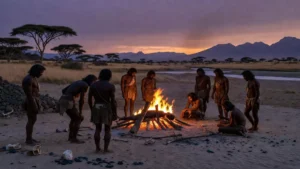
In a major archaeological breakthrough, researchers working in Ethiopia’s Afar Rift have uncovered what may be the oldest known evidence of deliberate human cremation. The discovery, dating back roughly 100,000 years, comes from fossilized bones of early *Homo sapiens* that show clear signs of exposure to high temperatures. If confirmed through further analysis, this finding would dramatically push back the timeline of intentional fire use in human death rituals by tens of thousands of years.
The Middle Awash region of Ethiopia continues to rewrite our understanding of early modern human behavior. This latest discovery adds compelling new details about how our ancestors treated their dead during the Middle Stone Age.
100,000-Year-Old Bones Hint at Earliest Human Cremation

### The Afar Rift: A Treasure Trove of Human History
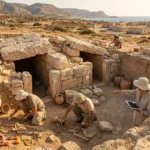
The Afar Rift in Ethiopia’s Middle Awash area ranks among Africa’s most important locations for studying early *Homo sapiens*. For decades, scientists have recovered thousands of fossils, stone tools, and environmental clues from these ancient landscapes. The recent focus on the Faro Daba beds, part of the lower Halibee Member of the Dawaitoli Formation, has yielded particularly revealing finds.
Since 1981, international research teams have worked systematically across the region. Their careful surveying, sieving, and excavation methods have preserved a remarkably intact record of human activity from a critical period just before modern humans began spreading into Eurasia.
### Evidence of Burning on Ancient Human Bones
Among the most significant discoveries are fossil remains from at least three *Homo sapiens* individuals. Some of these bones display clear traces of burning at high temperatures — a pattern consistent with controlled exposure to fire rather than accidental burning from wildfires or natural processes.
Researchers suggest these marks could represent early cremation practices. While earlier evidence of fire use by humans dates back much further, deliberate cremation of the dead has previously been documented only from much later periods, often associated with more recent cultural developments. This Ethiopian find challenges that timeline and raises new questions about symbolic behavior and mortuary rituals among early modern humans.
Not all the human remains tell the same story. Some bones show bite marks from predators, while others appear to have been rapidly buried. These varied postmortem histories suggest that early *Homo sapiens* groups handled death in diverse ways, depending on circumstances.
### A Rare Open-Air Middle Stone Age Site
Most archaeological sites from this era in Africa come from caves or rock shelters, where layers of occupation are often compressed and mixed together. The Faro Daba location stands out because it preserves an open-air setting with minimal disturbance from erosion or water flow. This allows researchers to reconstruct daily life with unusual clarity.
Thousands of Middle Stone Age stone artifacts were recovered directly from the ancient floodplain. The pattern of tool production and discard indicates repeated short-term visits rather than permanent settlement. Early humans returned to this area near the ancient Awash River, taking advantage of reliable water sources and diverse resources.
### Reconstructing the Ancient Environment
Environmental data from the site paints a vivid picture of a wooded landscape shaped by seasonal flooding. Sediment analysis, animal fossils, and traces of combustion all point to human activity occurring away from the main river channel. Local water conditions appear to have influenced daily life more than broader regional climate patterns.
More than 3,000 animal fossils help fill in the ecological context. The remains include monkeys, rodents, and various large mammals, offering insights into the habitats early *Homo sapiens* navigated and exploited. This rich faunal record shows a dynamic environment where humans adapted to changing seasonal conditions.
### Advanced Tool Technology and Long-Distance Movement
The stone tools recovered from the site reveal sophisticated technological knowledge. Some artifacts were crafted from obsidian — a volcanic glass sourced from distant locations. The presence of this material demonstrates that early human groups traveled significant distances across the landscape and maintained networks for resource acquisition.
These findings highlight the mobility and adaptability of Middle Stone Age populations. Rather than wandering aimlessly, groups appear to have moved strategically between familiar locations, returning repeatedly to resource-rich areas like the Awash River floodplain.
### Why This Discovery Matters for Human Evolution
The Middle Stone Age represents a pivotal chapter in African human history. It coincides with the biological and behavioral emergence of *Homo sapiens*, including the development of more complex tools, symbolic thinking, and possibly ritual behavior.
Evidence of possible cremation at 100,000 years ago would indicate that symbolic treatment of the dead emerged much earlier than previously thought. This has profound implications for understanding when abstract thinking, cultural traditions, and spiritual concepts first appeared in our species.
The varied treatment of remains at the site — burning, predator damage, and rapid burial — suggests flexible responses to death rather than a single rigid practice. This complexity mirrors the behavioral sophistication we associate with modern humans.
### Scientific Methods Behind the Findings
The research team employed rigorous, multidisciplinary approaches. Detailed geological analysis helped establish the age and context of the deposits. Careful examination of bone surfaces revealed thermal alterations, while comparison with experimental burning data strengthened interpretations about fire exposure.
The publication of these results in the *Proceedings of the National Academy of Sciences* (2026) reflects the high scientific standards applied. Lead researchers include Yonas Beyene, Berhane Asfaw, Tim White, and Giday WoldeGabriel, among others, representing decades of collaborative work in the Afar Rift.
### Comparison With Later Cremation Practices
Previous evidence of cremation typically dates to around 40,000–30,000 years ago in Europe and parts of Asia. The Ethiopian discovery, if verified as intentional cremation, would extend this practice deep into the African roots of *Homo sapiens*. It suggests that symbolic fire use in death rituals may have African origins, spreading later with migrating populations.
This aligns with growing evidence that many complex behaviors once attributed to European Upper Paleolithic cultures actually originated earlier in Africa.
### Challenges and Future Research Directions
While the burning patterns are compelling, researchers remain cautious. Distinguishing between deliberate cremation and other forms of fire exposure requires additional analysis. Future studies may include more detailed microscopic examination of bone microstructure and chemical signatures.
The team continues to investigate the broader cultural context. Did early humans cremate some individuals while burying others? What social or spiritual factors influenced these choices? Ongoing work at the site and similar locations may provide more answers.
**Conclusion**
The 100,000-year-old human bones from Ethiopia’s Afar Rift offer an extraordinary window into early *Homo sapiens* life and death. Possible evidence of cremation at this remarkable depth of time suggests our ancestors engaged in symbolic rituals much earlier than previously recognized. Combined with rich archaeological and environmental data, these findings deepen our appreciation for the behavioral complexity of early modern humans in Africa.
As research continues in the Middle Awash region, we can expect more revelations about how our species developed the cultural practices that define humanity. This discovery reminds us that the roots of many traditions — including how we honor our dead — reach far back into Africa’s ancient past, long before modern humans left the continent.
### FAQ About the Ethiopia Cremation Discovery
**How old is the possible evidence of human cremation?**
The bones date to approximately 100,000 years ago, from the Middle Stone Age in Ethiopia’s Afar Rift region.
**Why is this discovery significant?**
If confirmed as intentional cremation, it would push back the known history of this practice by tens of thousands of years and suggest symbolic behavior emerged earlier in Africa.
**What other evidence was found at the site?**
Thousands of stone tools, over 3,000 animal fossils, and traces of repeated human occupation on an ancient floodplain were recovered.
**Were all the human bones burned?**
No. The remains show different postmortem histories, including burning, predator damage, and rapid burial, suggesting varied treatment of the dead.
**How does this compare to other early human sites?**
Most Middle Stone Age sites in Africa are in caves. This open-air location with well-preserved layers is relatively rare and offers clearer insights into daily life.
**What does this tell us about early Homo sapiens behavior?**
The findings point to mobility, sophisticated tool technology, environmental adaptation, and possible symbolic rituals among our ancestors 100,000 years ago.