
Table of Contents
**Early Humans Used Fire in Caves 1.8 Million Years Ago**
A groundbreaking discovery from South Africa is rewriting our understanding of when early humans first harnessed one of the most transformative technologies in history: fire. New research from Wonderwerk Cave reveals compelling evidence that our ancient ancestors were using and controlling fire inside caves as far back as 1.8 million years ago — pushing back the timeline of this crucial development by hundreds of thousands of years.
This finding not only highlights the ingenuity of early hominins but also sheds light on how fire use may have shaped human evolution, from providing warmth and protection to eventually enabling cooking and social bonding. The study, published in *PLOS One*, offers one of the earliest and most convincing records of intentional fire management deep inside a cave environment.
Early Humans Used Fire in Caves 1.8 Million Years Ago

### The Significance of Wonderwerk Cave in Human Prehistory
Wonderwerk Cave, located in South Africa’s Northern Cape province, has long been recognized as an archaeological treasure trove. The cave’s deep, stratified deposits preserve an almost unbroken record of human occupation stretching back nearly two million years. Previous studies had already identified signs of burning around one million years ago, but the latest research delves into even older layers, uncovering evidence that fundamentally changes our view of early fire use.
The cave’s location and structure make it particularly valuable for such discoveries. Extending more than 140 meters into the hillside, it provided shelter from the elements and predators, creating an ideal environment for repeated hominin activity. Unlike open-air sites where natural wildfires could easily explain burnt remains, Wonderwerk’s interior location strengthens the case for deliberate human involvement.

### New Evidence from the Early Pleistocene Layers
Researchers focused on two ancient strata, known as Stratum 10 and Stratum 11, dating between approximately 1.07 and 1.79 million years ago. From these deposits, they analyzed 161 fossilized bones from small mammals, many of which likely arrived in the cave through the activity of barn owls that roosted there and left behind pellets rich in bones.
What makes the findings remarkable is the clear evidence of heating on these bones. Not only were burnt remains present, but they appeared in concentrated clusters rather than being randomly scattered. This pattern suggests repeated, localized burning events in specific areas of the cave over long periods — a hallmark of intentional fire use rather than chance exposure to wildfires.

The burnt material was found at least 30 meters inside the cave entrance. Natural grass or bush fires rarely penetrate that deeply, making accidental burning highly improbable. Instead, the evidence points to early humans transporting and maintaining fire in a controlled manner within their living space.
### Cutting-Edge Science Behind the Discovery
To confirm that the bones had been exposed to fire, the international research team employed two independent analytical techniques. The first was Fourier Transform Infrared Spectroscopy (FTIR), a method that detects chemical and structural changes in bone minerals caused by high temperatures. The second involved a novel optical approach using bone luminescence: when illuminated under specific blue light and filters, heated bones emit a distinctive reddish glow, while unheated ones do not.
The team rigorously tested their luminescence method with modern bones heated under controlled conditions and cross-checked results against known archaeological samples from a Bronze Age site in Spain. The consistency between FTIR and luminescence data provided robust confirmation of ancient burning.
Strikingly, every white and gray fossil bone examined from the oldest layer (Stratum 11) showed signs of heating. This widespread evidence across multiple deposits indicates that fire use was not a one-off event but a sustained practice by the cave’s inhabitants.
### Who Were the Fire Users at Wonderwerk?
The archaeological context links these finds to Acheulean stone tools and remains of larger animals, technologies and resources typically associated with *Homo erectus*. These early humans, who lived across Africa and parts of Asia, were skilled toolmakers and adaptable survivors. While the study does not claim they could generate fire on demand — a skill that likely developed later — it strongly suggests they collected natural fires (perhaps from lightning strikes) and maintained them inside the cave.
Carrying and sustaining fire required foresight, planning, and social cooperation. This behavior represents a significant cognitive leap, allowing hominins to extend their activities into the night, stay warm during cooler periods, and gain protection from predators like hyenas or big cats that roamed the ancient landscape.
### How Fire Transformed Human Evolution
The ability to control fire ranks among the most pivotal advancements in human history. Beyond immediate survival benefits, fire opened new possibilities for diet and health. Cooking food breaks down tough fibers and neutralizes toxins, making nutrients more accessible and potentially supporting larger brain development — a key feature of later human species.
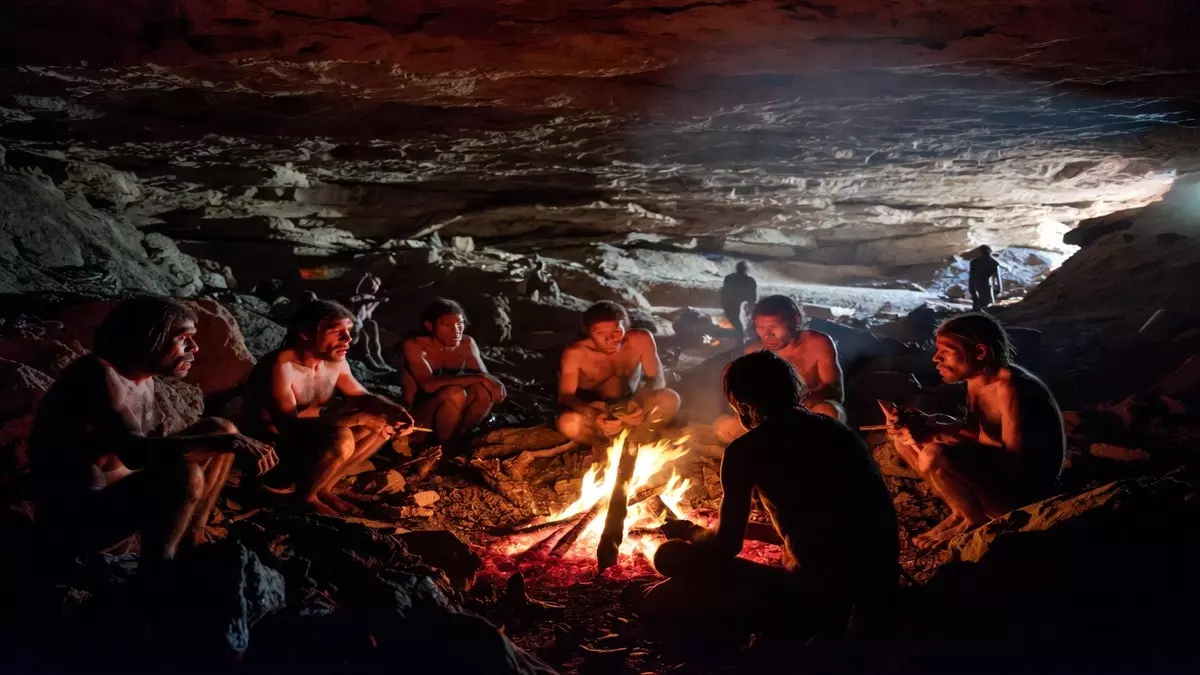
Socially, fire likely served as a focal point for group activities, storytelling, and strengthening community bonds. In the dim recesses of Wonderwerk Cave, flickering flames would have illuminated tool-making, food preparation, and rest, creating safer and more productive living environments.
This discovery adds to a growing body of evidence from other African sites, such as those in Kenya and Ethiopia, but Wonderwerk stands out for its deep-cave context and the precision of the dating methods used. Together, these finds are gradually filling in the timeline of when our ancestors began mastering this elemental force.
### Broader Implications for Archaeology and Human Origins
The Wonderwerk study does more than push back dates — it introduces a reliable, relatively non-destructive method for identifying ancient burnt bones. This luminescence technique could be applied to other controversial sites, helping resolve debates about the origins of fire use worldwide.
It also challenges older models that placed the regular control of fire closer to 400,000–800,000 years ago. Earlier dates from Wonderwerk suggest that fire management was part of the behavioral repertoire of *Homo erectus* populations much earlier than many textbooks once claimed.
Future research at the cave and similar locations will likely explore whether these early fires were used for cooking, warmth, or other purposes. Additional studies on plant remains, ash deposits, and tool wear patterns could provide even richer insights into daily life during the Early Pleistocene.
### Environmental Context of the Ancient Cave Dwellers
During the time these hominins occupied Wonderwerk Cave, the surrounding region featured a mix of grasslands, woodlands, and water sources that supported diverse wildlife. Small mammals whose bones were later burned probably formed part of the local ecosystem, either as prey or as owl food. Larger game, processed with Acheulean hand axes, supplemented the diet.
The cave itself offered a stable microclimate, protecting occupants from temperature swings and seasonal rains. By bringing fire inside, early humans enhanced this natural shelter, turning it into a true home base for extended periods.
This adaptation to cave environments may have been crucial during periods of climate variability, when reliable shelter and controllable heat provided a competitive edge for survival and reproduction.
**Conclusion**
The evidence from Wonderwerk Cave illuminates a pivotal chapter in the human story: when our distant ancestors first began to tame fire and claim deeper spaces as their own. Nearly two million years ago, in the heart of South Africa, early humans demonstrated remarkable ingenuity that set the stage for countless future innovations.
As researchers continue to unlock the secrets preserved in these ancient deposits, we gain not only a clearer picture of where we came from but also a deeper appreciation for the spark of curiosity and problem-solving that defines humanity. Discoveries like this remind us that the roots of our modern world stretch far back into the dim glow of prehistoric fires.
### FAQ
**How old is the earliest evidence of fire use at Wonderwerk Cave?**
The new study documents repeated fire use between about 1.07 and 1.79 million years ago, making it one of the oldest confirmed records.
**What methods proved the bones were burned by humans?**
Researchers used FTIR spectroscopy and a new bone luminescence technique, with results cross-verified against modern and archaeological controls for high reliability.
**Who likely used fire at Wonderwerk Cave?**
*Homo erectus* populations are the most probable occupants, based on associated Acheulean tools and the timeline of the deposits.
**Did early humans create fire or just maintain it?**
The evidence suggests they collected fire from natural sources and kept it burning, rather than producing it themselves through friction or other means.
**Why is finding burnt bones deep inside the cave important?**
The location 30 meters from the entrance makes natural wildfires unlikely, strongly supporting intentional transport and control of fire by hominins.
**What other benefits did fire provide to early humans?**
Fire offered warmth, predator protection, light for nighttime activities, and later enabled cooking, which improved nutrition and supported brain growth.
**Will this discovery change our understanding of human evolution?**
Yes — it indicates earlier and more sophisticated behaviors than previously thought, potentially influencing timelines for cognitive development, social structures, and dietary changes.