
Table of Contents
- 1. The New Demographics of Bone Buying
- 2. Legal Grey Areas and Global Loopholes
- 3. A Dark History: Colonialism and the Global Bone Supply
- 4. Anatomical Specimen vs. Illicit Grave Looting
- 4.1. Medical and Anatomical Preparation
- 4.2. Signs of Illicit Exhumation
- 5. Shifting From Commodities to Communities
- 6. Frequently Asked Questions
- 6.1. Is it legal to buy and sell human bones online?
- 6.2. Where do most of the human skulls sold online come from?
- 6.3. What is “dark academia” and how does it affect the bone trade?
- 6.4. How can experts tell if a skull was stolen from a grave?
- 6.5. Why are anthropologists against the commercial sale of human remains?
The Online Trade of Human Remains: Why Bones Are Not Home Decor
In recent years, an unsettling commerce has migrated from the dusty backrooms of niche curiosity shops to mainstream online marketplaces and social media feeds. Skulls, skeletal fragments, and artificially modified human remains are being bought, sold, and traded globally with increasing frequency.
What was once a highly specialized domain reserved for historical or medical collections has transformed into a booming e-commerce market. Fueled by internet subcultures and digital aesthetics, this trend has triggered deep concern among anthropologists, anatomists, and legal experts worldwide. The rapid commodification of human bones highlights glaring legal loopholes and raises a fundamental ethical crisis: have we forgotten that these specimens were once living people?
The Online Trade of Human Remains Why Bones Are Not Home Decor
The New Demographics of Bone Buying
The modern market for human skeletal remains is driven by an unexpectedly diverse cross-section of consumers, many of whom are entirely unaware of the ethical and historical baggage attached to their purchases:

Casual Lifestyle Consumers: The most rapid growth in the bone trade is driven by everyday internet users. The rise of the “dark academia” aesthetic—a subculture that romanticizes gothic literature, vintage tailoring, candlelit libraries, and scholarly mystique—has turned human bones into trendy props. On platforms like TikTok (
#OdditiesTok) and Instagram (#SkullDecor), users routinely pose with human skulls as if they were antique books, converting human remains into basic home decor.Students and Creators: Medical and dental students occasionally seek out real human skulls for anatomy study, completely oblivious to the legal risks involved. Concurrently, a small faction of contemporary artists and designers purchase bones to use as raw materials for physical sculptures and avant-garde installations.
Traditional Collectors: Classic collectors of medical oddities, “curiosities,” and practitioners of various ritual arts continue to maintain active demand in the market.

Legal Grey Areas and Global Loopholes
The international trade in human remains thrives primarily because the legal frameworks governing it are highly fragmented, inconsistent, and outdated.
In the United Kingdom, for instance, the Human Tissue Act 2004 strictly regulates how human bodies can be donated, used, and stored for anatomical education and research. However, the law features a major loophole: it only applies to human remains that are less than 100 years old. Anything older falls completely outside its regulatory scope.
Sellers frequently exploit this century-long gap. By simply labeling a skull as “Victorian,” vendors can legally list and sell human remains openly, even if they have absolutely no paperwork to prove the object’s actual age or origin.

[Human Tissue Act 2004] ──> Applies ONLY to remains < 100 years old ──> Creates "Victorian" Loophole for Sellers
A similar lack of consistency plagues the United States. While federal legislation heavily protects Native American remains, individual state laws regarding the possession and sale of other human bones vary wildly. Because e-commerce is inherently borderless, a skull listed online in one jurisdiction can be packed and shipped internationally with minimal oversight, effectively sidestepping national borders and domestic laws.
A Dark History: Colonialism and the Global Bone Supply
To understand why the open-market sale of human bones is so profoundly troubling, one must look at where these specimens actually originated. The historical supply chains that filled European and Western collections were deeply tied to colonial exploitation and the abuse of impoverished communities.
In 19th-century Britain, the Anatomy Act of 1832 was passed to end the rampant, gruesome practice of grave robbing by providing a legal supply of unclaimed bodies from workhouses, prisons, and hospitals for medical research. However, as medical education rapidly expanded, internal demand soon outstripped local supply, forcing institutions to look overseas.
| Prime Export Era | Country of Origin | Annual Export Scale | Reason for Trade Termination |
| Late 19th Century – 1985 | India | ~60,000 skeletons in 1984 alone | Banned in 1985 after a major scandal exposed the illicit export of 1,500 child skeletons. |
| 1985 – 2008 | China | High-volume global supplier | Banned all exports of human remains in 2008 due to ethical and reputational concerns. |
Many of the skulls and skeletons circulating on the open market today are former anatomical specimens from these eras. They were taken from vulnerable people who could not afford proper burials or were stolen outright by grave robbers in colonized territories.
Anatomical Specimen vs. Illicit Grave Looting
As demand has skyrocketed due to social media exposure, researchers have noted a worrying resurgence in active grave robbing. Knowing how to spot the difference between a legacy medical specimen and a freshly looted grave object is a critical focus for forensic anthropologists and law enforcement.
Medical and Anatomical Preparation
Bones originally prepared for genuine scientific study or dental training usually feature clear structural modifications. These include precisely drilled holes, structural metal wires, springs, hanging hooks, or protective layers of old varnish. True institutional specimens are also accompanied by detailed historical provenance and acquisition records.
Signs of Illicit Exhumation
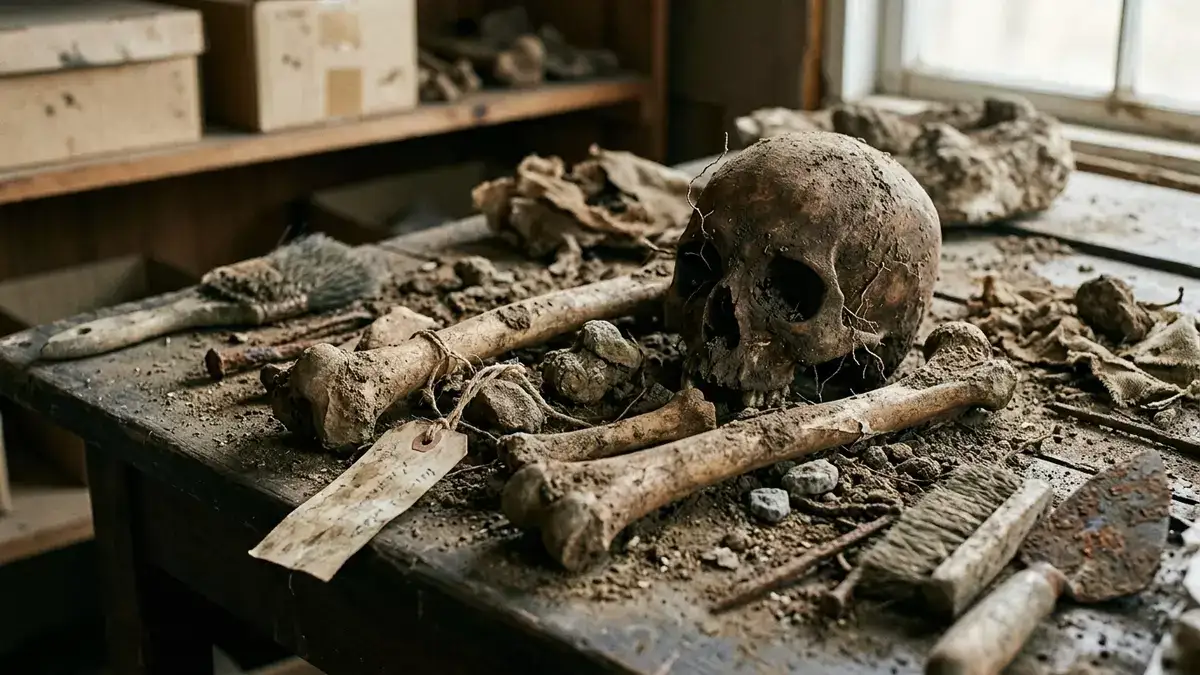
Conversely, remains that have been illegally dug up from old cemeteries display telltale taphonomic signs—physical changes caused by long-term environmental burial. These include distinct soil staining, root etching from plants, and microscopic fractures caused by the pressure of the earth. In many cases, fragments of coffin wood, rusted iron nails, or scraps of burial textiles may still cling to the bone surfaces.
Shifting From Commodities to Communities
The British Association for Biological Anthropology and Osteoarchaeology has launched active campaigns to curb the online sale of human remains, pushing digital platforms to enforce strict bans on skeletal listings. Ultimately, however, solving this crisis requires a cultural shift rather than just a legal rewrite.
Human remains are fundamentally different from any other vintage collectible or antique book. They are the physical, material traces of individual human lives. Every bone carries an intrinsic story of a person’s unique identity, their community, their struggles, and their mortality.
Treating a human skull as a stylish lifestyle accessory or a piece of trendy home decor strips away the dignity owed to the deceased. To build a more ethical society, consumers must look past the aesthetic appeal of these digital trends and recognize that the dead deserve respect, preservation, and rest—not a price tag.
Frequently Asked Questions
Is it legal to buy and sell human bones online?
The legality of the bone trade is highly fragmented and depends entirely on your location and the age of the remains. In the UK, bones older than 100 years are not covered by the Human Tissue Act, creating a legal grey area where “antique” bones are openly sold. In the US, state laws vary drastically, allowing many online transactions to slide through legal loopholes, though Native American remains are strictly protected by federal law.
Where do most of the human skulls sold online come from?
The vast majority of human bones circulating on the market today are legacy anatomical specimens originally exported from India and China during the 19th and 20th centuries. These trades were deeply exploitative, often targeting impoverished populations, and were eventually banned by India in 1985 and China in 2008.
What is “dark academia” and how does it affect the bone trade?
Dark academia is a popular social media aesthetic that romanticizes classic literature, academic research, gothic architecture, and vintage fashion. This trend has unintentionally normalized the ownership of human remains by popularizing the use of real skulls and skeletons as fashionable home decor props on platforms like TikTok and Instagram.
How can experts tell if a skull was stolen from a grave?
Anatomical specimens usually show clear signs of professional preparation, such as metal wires, drilled holes, or varnish. Conversely, remains illicitly exhumed from graves typically display natural soil staining, root etching from plants, burial microfractures, or tiny remnants of coffin wood and clothing textiles.
Why are anthropologists against the commercial sale of human remains?
Anthropologists and anatomists object to the trade because it commodifies human beings and erodes the basic ethical safeguards that protect the dead from exploitation. Treating human remains as decorative commodities diminishes the historical identity of the individual and reduces a once-living person to raw material or a consumer product.