
Table of Contents
**Ancient Ship Burial in Norway Rewrites Early Viking Origins**
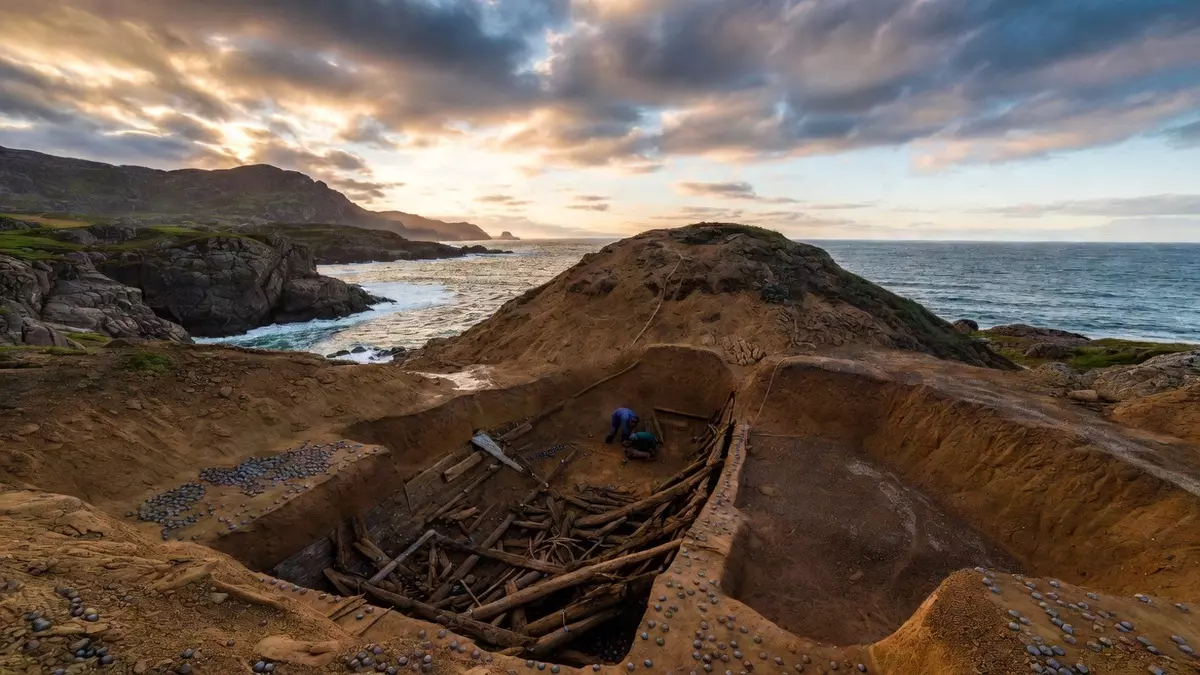
Archaeologists in Norway have uncovered one of the earliest known ship burials in Scandinavia, dramatically pushing back the origins of this iconic Viking tradition by nearly a century. The monumental find at Herlaugshaugen on the island of Leka dates to around CE 700, revealing that elaborate maritime burials and the social structures behind them were already emerging in the late seventh to early eighth century.
This discovery challenges long-held assumptions about the timeline of the Viking Age. It suggests that the powerful combination of seafaring technology, elite status display, and regional leadership developed earlier than previously thought, reshaping our understanding of how Norse society evolved before the famous raids of the late eighth century began.
Ancient Ship Burial in Norway Rewrites Early Viking Origins

### The Legendary Mound That Held a Ship
Herlaugshaugen, a prominent burial mound on Leka island, has long captured local imagination through legends of an early regional king. Rising visibly in the coastal landscape, the mound belongs to a broader tradition of large earthen monuments across northern Europe. While not all contain ships, those that do offer extraordinary insights into the beliefs and power of the people who built them.
Rather than launching a full-scale excavation of the massive mound, researchers from the Norwegian University of Science and Technology (NTNU) adopted a strategic, low-impact approach. They dug targeted test trenches and used metal detectors to survey the site. This careful method paid off when the team recovered 29 iron rivets — the fasteners once used to join the planks of a wooden ship. Even after the timber decayed, these metal pieces remained in their original positions. Small fragments of preserved wood still clinging to some rivets enabled precise radiocarbon dating, firmly placing the burial around CE 700.

### Rewriting the Timeline of Ship Burials
For decades, scholars dated the rise of large-scale ship burials in Scandinavia to around CE 800, coinciding with the traditional beginning of the Viking Age. Famous examples like the Oseberg and Gokstad ships come from the ninth and tenth centuries. In contrast, the early seventh-century Sutton Hoo ship burial in England was seen as somewhat exceptional or influenced by different traditions.
The Herlaugshaugen discovery bridges this gap. It demonstrates that Scandinavian elites were already conducting monumental ship burials by the late 700s, suggesting the practice developed locally and possibly influenced or paralleled developments elsewhere in northern Europe. The find closes an important chronological gap and indicates that key elements of Viking Age culture — including advanced shipbuilding, status display through burial, and control over maritime resources — were taking shape well before the first recorded Viking raids on Lindisfarne in 793 CE.
### What the Ship Burial Reveals About Late Iron Age Society
Constructing a burial mound of this size demanded enormous resources, coordinated labor, and skilled craftsmanship. Building the ship itself, transporting it inland or up the slope, and then covering it with tons of earth required strong leadership and a hierarchical society capable of mobilizing large groups of people. This points to emerging chieftains or petty kings who used such ceremonies to reinforce their authority and legacy.
The presence of a seagoing vessel in the mound also highlights the growing importance of maritime power. By CE 700, communities along Norway’s rugged coast were already developing the shipbuilding expertise and navigational skills that would later define the Viking Age. Leka’s location near important sailing routes placed it within broader networks of trade, communication, and cultural exchange that connected different parts of Scandinavia and beyond.
Excavations in 2023 not only confirmed the rivets but also uncovered clinker nails and additional wooden fragments, verifying that a substantial vessel had been placed inside the mound. These details strengthen the interpretation that Herlaugshaugen was a high-status burial intended to honor a powerful individual with strong ties to the sea.
### Connections to Broader European Traditions
The Herlaugshaugen ship burial now stands alongside Sutton Hoo as evidence that ship burials were a shared elite practice across parts of early medieval Europe. While regional variations existed, the core idea — placing the deceased in a ship to symbolize journeys to the afterlife or to display earthly power — appears in both Anglo-Saxon England and Norway around the same broad period.
This connection raises fascinating questions about cultural exchange during the seventh and eighth centuries. Ideas, technologies, and perhaps even people moved along the North Sea routes, influencing burial customs and social organization on both sides of the water. The Leka find strengthens the case that Scandinavia was not isolated but actively participating in wider northern European developments long before the Viking expansion.
### Why This Discovery Is So Significant
Most monumental ship burials known from Norway date to the height of the Viking Age, centuries after CE 700. The earlier date at Herlaugshaugen forces archaeologists to reconsider the pace and origins of social complexity in the region. It suggests that the foundations of what we recognize as Viking society — including centralized leadership, advanced maritime capabilities, and elaborate status rituals — were already forming during the Late Iron Age (also known as the Merovingian Period in parts of Europe).
The find also demonstrates the value of targeted, non-destructive methods in modern archaeology. By combining careful test excavations with remote sensing and scientific dating, researchers gained crucial information while preserving much of the site for future study.
### Ongoing Research and Preservation
The site continues to be studied, with further analysis of the rivets, wood fragments, and surrounding mound material planned. Local legends and historical maps, including an 18th-century drawing, have helped guide the work and connect archaeological evidence with cultural memory. The Norwegian University of Science and Technology and its partners are committed to sharing results with both the academic community and the public.
Herlaugshaugen now joins a select group of early ship burials that illuminate the transition from the Migration Period to the full Viking Age. As more sites are investigated with modern techniques, our picture of early Scandinavian society will continue to sharpen.
### The Human Story Behind the Mound
Imagine a powerful leader on the windswept coast of Leka around CE 700. His people hauled a seaworthy ship up the slope, placed his body inside with meaningful possessions, and raised a massive earthen mound to honor his memory. This was no simple grave — it was a public statement of power, continuity, and connection to the sea. The Herlaugshaugen burial captures a pivotal moment when maritime prowess and elite authority were becoming intertwined, setting the stage for the transformative Viking Age that would follow.
### Conclusion: A New Chapter in Viking Origins
The ship burial at Herlaugshaugen on Leka island represents a landmark discovery in Scandinavian archaeology. Dating to around CE 700, it pushes back the timeline for monumental ship burials and reveals that key elements of Viking culture were already developing a century earlier than many scholars previously believed.
This extraordinary find enriches our understanding of the Late Iron Age, highlighting the rise of social hierarchy, maritime expertise, and regional power structures that would define the Viking Age. It also bridges Scandinavian and broader European traditions, showing how ideas and practices flowed across the North Sea long before the famous Viking voyages began.
As researchers continue to study the site, Herlaugshaugen stands as a powerful reminder that the roots of the Viking Age run deeper than we once thought. The ancient mound on Leka not only honors a long-forgotten leader but also helps modern audiences connect with the early chapters of one of history’s most dynamic eras.
### FAQ: Herlaugshaugen Ship Burial Discovery
**How old is the Herlaugshaugen ship burial?**
The burial dates to around CE 700, in the late seventh or early eighth century, based on radiocarbon dating of wood attached to iron rivets.
**Why is this discovery important for Viking history?**
It pushes back the timeline for large ship burials in Scandinavia by about 100 years, showing that key Viking traditions developed earlier than previously thought.
**What evidence confirmed the presence of a ship?**
Archaeologists recovered 29 iron rivets, clinker nails, and wooden fragments that once formed part of a large wooden vessel.
**How does it compare to Sutton Hoo?**
Like the early seventh-century Sutton Hoo burial in England, Herlaugshaugen shows elite ship burial practices, but it confirms the tradition was also well established in Scandinavia earlier than many models suggested.
**What does the burial reveal about society at the time?**
The massive scale indicates strong leadership, social hierarchy, and the ability to organize large labor forces — all signs of emerging complex societies tied to maritime power.
**Will more research be done at the site?**
Yes. Further analysis of the materials and non-invasive studies are planned to learn more while preserving the mound for future generations.