
Table of Contents
- 1. Unlocking a Lost Chapter of Human History
- 2. The Southern African Climate Refugium
- 2.1. A Sanctuary from Environmental Chaos
- 2.2. Technology Shifts Without Immigrant Waves
- 3. Occasional Migrations: The Ancient DNA Footprint
- 4. Evolutionary Breakthroughs: Sweat, Brains, and Survival
- 5. The Modern Genetic Legacy
- 6. Conclusion: A New View of Human Beginnings
- 7. Frequently Asked Questions
- 7.1. How long were these ancient populations isolated?
- 7.2. What is a climate refugium?
- 7.3. How does this study change the theory of human origins?
- 7.4. Who are the closest living descendants of this ancient lineage?
- 7.5. What did the researchers discover about the ancient humans’ brains?
Ancient DNA Proves Humans Lived Isolated in Southern Africa for 100,000 Years
A groundbreaking genetic study has rewritten the history of human evolution, revealing that ancient populations in southern Africa lived in near-total isolation for up to 200,000 years. During this immense stretch of time, these communities developed a completely unique set of genetic traits that fundamentally shaped the biological and cognitive blueprint of modern Homo sapiens.
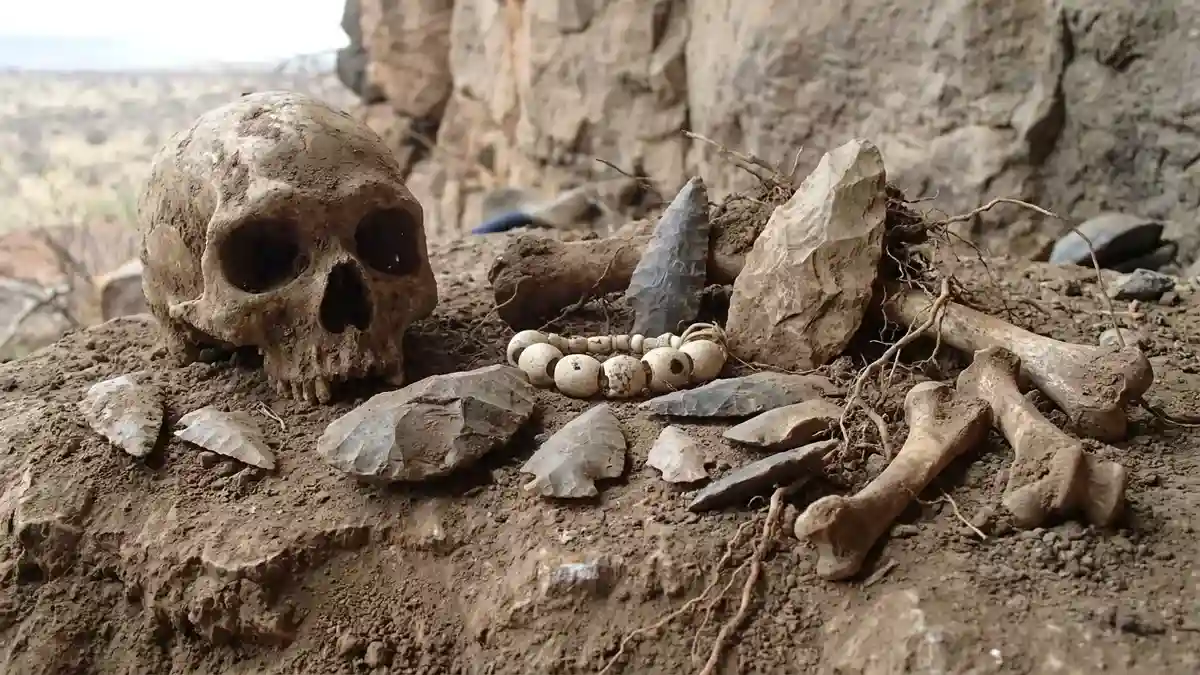
By sequencing the complete genomes of 28 ancient individuals who lived between 10,200 and 150 years ago, an international research team has provided irrefutable evidence that regions south of the Limpopo River served as a vital, independent cradle for our species. The landmark study, published in the journal Nature, challenges long-held assumptions about how, where, and why early humans evolved the traits we possess today.
Ancient DNA Proves Humans Lived Isolated in Southern Africa for 100,000 Years
Unlocking a Lost Chapter of Human History
For decades, mainstream anthropology favored a single-origin theory, suggesting that modern humans arose predominantly in eastern Africa before spreading across the globe. However, this comprehensive genomic analysis forces scientists to reconsider the profound contributions of the African continent’s southern tip.

The research reveals that the genetic profile of individuals who inhabited southern Africa more than 1,400 years ago falls completely outside the range of genetic variation seen in any modern population—including the present-day Khoe-San communities who live in the region today. This ancient lineage possessed an astonishing degree of genetic diversity, containing a treasure trove of unique variants that have completely vanished from the rest of the modern human gene pool.
The Southern African Climate Refugium
How did a population remain so structurally distinct for so many millennia? The answer lies in the ancient climate and geography of the region.
A Sanctuary from Environmental Chaos
Genetic models constructed by the researchers suggest that southern Africa functioned effectively as a climate refugium. As shifting global weather patterns brought extreme droughts and environmental volatility to other parts of the continent, the ecosystem south of the Limpopo River remained relatively stable and hospitable. This allowed early human hunter-gatherers to settle, thrive, and sustain themselves across countless generations without needing to migrate in search of resources.
 2,500-Year-Old Celtic Chariot Burial With Gold and Etruscan Treasures Discovered in Germany
Technology Shifts Without Immigrant Waves
This intense demographic stability is backed up by the physical archaeological record. At renowned historical locations like the Matjes River Rock Shelter, excavations reveal distinct, dramatic shifts in tool technology, artistic styles, and foraging techniques over thousands of years.
In most parts of Europe and Asia, a sudden shift in technology points to a conquest or migration wave, where incoming groups replaced the locals. In southern Africa, however, the DNA tells a completely different story: the exact same isolated population stayed put, independently innovating and changing their culture from within without any external genetic influence.

Occasional Migrations: The Ancient DNA Footprint
While the core population remained fiercely isolated for the vast majority of its history, the study did detect signs of small-scale, outward migrations during periods of exceptionally mild climate.
Long before any major external populations moved into the southern tip of Africa, tiny groups occasionally journeyed northward. Geneticists successfully detected unmistakable traces of this ancient southern African DNA in skeletal remains found in modern-day Malawi dating back roughly 8,000 years. This confirms that while the region was highly isolated, it occasionally acted as a source population, slowly dispersing its unique genetic material northward.
Evolutionary Breakthroughs: Sweat, Brains, and Survival
Perhaps the most astonishing revelation from the Nature study is the identification of dozens of distinct genetic variants unique to Homo sapiens that were incredibly widespread among these ancient southern Africans. These specific mutations provide a literal road map of how our species adapted to survive.
| Biological System | Specific Genetic Adaptations | Evolutionary Advantage |
| Thermoregulation | Enhanced kidney function, optimized fluid balance, and advanced sweating mechanisms. | Allowed early humans to maintain safe body temperatures and hunt effectively in arid, hot climates. |
| Neurological Growth | Targeted modifications to neuron growth pathways and synaptic connections. | Supported the development of complex thinking, long-term memory, and heightened attention spans. |
| Immune System | Diversified baseline immune responses and specialized pathogen defense. | Protected isolated communities from localized tropical diseases and environmental bacteria. |
These findings strongly imply that the very traits defining humanity today—our high-level cognitive abilities, advanced problem-solving, and unique physical stamina—have their deepest evolutionary roots firmly planted in this southern lineage.
The Modern Genetic Legacy
The prehistoric southern African group did not simply vanish into history; their DNA forms the literal bedrock of the modern human race. Geneticists estimate that roughly 50 percent of all genetic variation present across the entire modern global population can be traced directly back to this isolated prehistoric group.
While their genetic footprint is distributed globally, it remains most concentrated within the indigenous San communities currently living in Namibia, Botswana, and South Africa. Modern San individuals retain an unparalleled 80 percent of this ancient southern African ancestry, making them the direct custodians of one of the oldest and most significant lineages in the history of our species.
Conclusion: A New View of Human Beginnings
The completion of this comprehensive genomic timeline shatters the outdated idea of a single, localized geographic point for human origins. Instead, the evidence paints a much more complex, interconnected, and fascinating picture. Southern Africa supported a highly stable, deeply innovative, and genetically isolated population of Homo sapiens for over 100,000 years. By exploring how these ancient people adapted to their environments, science has uncovered the literal foundations of human thought, survival, and identity.
Frequently Asked Questions
How long were these ancient populations isolated?
The study demonstrates that populations in southern Africa lived in near-complete genetic isolation for a minimum of 100,000 years, with some data suggesting the isolation could have lasted for up to 200,000 years.
What is a climate refugium?
A climate refugium is a geographic area that remains relatively unaffected by regional or global climate changes. For early humans, southern Africa provided a stable sanctuary with ample resources while other parts of the continent faced severe environmental disruptions.
How does this study change the theory of human origins?
It proves that human evolution did not happen exclusively in eastern Africa. Instead, it shows that southern Africa was an equally critical center of evolution where core human traits—such as advanced brain development and body temperature regulation—were developed over millennia of isolation.
Who are the closest living descendants of this ancient lineage?
The modern San Bushman communities residing in Namibia, Botswana, and South Africa are the closest living descendants, retaining up to 80 percent of this unique, prehistoric southern African ancestry.
What did the researchers discover about the ancient humans’ brains?
The genomic analysis revealed unique genetic variants related to neuron growth and cognitive abilities. This suggests that crucial aspects of human intelligence, complex thinking, and attention spans originally developed and stabilized within this isolated southern population.