
Table of Contents
- 1. The Anatomy of a Phoenician Oil Bottle
- 2. Organic Residue Analysis: Bottling the Fragrance of Home
- 3. Perfume as a Tool for Elite Diplomacy and Alliances
- 4. Geopolitical Instability and the Disappearance of the Bottles
- 5. Conclusion
- 6. Frequently Asked Questions
- 6.1. What are Phoenician oil bottles and where were they discovered?
- 6.2. How old are these ancient perfume vessels?
- 6.3. What ingredients were discovered inside the bottles?
- 6.4. Where were these bottles originally manufactured?
- 6.5. Why did these scented oils disappear from the ancient markets?
Phoenician Oil Bottles Reveal the Role of Scent in Ancient Identity and Trade
While archaeologists routinely uncover durable artifacts like stone pottery, metallic coins, and skeletal remains, the sensory experiences of the ancient world have long been considered lost to time. However, a groundbreaking interdisciplinary study has successfully traced the elusive fragrances that once sat at the absolute heart of Phoenician culture. By analyzing 51 ceramic oil vessels recovered from the ancient site of Motya—a small island off the coast of Sicily—researchers have uncovered how aromatic oils contributed to personal identity, cultural memory, and political exchange across the Iron Age Mediterranean.
The comprehensive study, published in the Journal of Archaeological Method and Theory, provides a fascinating look into the invisible sensory threads that bound distant colonies to their homelands. Through advanced chemical analysis, scientists have resurrected the olfactory landscape of the ancient world, proving that perfume was far more than a simple luxury commodity; it was a powerful tool for survival, diplomacy, and cultural preservation.
Phoenician Oil Bottles Reveal the Role of Scent in Ancient Identity and Trade
The Anatomy of a Phoenician Oil Bottle
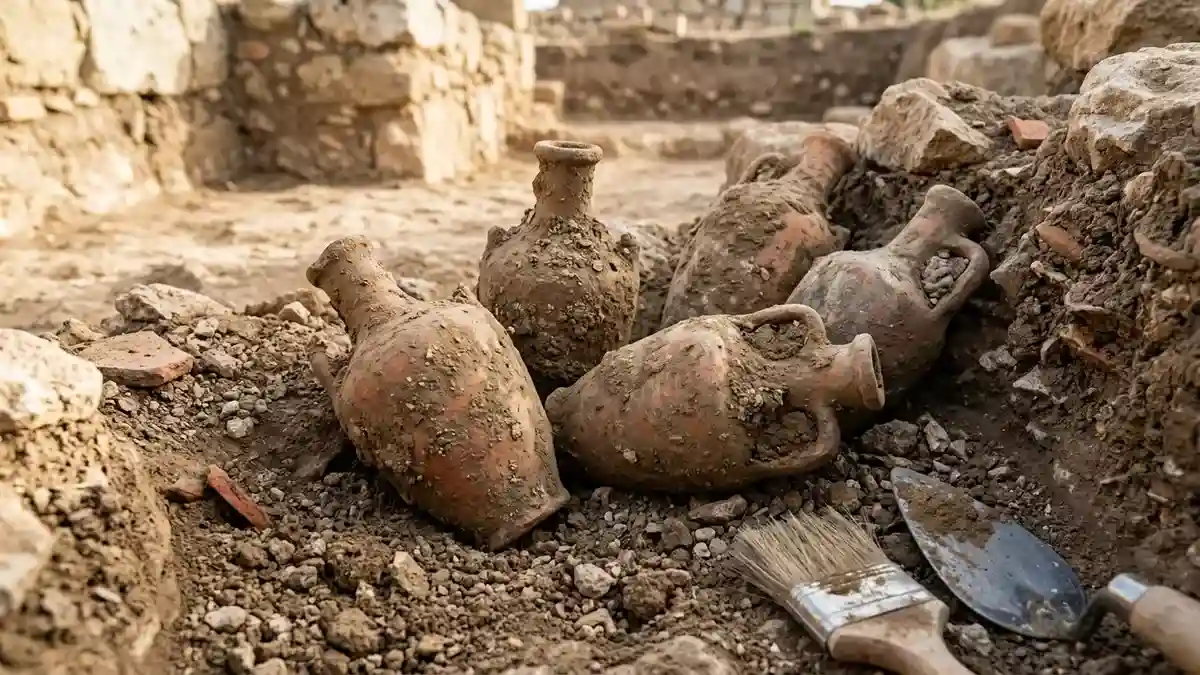
The objects at the center of the investigation are small, unassuming ceramic containers referred to by specialists as “Phoenician oil bottles.” Measuring between 15 and 18 centimeters (roughly 6 to 7 inches) in height, these narrow-necked, plain vessels were engineered for maximum practical utility rather than artistic display. They were designed to hold precious liquids, with thin spouts optimized for dispensing oils drop by drop to prevent wasteful spilling.
The 51 analyzed vessels span a long chronological window stretching from the 8th to the 6th centuries BCE. Interestingly, excavation teams uncovered these bottles across a diverse array of urban contexts within Motya, including standard domestic kitchens, formal civic cemeteries, and high-status sacred sanctuary areas. This widespread distribution proves that the bottles were integrated into multiple facets of daily life, serving utilitarian, funerary, and religious functions simultaneously.
Furthermore, physical and elemental testing of the raw clay fabric yielded a major geographic revelation. The chemical signature of the pottery proves that production originally began thousands of miles away in southern Phoenicia—a coastal Levantine region stretching from modern-day Beirut in Lebanon down to the Carmel coast. This confirms that the bottles were manufactured in the imperial heartland before being shipped across open waters to the western frontiers.

Organic Residue Analysis: Bottling the Fragrance of Home
To discover exactly what these narrow clay bottles contained, scientists utilized cutting-edge organic residue analysis, a laboratory methodology that extracts and identifies microscopic chemical compounds trapped within the porous interior walls of ancient pottery.
The laboratory tests yielded remarkable results, detecting explicit chemical signatures of ancient organic materials inside eight of the primary vessels:
Base Carrier Materials: Traces of highly refined plant-based lipids, indicating the use of premium vegetable or olive oils as a smooth base.
Aromatic Pine Resins: High concentrations of pine resin compounds, used to infuse the oil with a sharp, woody fragrance while acting as a natural preservative to slow down oxidation.
Mastic Resin Exudates: Traces of mastic, a valuable resin harvested from the mastic tree, long celebrated in antiquity for its sweet, balsamic scent and medicinal properties.

The presence of these combined resins provides indisputable proof that the vessels were used to store highly aromatic unguents and specialized perfumes.
For Phoenician settlers leaving the Levant to establish new colony networks across the Mediterranean, these heavily scented oils functioned as potent sensory time capsules. In psychology, smell is recognized as the sense most deeply linked to memory and emotion. Inhaling the familiar scent of native pine and mastic allowed displaced Phoenician families to maintain an intense, intimate connection to their homeland traditions, reinforcing a shared cultural identity among geographically scattered communities.
“Intangible factors like smell, memory, and shared sensory experiences were just as critical to ancient migration as the movement of physical people and weapons. Scents allowed communities to carry their heritage across the seas.” — Research Team Analysis, Journal of Archaeological Method and Theory
Perfume as a Tool for Elite Diplomacy and Alliances
The Phoenicians were globally renowned as master seafarers, unparalleled merchants, and innovators in the migration of complex cultural practices. Because Motya maintained a consistent, uninterrupted supply of these specialized oil bottles for more than two centuries, researchers believe the product represented a highly standardized, universally recognized luxury brand tradition across the ancient world.
Remarkably, these oil bottles did not remain confined to Phoenician neighborhoods. Archaeologists have routinely excavated these exact Levantine vessels within elite, high-status contexts among entirely non-Phoenician indigenous populations throughout the western Mediterranean.
This foreign distribution indicates that the Phoenicians successfully weaponized their perfume industry for political gain. Offering exotic, beautifully scented oils to foreign chieftains and native aristocrats became a central strategy for building trade alliances, securing peaceful borders, and projecting imperial cultural influence without relying on military force. The shared experience of luxury perfumes allowed distinct ethnic groups to find common cultural ground.
Geopolitical Instability and the Disappearance of the Bottles
For decades, the sudden decline and eventual disappearance of these signature oil bottles from western Mediterranean markets by the end of the 6th century BCE was blamed on the economic rise of Carthage, a powerful Phoenician daughter colony that eventually came to dominate regional trade.
However, this new study proposes a more complex, geopolitical explanation rooted in the eastern homeland. The end of the 6th century BCE coincided with catastrophic political upheavals across the Levant, most notably the destructive military campaigns of the Neo-Babylonian Empire.
The researchers argue that severe imperial instability, localized warfare, and the shifting of trade capitals within the Phoenician heartland likely fractured the centralized manufacturing centers and disrupted the highly specialized maritime trade routes required to ship the bottles westward. This economic collapse in the East, rather than commercial competition from Carthage, caused the rapid evaporation of the historic product line from the Sicilian markets.
Conclusion
The micro-analysis of the Motya oil bottles serves as a powerful reminder that the ancient world was not experienced merely in black and white or through silent stones. It was a place vibrantly filled with distinct sounds, bright colors, and powerful aromas. By utilizing advanced chemical engineering to peer into the pores of ancient clay, modern science has uncovered an invisible thread of perfume that successfully bound distant shores, shaped imperial identities, and facilitated peaceful cultural exchange across the ancient Mediterranean.
Frequently Asked Questions
What are Phoenician oil bottles and where were they discovered?
They are small, plain ceramic vessels measuring 15 to 18 centimeters tall, engineered with narrow necks to hold precious liquids. The 51 samples analyzed in this study were recovered from domestic, burial, and sacred sites on the island of Motya, located just off the coast of Sicily.
How old are these ancient perfume vessels?
The analyzed bottles date back to the Iron Age Mediterranean, specifically manufactured and circulated between the 8th and 6th centuries BCE.
What ingredients were discovered inside the bottles?
Advanced organic residue analysis revealed traces of plant oils combined with aromatic pine resin and mastic resin. These ingredients were highly valued in antiquity for creating long-lasting, sophisticated perfumes and medicinal unguents.
Where were these bottles originally manufactured?
Chemical testing of the ceramic clay fabric proved that the bottles were not made locally in Sicily. Instead, they were mass-produced in the original Phoenician homeland, in a coastal region stretching from modern-day Beirut to the Carmel coast, before being exported across the sea.
Why did these scented oils disappear from the ancient markets?
While historians previously believed the rise of Carthage killed the trade, new evidence suggests that severe political instability and military invasions in the Levant during the Neo-Babylonian period shattered the eastern manufacturing centers, cutting off the supply chain by the end of the 6th century BCE.