
Table of Contents
- 1. The Brutal Realities of the Saltpetre Plantation System
- 2. The Red Circles of the Floodplain: A 340-Square-Mile Network
- 3. OSL Dating Tracks Carbon-Free Agricultural Survival
- 4. Deconstructing the Identity of the “Zanj” Rebels
- 5. The Mystery of the Final 13th-Century Collapse
- 6. Frequently Asked Questions
- 6.1. What was the Zanj rebellion?
- 6.2. How did this new study change our view of the rebellion?
- 6.3. What is OSL dating and how was it used?
- 6.4. Who were the people referred to as the “Zanj”?
- 6.5. Why was this massive farming system eventually abandoned in the 13th century?
New Study of Ancient Iraqi Ridges Shatters Zanj Rebellion Myths
A groundbreaking archaeological study in southern Iraq is fundamentally reshaping our understanding of the Zanj rebellion, one of the largest and most devastating slave uprisings in Islamic history. For centuries, mainstream history has recorded that the 15-year conflict (869–883 CE) utterly crippled the Abbasid Caliphate’s economy, permanently destroying the agricultural infrastructure around Basra and leaving vast swathes of fertile farmland completely desolate.
However, state-of-the-art soil testing has completely overturned this long-standing narrative. By analyzing a massive, abandoned network of ancient canals and farming ridges in the Shatt al-Arab floodplain, an international research team has proven that complex agriculture survived the war and flourished for centuries longer than previously believed. This discovery forces historians to reconsider the true long-term economic impact of the rebellion and shines a direct spotlight on the landscape heritage of early human labor.
New Study of Ancient Iraqi Ridges Shatters Zanj Rebellion Myths
The Brutal Realities of the Saltpetre Plantation System
To understand the scale of the Zanj rebellion, one must examine the oppressive economic system that triggered it. During the 9th century, wealthy elites in the Abbasid capital of Baghdad invested heavily in reclaiming the marshy, waterlogged floodplains of southern Iraq. To transform this harsh terrain into profitable plantations for sugarcane cultivation, they imported thousands of enslaved laborers, collectively referred to in medieval texts as the “Zanj.”
These laborers were subjected to horrific, industrial-scale exploitation. They spent their days wading through toxic marshes, physically clearing heavy mud, digging endless irrigation canals, and manually scraping bitter saltpetre (potassium nitrate) off the topsoil to desalinate the land for farming.
In 869 CE, a charismatic leader named Ali bin Muhammad tapped into this deep well of human suffering. He mobilized the workers by denouncing the cruelty of the ruling class. The medieval chronicler Al-Tabari, in his famous Annals of Prophets and Kings, records a dramatic moment where Ali confronted slave owners directly in front of their captives, declaring: “I wanted to behead you all, for the way you have treated these slaves, with arrogance and coercion… In ways that Allah has forbidden.”

The Red Circles of the Floodplain: A 340-Square-Mile Network
For decades, geographers and archaeologists have mapped a staggering network of linear ridges, dried-up canals, and secondary water channels stretching across more than 800 square kilometers (roughly 340 square miles) of the Iraqi desert. This footprint contains approximately 7,000 distinct, human-made linear earthworks, some measuring well over a kilometer in length.
Traditional historical consensus held that this entire landscape was sculpted exclusively by enslaved African hands in the decades leading up to the 869 CE revolt. When the Zanj rose up, burned plantations, defeated imperial legions, and famously sacked the metropolis of Basra, historians assumed the entire agricultural system was instantly smashed and abandoned, never to recover.
OSL Dating Tracks Carbon-Free Agricultural Survival
The new study, published in the journal Antiquity, utilized Optically Stimulated Luminescence (OSL) dating to challenge this assumption. OSL is a highly advanced laboratory technique that measures the last time specific quartz grains within soil were exposed to direct sunlight, allowing scientists to date when earthworks were actively built, shifted, or cleared by human farmers.
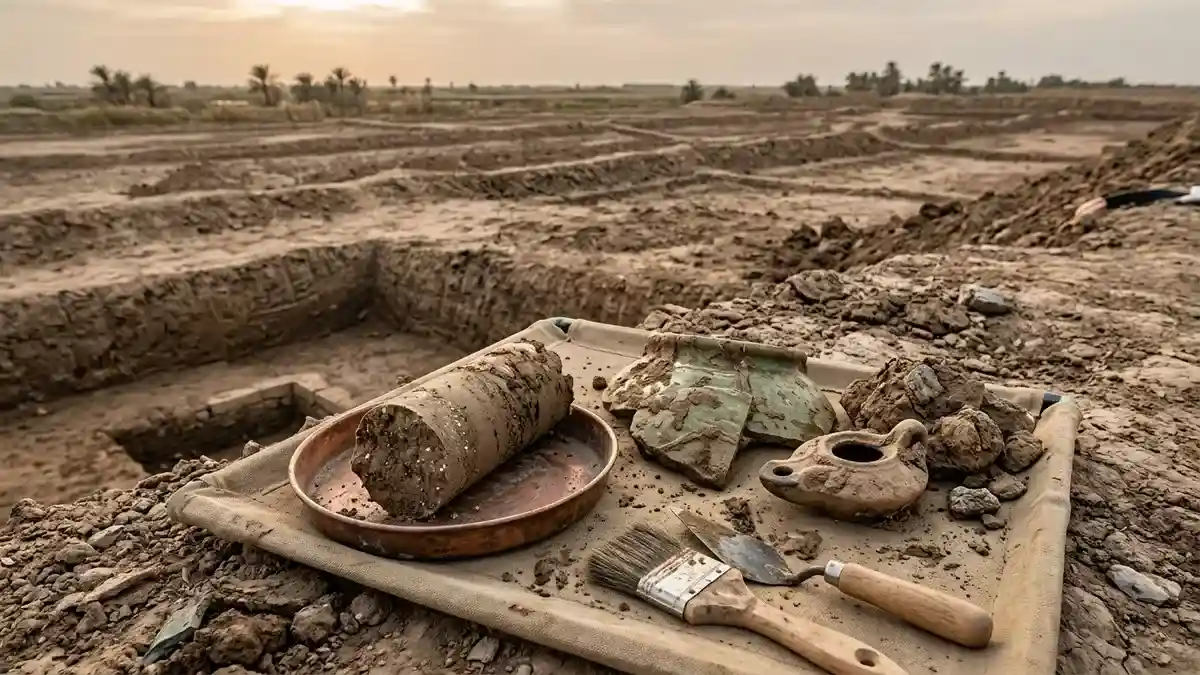
In 2022, field researchers excavated four targeted sites across the 7,000 ridge features to pull deep core soil samples. The laboratory results yielded a historical bombshell:
The Old Theory: Every ridge was abandoned by 883 CE when the Abbasid military finally crushed the rebellion.
The New OSL Evidence: Multiple primary farming ridges remained under active, continuous cultivation a century or more after the revolt was suppressed. The soil profiles returned dates extending comfortably into the 11th, 12th, and even 13th centuries.
This scientific data proves that the Zanj rebellion did not permanently collapse the local agrarian economy. While the war undoubtedly caused immense, short-term trauma and localized destruction, the core infrastructure of canals and ridges was resilient enough to survive. Free peasants, surviving laborers, and returning landowners successfully reclaimed the earthworks, keeping the irrigation systems operational throughout the middle and late medieval periods.
“The OSL dates completely undermine the idea that the Zanj rebellion left a permanent scar of desolation. Agriculture rebounded and persisted for generations under different social dynamics.” — Research Group Report, Antiquity
Deconstructing the Identity of the “Zanj” Rebels
The study also delves into the complex, fluid social makeup of the rebel armies. In medieval Arabic text, “Zanj” was a sweeping, often ambiguous term broadly used to describe people from the Swahili coast of East Africa. However, modern historical and genetic reassessments suggest a much wider diaspora. Many of the enslaved individuals may have been trafficked from deep within West and Central Africa, moving along grueling trans-Saharan trade routes long before arriving in the Mesopotamian delta.
Furthermore, court records reveal that the rebellion was not a racially exclusive movement. The core force of African laborers successfully forged alliances with local Arabic-speaking peasant farmers, marsh dwellers, and marginalized seasonal workers who were equally desperate to escape the crushing tax burdens and military coercion of the central Abbasid state. This diverse coalition explains why the rebellion was uniquely resilient, successfully holding off the entire might of the imperial caliphate for nearly fifteen years.
The Mystery of the Final 13th-Century Collapse
While the OSL data successfully extends the lifespan of this massive farming network by nearly 400 years, it also introduces a haunting new historical mystery: Why was this highly successful, 340-square-mile agricultural engine completely and permanently abandoned between the 13th and 14th centuries?
Archaeologists are currently evaluating several catastrophic factors that hit the region simultaneously during this era:
The Mongol Invasions: The mid-13th century saw the violent collapse of the Abbasid Caliphate under the weight of Mongol campaigns, which severely disrupted centralized infrastructure funding and rural security.
Climate Alterations: Shifting monsoonal patterns and severe mega-droughts may have altered the volume of the Tigris and Euphrates rivers, making the maintenance of massive canal networks physically impossible.
Epidemic Diseases: Outbreaks of systemic plagues routinely decimated rural agricultural workforces during this window, leading to a sudden shortage of labor required to clear silt from the channels.
Regardless of why it ultimately died, this vast matrix of ancient ridges is finally receiving the global recognition it deserves. Once dismissed as dead ruins or ignored entirely by modern developers, these earthworks are now celebrated as a monument to human resilience, labor history, and the enduring heritage of southern Iraq.
Frequently Asked Questions
What was the Zanj rebellion?
The Zanj rebellion was a massive, 15-year slave uprising (869–883 CE) against the Abbasid Caliphate in southern Iraq. Led by Ali bin Muhammad, it brought together thousands of exploited African laborers and local poor peasants who successfully captured major cities like Basra.
How did this new study change our view of the rebellion?
Traditional history stated that the rebellion completely destroyed the region’s agricultural economy, leaving the land permanently abandoned. This new study uses scientific soil dating to prove that farming actually survived the war and continued successfully for nearly 400 more years.
What is OSL dating and how was it used?
Optically Stimulated Luminescence (OSL) dating is a laboratory technique that determines the exact time mineral grains were last exposed to sunlight. Scientists used it on the soil of the ancient Iraqi farming ridges to prove they were actively maintained well into the 13th century.
Who were the people referred to as the “Zanj”?
While medieval chroniclers used the term generally for East African slaves from the Swahili coast, modern research indicates many may have arrived from West and Central Africa via Saharan trade routes. The rebel group also included native Iraqi peasants who shared the same economic struggles.
Why was this massive farming system eventually abandoned in the 13th century?
The exact cause remains unknown, but researchers believe a combination of the devastating Mongol invasions, rapid climate shifts, river blockages, and epidemic diseases caused the final collapse of the irrigation network.