
Table of Contents
- 1. The Dawn of Industrial Viticulture in the Jezreel Valley
- 1.1. Contextualizing Early Bronze Age Urban Growth
- 2. Unlocking the Secrets of Canaanite Folk Cults
- 2.1. The Ram-Shaped Libation Mechanism
- 2.2. Open-Air Worship vs. Official Temple Rituals
- 3. Bridging the Gap in Biblical Archaeology
- 4. Bringing the Ancient Jezreel Valley to the Public
- 5. Frequently Asked Questions
- 5.1. What major discoveries were made near Tel Megiddo?
- 5.2. How did the ancient ram-shaped vessel function?
- 5.3. What is the historical significance of the 5,000-year-old winepress?
- 5.4. What does the location of the Canaanite artifacts tell us about ancient religion?
- 5.5. Where can the public view these newly discovered artifacts?
5,000-Year-Old Winepress Unveils Ancient Canaanite Rituals
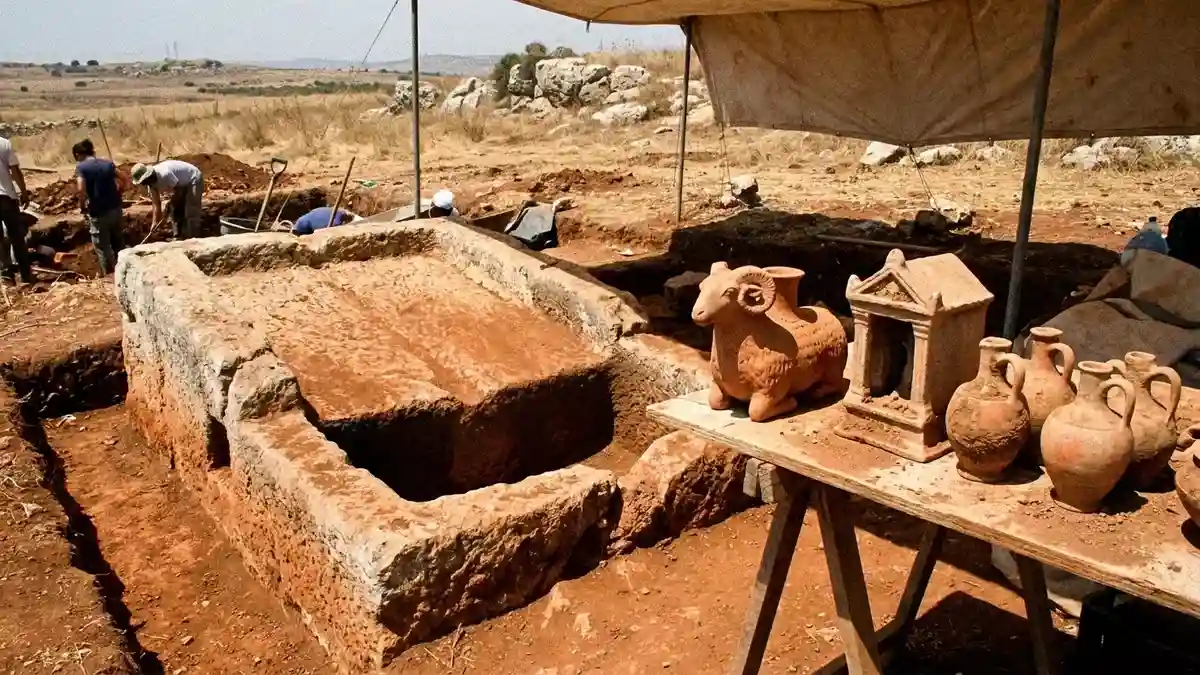
An extraordinary archaeological campaign in northern Israel has brought to light a vibrant window into the industrial and spiritual foundations of the ancient Near East. While executing routine rescue excavations ahead of a major infrastructure expansion for Highway 66, researchers uncovered a highly stratified historic landscape in the immediate vicinity of Tel Megiddo, situated within the fertile Jezreel Valley.
5,000-Year-Old Winepress Unveils Ancient Canaanite Rituals
The Dawn of Industrial Viticulture in the Jezreel Valley
The oldest occupational horizon identified at the site dates securely to the Early Bronze Age IB period, roughly 5,000 years ago. This particular epoch is universally recognized by historians as a crucial turning point in human history, marking the definitive collapse of small chalcolithic villages and the rapid rise of the world’s very first fortified cities.
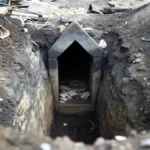
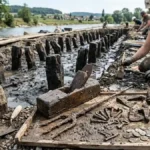
At the heart of this Early Bronze Age sector, archaeologists exposed a beautifully engineered, rock-hewn winepress. This industrial installation features a meticulously smoothed, sloped limestone treading floor where laborers once crushed fresh grapes with their feet. The extracted juice naturally funneled down the incline into a deep, rock-cut collection vat designed to hold large volumes of fermenting must.
Contextualizing Early Bronze Age Urban Growth
The discovery of a formalized winepress from this early era serves as definitive proof that highly organized, large-scale agricultural production was fully operational during the birth of urban civilization. Viticulture—the specialized science, production, and study of grapes—demands long-term territorial stability, deep botanical knowledge, and a centralized economic framework to manage distribution.
       [EARLY BRONZE AGE URBAN SPRAWL MODEL]

  [FORTIFIED CITY CORE] ──> Central Tel Megiddo Administration
          │
          └───> [SUBURBAN EXPANSION ZONE] (New Excavation Site)
                     │
                     ├───> Residential Stone Households
                     │
                     └───> *ROCK-HEWN INDUSTRIAL WINEPRESS*
Crucially, the excavation team discovered that the industrial winepress was surrounded by the foundational ruins of domestic residential structures. This spatial layout indicates that the site was once a thriving, expanding suburban settlement sprawling well beyond the primary defensive ring walls of nearby Tel Megiddo. The parallel evolution of residential neighborhoods and dedicated craft manufacturing zones demonstrates that the regional economy was diversifying rapidly, transitioning from simple survival farming into a highly commercialized, trade-driven urban ecosystem.
Unlocking the Secrets of Canaanite Folk Cults
While the Early Bronze Age layers highlighted the industrial brilliance of early city-dwellers, the excavation’s upper strata yielded equally profound discoveries from a much later phase of history: the Late Bronze Age II, dating back roughly 3,300 years. During this era, the region was governed by the Canaanites, a complex network of culturally unified city-states known for their sophisticated international maritime trade and elaborate religious pantheon.
Within this Late Bronze Age layer, researchers struck archaeological gold, unearthing a pristine assemblage of ritualistic and ceremonial artifacts. Unlike typical discoveries of this nature, which are almost universally recovered as fractured, scattered shards, these sacred items were found completely intact, having been deliberately and carefully buried together in antiquity.
           [THE CANAANITE CEREMONIAL LIBATION KIT]
                             │
     ┌───────────────────────┼───────────────────────┐
     ▼                       ▼                       ▼
Zoomorphic Vessel        Ceramic Shrine Model     Imported Cypriot Ware
(Ram-Shaped Pourer)      (Miniature Temple)       (Global Trade Links)
     │
     ▼
*Function: Channelling sacred wine, oil, or milk to the gods*
The Ram-Shaped Libation Mechanism
The true showpiece of the ritual collection is an extraordinary, zoomorphic (animal-shaped) libation vessel sculpted in the distinct image of a ram. This specialized container formed the centerpiece of a complete ceremonial kit, which included an array of small companion bowls.
Forensic analysis of the artifact’s design reveals a highly creative, interactive mechanism for presenting offerings to the gods. During a ritual event, a priest or practitioner would slowly pour a sacred liquid—such as freshly pressed wine, aromatic olive oil, or fresh milk—directly into a receptacle situated on the ram’s back. The liquid would then fill the hollow core of the figurine and stream out through its open mouth, symbolizing a living blessing or a direct material offering to the supernatural realm.
| Artifact Type | Material Composition | Preserved Condition | Primary Cultural Function |
| Zoomorphic Ram Vessel | Local Teracotta Clay | 100% Intact / Flawless | Used to channel and pour sacred liquid offerings |
| Shrine Model | Fine Sculpted Ceramic | Complete Profile | Served as a miniature, portable house for deities |
| Cypriot Juglets | Imported Fine Ceramic | Excellent Preservation | Highlights high-end trade links with ancient Cyprus |
Open-Air Worship vs. Official Temple Rituals
The unique geographical context in which these cultic objects were abandoned has forced scholars to re-evaluate how everyday religion operated in the ancient Levant. The libation kit was recovered next to a massive, prominent natural rock outcrop that sat in direct, unobstructed line-of-sight of Megiddo’s massive inner-city temple complex.
This strategic placement suggests that the artifacts were utilized by local rural farmers, herders, and field laborers practicing open-air rituals outside the heavily fortified city walls. Rather than traveling into the central urban temple to interact with the high-ranking official priesthood, common citizens likely maintained their own parallel, localized “folk cults.” These open-air altars allowed everyday workers to pray directly for agricultural fertility, timely rainfall, and successful harvests right alongside the fields that sustained their families.
Bridging the Gap in Biblical Archaeology
For over a century, Tel Megiddo has stood as one of the most intensively studied and historically significant archaeological mounds in the world, famously recognized in biblical literature as a focal point of ancient warfare and political power. However, previous historical excavations focused almost exclusively on the elite structures within the city core, such as palaces, public granaries, and monumental temple complexes.
+-----------------------------------------------------------------------+
|                    THE 1,700-YEAR EVOLUTION MATRIX                    |
|                                                                       |
|  5,000 Years Ago (Early Bronze)          3,300 Years Ago (Late Bronze)|
|  [ URBAN BIRTH & VITICULTURE ] <───────> [ CANAANITE FOLK WORSHIP ]   |
|  • Rock-cut treading floors              • Zoomorphic ram libation kit|
|  • Suburban neighborhood expansion       • Open-air field offerings   |
+-----------------------------------------------------------------------+
This latest Highway 66 excavation successfully bridges a major historical gap, providing a clear voice to the rural and industrial populations who lived along the periphery of the great city. The 5,000-year-old winepress maps the absolute infancy of regional urban commerce, while the 3,300-year-old Canaanite offerings prove that deep-seated spiritual traditions and localized worship remained deeply intertwined with the landscape for centuries.
Bringing the Ancient Jezreel Valley to the Public
To ensure these priceless cultural treasures are preserved for future generations, the Israel Antiquities Authority has coordinated a rapid conservation and public display initiative. The recovered materials have undergone painstaking stabilization treatments in specialized state laboratories to protect the fragile ancient ceramics and organic residues from environmental degradation.
The Megiddo artifacts—featuring both the physically reconstructed Early Bronze Age winepress and the intact Canaanite ram-shaped libation set—are officially transitioning from the active dirt fields to the public stage. The entire collection will be prominently exhibited at the Jay and Jeanie Schottenstein National Campus for the Archaeology of the Land of Israel in Jerusalem, providing visitors with an unparalleled glimpse into the profound industrial, economic, and spiritual roots that shaped the ancient Levant.
Frequently Asked Questions
What major discoveries were made near Tel Megiddo?
Archaeologists uncovered a 5,000-year-old rock-hewn winepress surrounded by residential buildings dating to the Early Bronze Age, alongside a highly rare, 3,300-year-old Canaanite ritual libation set featuring a ram-shaped vessel.
How did the ancient ram-shaped vessel function?
The zoomorphic vessel was used for sacred liquid offerings. A priest or worshipper would pour liquids like wine, milk, or oil into an opening on the ram’s back, which would then flow through the hollow ceramic body and stream out of its mouth as a symbolic gift to the gods.
What is the historical significance of the 5,000-year-old winepress?
Dating to the Early Bronze Age IB, it is one of the oldest structurally intact winepresses ever found in Israel. Its presence within an expanding residential suburb proves that organized, large-scale industrial winemaking developed in tandem with the world’s very first urban centers.
What does the location of the Canaanite artifacts tell us about ancient religion?
The ritual items were found buried next to a natural rock outcrop facing Megiddo’s official city temples. This suggests that rural farmers and common citizens practiced their own open-air “folk cults” and private ceremonies outside the city walls, parallel to official state religion.
Where can the public view these newly discovered artifacts?
The entire excavated assemblage, including the reconstructed winepress and the complete Canaanite ceremonial kit, will be on public display at the Jay and Jeanie Schottenstein National Campus for the Archaeology of the Land of Israel in Jerusalem.