
Table of Contents
- 1. Mapping the Strategic Outpost of Pyla-Vigla
- 2. The Architecture of Coexistence: Domestic Zones Explored
- 2.1. The Great Linear Complex
- 2.2. The Pillar Hall
- 2.3. The Misaligned Sector
- 3. Balancing Home Life, Weaponry, and Small-Scale Industry
- 4. A New Window Into Hellenistic Social Organization
- 5. Frequently Asked Questions
- 5.1. Where is Pyla-Vigla and why is it historically significant?
- 5.2. What unique discovery was made during the 19th excavation season?
- 5.3. What do the indoor artifacts tell us about life in the fortress?
- 5.4. Did families live alongside soldiers at Pyla-Vigla?
- 5.5. How did the settlement’s geography help its inhabitants?
Ancient Fortified Settlement in Cyprus Unlocks Hellenistic Outpost Secrets
A groundbreaking archaeological field campaign has unsealed a rare visual history of daily life inside a Hellenistic military garrison on the Mediterranean island of Cyprus. For decades, historical frameworks regarding ancient defensive outposts painted them as sterile, strictly functional barracks occupied solely by transient male guards.
However, the latest discoveries at the site of Pyla-Vigla—situated on a steep, coastal plateau overlooking Larnaca Bay—completely overturn this traditional narrative. Uncovered by an international research coalition, the excavation exposes a vibrant, multi-layered urban neighborhood where professional soldiers, local artisans, and civilian families balanced high-stakes military defense with complex domestic routines, cooking traditions, and commercial manufacturing.
Ancient Fortified Settlement in Cyprus Unlocks Hellenistic Outpost Secrets
Mapping the Strategic Outpost of Pyla-Vigla
The ancient settlement of Pyla-Vigla occupies a sheer, heavily defensible plateau along the southeastern coast of Cyprus. This vantage point granted the settlement an immense tactical advantage, allowing garrison commanders to keep watch over the entire Gulf of Larnaca while actively controlling crucial regional maritime trade lanes during the volatile early Hellenistic era.
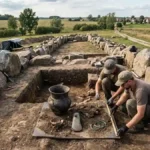
The long-term study of this fortified complex operates under the Pyla-Koutsopetria Archaeological Project (PKAP), an initiative led by researchers from Metropolitan State University of Denver, Trinity University, and Reed College. While previous digging phases targeted the outer perimeter—yielding defensive fortifications, heavy stone sling bullets, and physical casting molds for weapon manufacturing dating between the late 4th and early 3rd century BCE—the 19th field season shifted focus inward, penetrating the interior of the plateau to expose the civilian and residential heart of the fort.
       [TACTICAL OVERWATCH GRID OF PYLA-VIGLA]

      [THE HILL PLATEAU] ──> Overlooks the Gulf of Larnaca
               │
               ├───> Outer Zone: Defensive Ring Walls & Ballistics
               │
               └───> Inner Zone: *NEW RESIDENTIAL & CRAFT COMPLEX*
The Architecture of Coexistence: Domestic Zones Explored
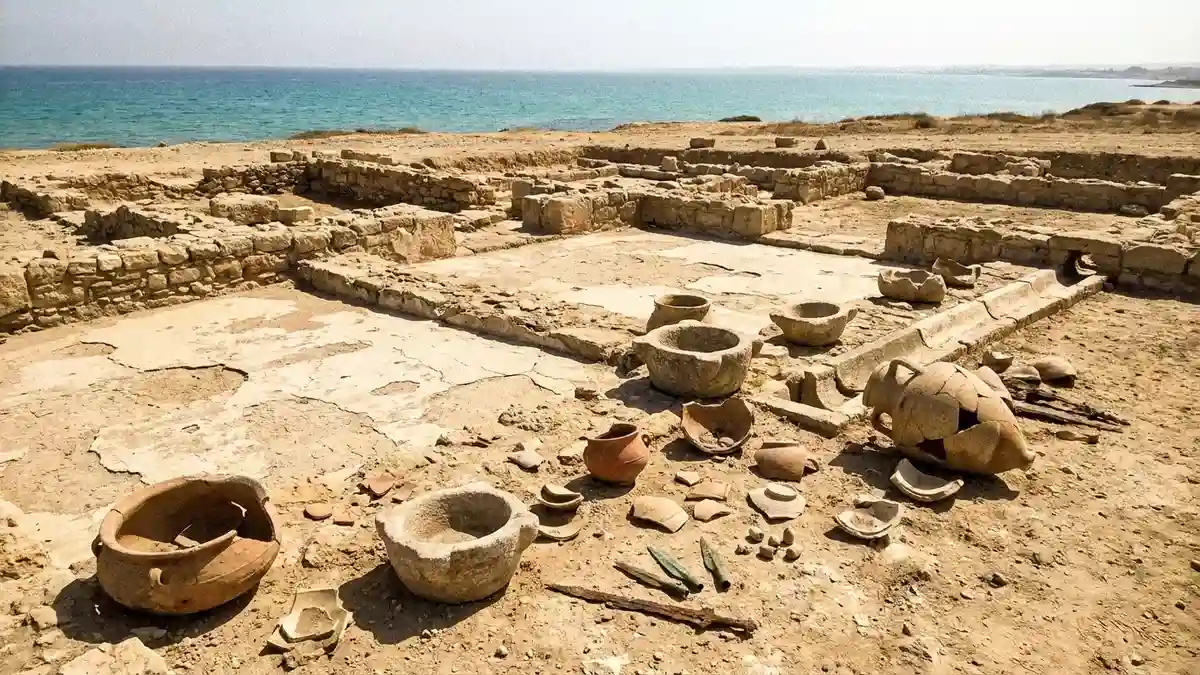
The residential zone exposed within the plateau’s interior features an organized network of streets and adjoining structural foundations. The team successfully mapped at least four independent stone buildings, displaying a dynamic history of structural redesign and expansion over successive generations:
The Great Linear Complex
The largest structure uncovered features an elongated rectangular plan initially composed of uniform parallel rooms. Over time, as family sizes shifted or new occupants moved in, residents inserted interior partition walls, remodeling the grand space into tighter, highly specialized private chambers.
The Pillar Hall
Positioned directly south of the linear complex, this separate building boasts a grand central hall characterized by massive stone column bases. This space likely served as a high-status family residence or a communal gathering hall where off-duty soldiers and community leaders convened.
The Misaligned Sector
East of the Pillar Hall sits a fourth building erected on a completely different structural axis. This spatial shift indicates a major secondary construction phase, pointing to a period of urban expansion or rapid rebuilding following a localized conflict or economic boom.
+-------------------------------------------------------------+
|             RESIDENTIAL ARCHITECTURE MATRIX                 |
|                                                             |
|   [Linear Complex]  ──> Partitioned rows of domestic rooms  |
|   [Pillar Hall]     ──> Communal hall with heavy stone bases|
|   [Eastern Blocks]  ──> Misaligned walls indicating growth  |
+-------------------------------------------------------------+
Balancing Home Life, Weaponry, and Small-Scale Industry
The physical artifacts extracted from the flooring of these buildings reveal an intricate, highly self-sufficient ecosystem. Rather than importing all daily necessities from the major mainland capitals of Cyprus, the community manufactured a vast array of goods right inside their fortified walls.
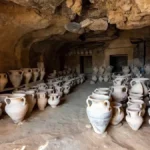
The floors of the structures—frequently finished with durable plaster—were packed with specialized stone washbasins, drainage channels, and fragments of massive storage amphorae. These features indicate that domestic spaces regularly doubled as small-scale workshops for processing agricultural products, pressing oil, weaving textiles, or storing wine.
| Artifact Category | Specific Items Recovered | Social & Historical Reality |
| Domestic & Kitchen | Wheel-thrown kitchenware, fine table pottery, grooming tools | Highlights civilian families executing standard daily care and household meals |
| Industrial Craft | Plastered drainage basins, stone mortars, trade amphorae | Confirms a self-sufficient community operating localized workshops |
| Military & Weaponry | Bronze spear tips, lead sling shot, iron sword fragments | Reminds researchers that the entire domestic grid operated under active wartime status |
The coexistence of consumer kitchenware directly alongside bronze, lead, and iron weapon fragments highlights the unique social organization of Hellenistic Cyprus. A soldier’s morning may have been spent cleaning a bronze blade or sharpening iron spearheads, while their afternoon was dedicated to maintaining the household plot, repairing an olive drain, or dining with family on fine table pottery.
                  [THE HELLENISTIC RHYTHM OF LIFE]
                                  │
         ┌────────────────────────┼────────────────────────┐
         ▼                        ▼                        ▼
  DOMESTIC MAINTENANCE    INDUSTRIAL PRODUCTION    MILITARY READINESS
Cooking & Household Care   Oil Pressing & Trade    Weapons Upkeep & Guard
A New Window Into Hellenistic Social Organization
According to formal statements released by the Department of Antiquities of Cyprus, the highly integrated nature of residential, industrial, and military infrastructure at Pyla-Vigla provides critical insights into the broader geopolitical realities of the eastern Mediterranean.
During the early Hellenistic period, the successors of Alexander the Great fought fiercely over control of Cyprus due to its abundant timber reserves and strategic copper mines. Outposts like Pyla-Vigla were essential for securing imperial territory, but as this excavation proves, these fortresses were far more than lonely military lookouts—they were vibrant, living communities where soldiers and civilians coexisted, raised children, practiced trades, and built a shared culture in the face of persistent conflict.
Moving forward, the PKAP team intends to carry out intensive stylistic and chemical analyses on the recovered ceramics and architectural fragments. By pinpointing the exact origins of the clay and trade items, researchers hope to definitively map Pyla-Vigla’s economic connections to the broader network of Hellenistic cities across the island and the wider Mediterranean world, ensuring the stories of these ancient soldier-colonists are preserved for generations to come.
Frequently Asked Questions
Where is Pyla-Vigla and why is it historically significant?
Pyla-Vigla is an ancient archaeological site situated on a coastal plateau near Larnaca, on the southeastern coast of Cyprus. It is significant because it represents a remarkably preserved, fortified military and civilian settlement from the early Hellenistic period (late 4th to early 3rd century BCE).
What unique discovery was made during the 19th excavation season?
While previous excavations focused primarily on the fortress’s outer defensive walls and weaponry, the recent campaign uncovered the plateau’s interior domestic zone, revealing residential structures, kitchenware, and artisan workshops.
What do the indoor artifacts tell us about life in the fortress?
The discovery of plastered floors, stone basins, drains, and commercial amphorae alongside domestic kitchenware proves that the outpost was a self-sufficient community. Inhabitants actively engaged in small-scale craftsmanship, food storage, and trade alongside their military defense duties.
Did families live alongside soldiers at Pyla-Vigla?
Yes. The structural design of the multi-room houses, paired with personal care items, diverse tableware, and culinary pottery, strongly indicates a permanent civilian presence where families lived and worked directly alongside the military garrison.
How did the settlement’s geography help its inhabitants?
Perched on a steep plateau directly above the Gulf of Larnaca, the settlement enjoyed an exceptional natural defensive advantage against land invasions while maintaining total visual control over vital local maritime shipping and trade routes.