
Table of Contents
- 1. Unlocking the Secrets of Ancient Ash
- 2. A Mixture of Local Bounty and Exotic Imports
- 2.1. The Findings
- 3. The Global Reach of the Roman Household
- 4. Bridging the Gap Between Text and Reality
- 5. Frequently Asked Questions
- 5.1. Why is this discovery important for Roman history?
- 5.2. How did the researchers identify the substances?
- 5.3. Did the Romans really burn wine?
- 5.4. Where did the incense come from?
- 5.5. Why haven’t we found this evidence before?
New Archaeological Evidence Reveals Hidden Rituals in Roman Homes
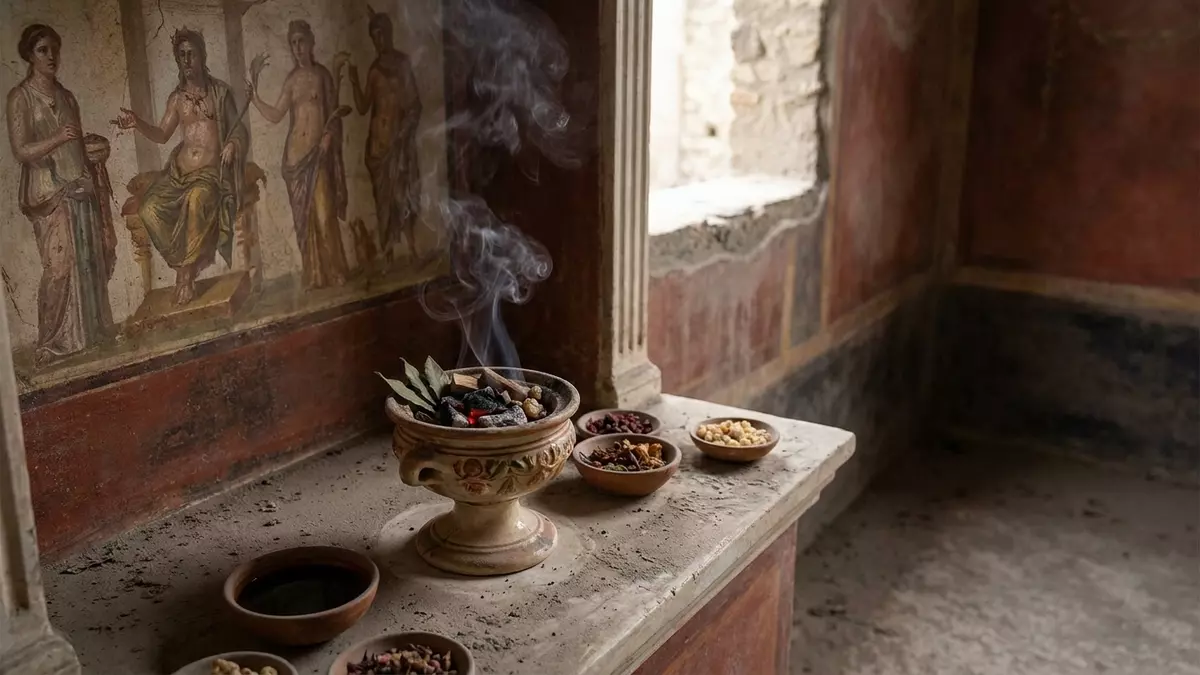
For nearly two millennia, the tragic destruction of Pompeii has served as a static time capsule of Roman life. Now, sophisticated chemical analysis of ash trapped inside ancient incense burners is offering a modern, sensory-driven look at how Romans worshipped within the privacy of their own homes. By analyzing residues from two censers buried by the eruption of Mount Vesuvius in 79 CE, researchers have finally confirmed that domestic religious rituals were far more complex—and globally connected—than historians previously realized.
New Archaeological Evidence Reveals Hidden Rituals in Roman Homes
Unlocking the Secrets of Ancient Ash
For generations, our understanding of Roman ritual practices relied heavily on fragmentary texts and artistic representations. While these sources painted a vivid picture of religious life, they lacked the tangible proof of what was actually burning on household altars.
By employing advanced microscopy and chemical residue analysis, a research team led by experts in archaeological science was able to identify organic compounds, plant fibers, and mineral structures within the ash. This breakthrough allowed them to bypass the ambiguity of written records and see exactly which substances were being offered to the gods by Pompeii’s residents.
A Mixture of Local Bounty and Exotic Imports
The analysis revealed that Roman domestic worship was a nuanced blend of the familiar and the foreign. The contents of the censers confirmed that households were balancing locally sourced materials with expensive, long-distance trade goods.
The Findings
Wine as an Offering: One of the most fascinating discoveries was the presence of chemical compounds linked to grapes. While ancient Roman texts frequently alluded to the practice of pouring or burning wine during religious rites, this study provides the first clear physical evidence that grape products were intentionally included in household offerings.
A Fuel Base: The burners contained wood residues from local vegetation, likely used as the foundation for the ritual fire. Researchers identified traces associated with laurel and various stone fruit trees, suggesting that Romans utilized the flora immediately available to them in the Campanian landscape.
The Global Frankincense Trade: Perhaps most significantly, the team identified resin from the Burseraceae family, which includes frankincense. This is the first archaeological confirmation of frankincense being burned in a private Pompeian shrine.
The Global Reach of the Roman Household
Perhaps the most startling discovery is the geographic origin of the frankincense. Traditional historical narratives have long suggested that southern Arabia was the primary supplier of incense to the Roman world. However, the chemical signatures identified in this study point to sources further afield, likely India or sub-Saharan Africa.
This finding fundamentally changes our perception of Roman domestic life. It reveals that global trade networks were not just the domain of the wealthy or the official state temples; they extended all the way to the modest lararium (household shrine) of an ordinary family. To burn frankincense imported from thousands of miles away was a deliberate choice that integrated a Roman household into a massive, interconnected network of international commerce.

Bridging the Gap Between Text and Reality
This study serves as a masterclass in how modern forensic archaeology can breathe life into ancient artifacts. While incense burners are among the most common items recovered from Roman excavations, they were long dismissed as “empty” containers. By treating the ash as a primary source, scientists have successfully bridged the gap between what ancient writers claimed occurred in Roman homes and what actually happened on their altars.
While the researchers noted that the lack of detailed excavation logs for some of these older finds introduces minor limitations, the consistency between the chemical results and the recovered plant remains is compelling. These small, scorched traces are not just debris; they are the literal remains of everyday acts of faith, connecting us directly to the people who once stood in these homes, offering wine and exotic resin to their ancestors, and hoping for favor in a volatile world.
Frequently Asked Questions
Why is this discovery important for Roman history?
It provides the first definitive archaeological proof of what Romans were actually burning in their household shrines. It confirms that rituals were not just based on local offerings but also involved highly expensive, globally sourced goods.
How did the researchers identify the substances?
The team used chemical analysis and microscopy to identify organic residues, plant micro-particles, and specific mineral signatures. This allowed them to distinguish between different types of resins, wood, and even the chemical signatures of fermented grape products.
Did the Romans really burn wine?
The evidence shows compounds consistent with wine or grape-based products within the incense burners. Roman literature often mentions wine as a ritual offering, and this study provides the physical confirmation that it was indeed part of the burning process.
Where did the incense come from?
The study suggests the frankincense originated from India or sub-Saharan Africa rather than the traditionally cited southern Arabia. This indicates that private citizens had access to goods from incredibly distant trade routes.
Why haven’t we found this evidence before?
Most ancient sites were not preserved by a sudden, protective event like the eruption of Mount Vesuvius. In most parts of the Roman world, moisture and soil bacteria would have caused these organic residues to decay completely. Pompeii’s unique burial conditions kept the ash and its contents pristine for nearly 2,000 years.