
Table of Contents
- 1. An Unexpected Discovery in the Altiplano
- 2. A Pathogen with Deep Evolutionary Roots
- 3. Shifting the Historical Narrative
- 4. Frequently Asked Questions
- 4.1. Why is this discovery significant?
- 4.2. Was this bacterium different from the one we see today?
- 4.3. Did the mummy die from scarlet fever?
- 4.4. How were the scientists able to recover DNA from 700-year-old teeth?
- 4.5. Does this change our understanding of human migration?
700-Year-Old Mummy Reveals Ancient Roots of Scarlet Fever
A groundbreaking genetic study of a 700-year-old mummy from the Bolivian highlands has rewritten the timeline of infectious diseases in the Americas. Researchers have identified the DNA of Streptococcus pyogenes—the bacterium responsible for strep throat and scarlet fever—within the remains of a young man who lived between 1283 and 1383. This discovery provides definitive proof that this pathogen was circulating among Indigenous populations in South America long before the arrival of Europeans.
700-Year-Old Mummy Reveals Ancient Roots of Scarlet Fever
An Unexpected Discovery in the Altiplano
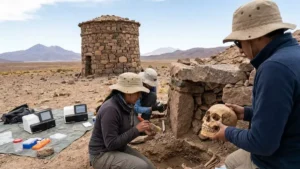
The remains, currently housed at the National Museum of Archaeology in La Paz, originated from a chullpa—a traditional burial tower characteristic of the Late Intermediate Period in the Andean region. The high altitude and arid climate of the Bolivian Altiplano acted as a natural preservative, keeping the human tissue and microbial DNA remarkably intact over seven centuries.
Scientists made the discovery while performing a deep-tissue genomic analysis of the mummy’s teeth. While screening for various microbial signatures, they identified the distinct genetic footprint of Streptococcus pyogenes. By employing advanced methods to reconstruct the pathogen’s genome from highly fragmented ancient DNA, the team successfully mapped the bacterium without relying on modern genetic references, ensuring a high degree of accuracy.

A Pathogen with Deep Evolutionary Roots
The reconstructed genome revealed striking parallels to modern strains of group A strep. Crucially, the ancient bacterium contained many of the same virulence genes that allow modern versions to cause throat infections, such as strep throat and scarlet fever.
This study also offers a window into the broader evolutionary history of the pathogen:
Ancient Divergence: Genetic modeling suggests that this specific Bolivian lineage separated from other known global strains approximately 10,000 years ago.
Human Settlement: Researchers believe this divergence occurred alongside the early migration of human populations into the Andes, as settlers navigated new ecosystems and encountered unfamiliar biological environments.
Environmental Pressures: Analysis of the young man’s remains indicated periods of lower-than-average nutritional health. When combined with the increasing population density and mobility of the period, these conditions likely created the perfect environment for the bacterium to spread.

Shifting the Historical Narrative
For decades, the history of infectious disease in the Americas has been heavily focused on the post-colonial period. This finding challenges the assumption that many such pathogens were introduced exclusively by European settlers. Instead, it demonstrates that Indigenous communities were navigating their own complex epidemiological landscapes centuries before contact.
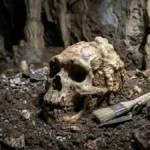
To contextualize their findings, the research team revisited older DNA datasets. They discovered previously overlooked traces of Streptococcus pyogenes in ancient European remains dating back 4,000 years, as well as related Streptococcus species in 200-year-old gorilla remains from Africa. These findings indicate that the bacterium has been a long-term human companion, evolving alongside us across different continents and climates.
While it remains unclear whether the young man in the chullpa succumbed to a strep-related infection, the presence of the bacteria is a landmark scientific moment. It marks the first time this pathogen has been successfully detected in ancient human remains, proving that the tools of modern genetic science can reach back through history to solve “cold cases” that were once considered lost to time.
Frequently Asked Questions
Why is this discovery significant?
It is the first time Streptococcus pyogenes has been identified in ancient human remains. It confirms that the bacteria responsible for scarlet fever and strep throat were present in the Americas centuries before European contact, disproving the idea that they were solely introduced by later colonization.
Was this bacterium different from the one we see today?
Surprisingly, no. The ancient strain shares a high degree of similarity with modern group A strep and possesses many of the same disease-related genes that allow modern strains to cause illness in humans.
Did the mummy die from scarlet fever?
The researchers cannot confirm the cause of death. However, they found clear evidence that the bacterium had infected the individual, meaning the pathogen was actively circulating in the community at that time.
How were the scientists able to recover DNA from 700-year-old teeth?
The Bolivian Altiplano’s cold, dry, and stable environment is ideal for preserving DNA. By extracting samples from the interior of the teeth, which are highly protected from environmental contamination, scientists were able to isolate and reconstruct the ancient genome.
Does this change our understanding of human migration?
Yes, it helps trace the evolution of the pathogen back to the initial human settlement of the Andes 10,000 years ago, demonstrating that as humans adapted to new environments and animals, they also carried and adapted to evolving microbial threats.