
Table of Contents
**Bronze Age Hilltop Farm Rewrites UK Upland History**
Archaeologists have uncovered a remarkably preserved Bronze Age settlement high in England’s Cheviot Hills, revealing organized farming and community life more than 4,400 years ago. The discovery at Harden Quarry in Northumberland National Park challenges previous ideas about when and how early farmers colonized rugged upland landscapes in northern Britain.
This rare site combines homes, field systems, and burial monuments in one place, offering an unprecedented view of daily life during a transformative period in British prehistory. The findings highlight the ingenuity of early Bronze Age people who turned challenging terrain into productive land while maintaining rich ritual traditions.
Bronze Age Hilltop Farm Rewrites UK Upland History

### Major Discovery at Harden Quarry in the Cheviots
Excavations ahead of a quarry extension inside Northumberland National Park revealed a well-preserved hilltop settlement from around 2400 BCE. This early Bronze Age date marks a pivotal time when new technologies, burial customs, and farming practices spread across Britain.
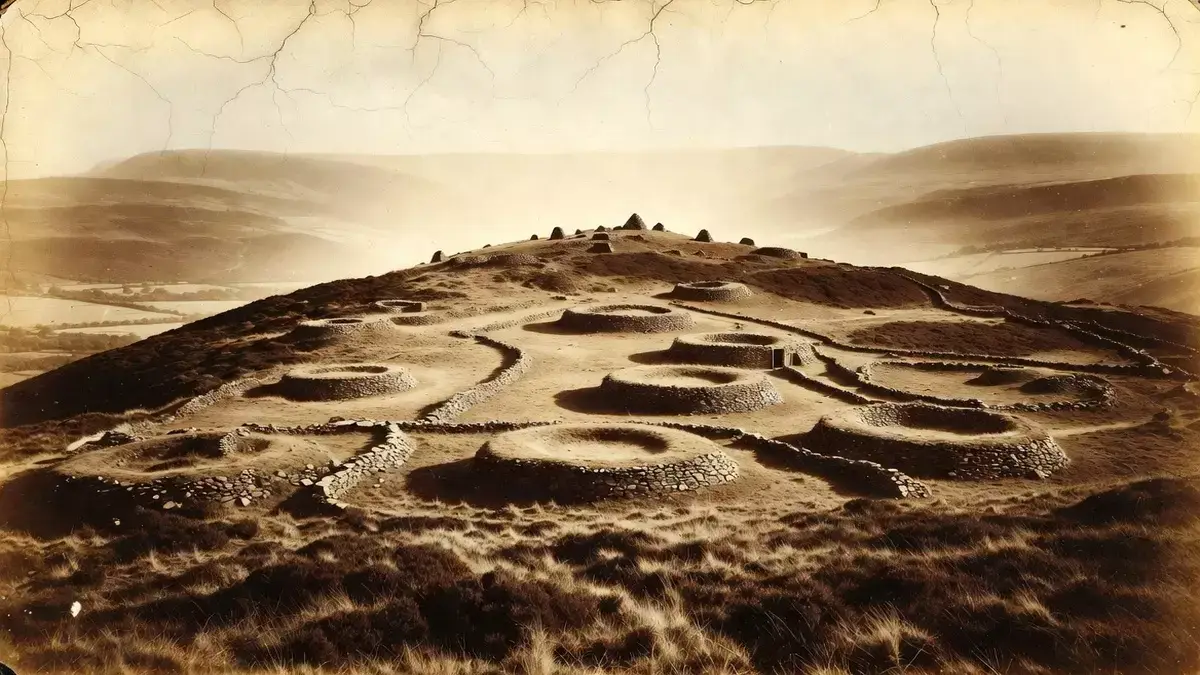
Teams from Archaeological Research Services Ltd documented circular platforms that once supported timber roundhouses, along with extensive field systems and numerous clearance cairns. These stone piles formed as farmers cleared rocky ground to create arable plots, demonstrating deliberate and sustained land management rather than temporary use.

The level of preservation is exceptional for upland environments, where erosion and modern agriculture often destroy such features. Here, settlement areas, agricultural traces, and burial monuments survive together, allowing researchers to study how people lived, worked, and honored their dead within the same landscape.
### Evidence of Early Upland Farming in Northern England
One of the most significant aspects of the Harden Quarry site is the clear evidence for farming at high elevations starting around 2400 BCE. A radiocarbon date from a clearance cairn confirms activity during the opening centuries of the British Bronze Age, pushing back the timeline for intensive upland agriculture in the Cheviot region.
Earlier models often associated sustained farming in these northern hills with later periods. The new finds show that communities were already organizing land, clearing stones, and establishing field systems much earlier than expected. This adaptation to marginal upland environments reflects growing population pressures, technological improvements, and a willingness to invest in long-term land use.
The presence of organized field systems alongside roundhouse platforms indicates year-round or semi-permanent settlement rather than seasonal grazing. These early farmers likely grew cereals and raised livestock, creating a mixed economy suited to the Cheviot Hills’ climate and soils.
### Burial Monuments and Ritual Practices
Burial evidence adds emotional and cultural depth to the site. Archaeologists identified three cairns on the hilltop. One large cairn overlay two smaller, earlier monuments. Inside the earlier cairns lay stone-lined cists—formal graves typical of the period. Although acidic soils destroyed any remaining bones, the structures confirm careful funerary rites.
Later burials included cremated remains. Some were placed inside pottery vessels, including a complete food vessel urn that still contained human ashes. Other cremations appeared in small pits nearby. These practices reflect evolving Bronze Age traditions that combined inhumation and cremation elements.
Fragments of distinctive Beaker-style pottery further tie the site to broader cultural changes sweeping Britain around this time. Beaker communities are associated with the introduction of metalworking, new drinking vessels, and shifts in burial customs, often linked to movements of people and ideas across Europe.
### The Significance of Beaker Culture in Bronze Age Britain
The Beaker phenomenon represents one of the most dynamic periods in prehistoric Britain. Around 2500–2000 BCE, new styles of pottery, archery equipment, and metal objects appeared alongside single-grave burials under round barrows or cairns. At Harden Quarry, these elements appear in an upland context, showing that these cultural influences reached even remote hilltop communities.
The combination of settlement, farming, and burial features at one location is particularly valuable. It allows researchers to connect domestic life with ritual behavior, painting a fuller picture of Bronze Age society than isolated finds usually permit.
Clive Waddington of Archaeological Research Services Ltd noted that the site provides an unusually complete record of where people lived, farmed, and buried their dead in the same terrain. This integrated landscape approach is rare in upland archaeology and offers important comparative data for other regions.
### Developer-Funded Archaeology Protecting Cultural Heritage
The excavation was required as part of planning conditions for quarry expansion approved in 2022. Harden Quarry is known for its distinctive red felsite stone used in road construction, but the work has now highlighted its cultural importance as well.
Northumberland National Park Authority monitored the project, emphasizing how developer-funded archaeology continues to reveal new information about early human activity across the Cheviots. Such collaborations between commercial developers, archaeologists, and heritage authorities play a crucial role in balancing economic needs with preservation of Britain’s ancient past.
### Life in the Early Bronze Age Cheviot Hills
The Cheviot Hills form part of the border landscape between England and Scotland, a region rich in prehistoric remains. Four thousand years ago, these uplands presented both challenges and opportunities. Communities adapted by building durable roundhouses, clearing fields, and developing social networks that supported trade and shared rituals.
Roundhouses provided shelter for extended families, while nearby fields produced food that sustained growing populations. Burial cairns visible on the skyline served as ancestral markers, reinforcing territorial claims and community identity.
The discovery of Beaker pottery alongside local practices suggests cultural blending rather than wholesale replacement. New ideas and technologies were adopted and adapted to suit upland life, creating distinctive regional expressions of broader Bronze Age trends.
### Scientific Methods and Future Analysis
Excavators employed careful stratigraphic recording and environmental sampling to maximize data recovery. Further laboratory work on soils, charcoal, pollen, and artifacts will refine chronologies, identify specific crops, and reconstruct the local environment during the Bronze Age.
This multi-proxy approach—combining radiocarbon dating, artifact analysis, and landscape study—exemplifies modern standards in British archaeology. It ensures the Harden Quarry findings contribute robust evidence to national and international research on prehistoric farming and settlement patterns.
### Changing Views of Bronze Age Uplands
Traditionally, archaeologists viewed upland areas like the Cheviots as marginal zones used mainly for seasonal grazing. The Harden Quarry site challenges this perspective, showing planned settlement and agriculture established early in the Bronze Age. This has implications for understanding population dynamics, climate resilience, and economic strategies across Britain.
Similar discoveries elsewhere suggest that early farmers were more ambitious and capable than previously thought. They successfully modified challenging landscapes, laying foundations for later agricultural expansions.
### Broader Context of Bronze Age Britain
The early Bronze Age (roughly 2500–1500 BCE) was a time of innovation. Metalworking expanded, long-distance exchange networks grew, and monumental architecture evolved. Communities invested in land improvement while maintaining connections through shared material culture like Beaker and food vessel pottery.
Harden Quarry adds valuable upland data to a record often dominated by lowland or monumental sites. It helps balance our understanding of how different environments shaped daily life and cultural development.
For the public, these discoveries make the distant past more tangible. Visitors to Northumberland National Park can now appreciate layers of human history alongside its celebrated natural beauty.
### Preservation and Public Outreach
The site’s location within a national park underscores the importance of protecting archaeological resources amid modern development. Future publications and outreach efforts will share detailed results with both specialists and the wider public, ensuring the knowledge gained benefits everyone.
As climate change and land use pressures increase, such excavations become vital for documenting fragile heritage before it disappears.
### Conclusion: A Window into Bronze Age Life in Northern England
The Bronze Age settlement at Harden Quarry transforms our understanding of early farming and community organization in the Cheviot Hills. With roundhouses, field systems, clearance cairns, and diverse burial monuments all preserved together, the site offers a rare, nearly complete picture of life more than 4,400 years ago.
This discovery demonstrates that upland landscapes supported sustained settlement and agriculture far earlier than many expected. It enriches the story of Britain’s Bronze Age, highlighting adaptation, innovation, and continuity in a challenging environment.
As analysis continues, Harden Quarry will provide important insights for researchers while inspiring greater appreciation for the deep human history embedded in Northumberland’s hills. These ancient farmers and their descendants shaped a landscape that still captivates us today.
### FAQ: Bronze Age Settlement in Northumberland’s Cheviot Hills
**How old is the Harden Quarry settlement?**
Radiocarbon dating places the main activity around 2400 BCE, early in the British Bronze Age, more than 4,400 years ago.
**What evidence shows farming took place there?**
Archaeologists found field systems and numerous clearance cairns created by removing stones from soil to prepare land for crops, indicating organized agriculture.
**What types of burials were discovered?**
The site includes multiple cairns with stone-lined cists and later cremated remains, some placed inside complete food vessel pottery urns.
**Why is Beaker pottery important at the site?**
Beaker fragments link the settlement to wider cultural changes involving new burial practices, metal use, and farming traditions spreading across Britain.
**Why is this discovery significant for upland archaeology?**
The combination of homes, fields, and burials in one well-preserved hilltop landscape is rare and provides an integrated view of Bronze Age daily life.
**Who carried out the excavation?**
Archaeological Research Services Ltd conducted the work as part of developer-funded requirements for quarry expansion, monitored by Northumberland National Park Authority.