
Table of Contents
- 1. A Massive Community Effort on the Roman Frontier
- 2. Mapping Global Trade Through Ancient Ceramics
- 3. Weapons of War and Intimate Human Touches
- 3.1. The Toolkit of the Roman Soldier
- 3.2. Luxury, Fashion, and Official Bureaucracy
- 4. Miraculous Organic Preservation in Waterlogged Soil
- 5. Architectural Evolution: A Fort That Refused to Fall
- 6. Conclusion
- 7. Frequently Asked Questions
- 7.1. What was the strategic purpose of Bremenium Fort?
- 7.2. Why did a piece of fruit survive in the ground for nearly 2,000 years?
- 7.3. What is Samian Ware and why is it significant?
- 7.4. How did the team safely excavate the fragile artifacts?
- 7.5. Can the public visit the Bremenium Fort excavation site?
Northumberland Excavation Unearths Bumper Crop of Roman Artifacts
Deep within the rugged landscape of Northumberland National Park, an ambitious archaeological investigation has just concluded its most successful season to date. Excavating the historic grounds of Bremenium Fort in High Rochester, a dedicated team of researchers and community volunteers has exposed a staggering array of ancient military gear, international trade goods, and structural ruins.
As one of the northernmost outposts of the Roman Empire in Britain, Bremenium served as a vital frontier stronghold designed to monitor troubled border territories. The latest discoveries throw open a vivid window into the daily lives, diets, and global connections of the soldiers and civilians who held the line on the edge of the known world nearly two millennia ago.
Northumberland Excavation Unearths Bumper Crop of Roman Artifacts
A Massive Community Effort on the Roman Frontier
The latest breakthroughs were achieved during the project’s fifth consecutive field campaign. Run by the Redesdale Archaeological Group (RAG) and backed by the National Lottery Heritage Fund, the excavation has grown into a major hub for community science and academic training.
+---------------------------+---------------------------------------------------------+
| Project Component         | Campaign Statistics & Details                           |
+---------------------------+---------------------------------------------------------+
| Location                  | Bremenium Fort, High Rochester, Northumberland         |
| Adult Volunteers          | 44 participants contributing over 2,000 collective hours |
| Academic Partnership      | 24 Newcastle University students (2,080 field hours)    |
| Operational Base          | Rochester Village Hall                                  |
+---------------------------+---------------------------------------------------------+
The dig successfully united generations of history enthusiasts. Alongside seasoned researchers, dozens of local volunteers worked side by side with a wave of archaeology students from Newcastle University. This massive mobilization of labor allowed the project to open larger, deeper trenches than in any previous season, paving the way for an unprecedented haul of historical treasures.
Mapping Global Trade Through Ancient Ceramics
The sheer volume and diversity of the pottery fragments pulled from the Northumberland soil completely dispels the myth that Bremenium was an isolated, culturally starved military outpost. Instead, the ceramic profile reveals a bustling hub plugged directly into a sophisticated international supply chain stretching across the entire expanse of the Roman Empire.
                      BREMENIUM'S GLOBAL CERAMIC NETWORK

  [ Gaul / France ]    ==========> Samian Ware (Glossy red luxury tableware)
  [ Southern Spain ]   ==========> Olive Oil Amphorae (Massive transport jars)
  [ Southern Britain ] ==========> Black Burnished Ware (Rugged cooking vessels)
  [ Local Provinces ]  ==========> Grey Ware, Mortaria, & Nene Valley Ware
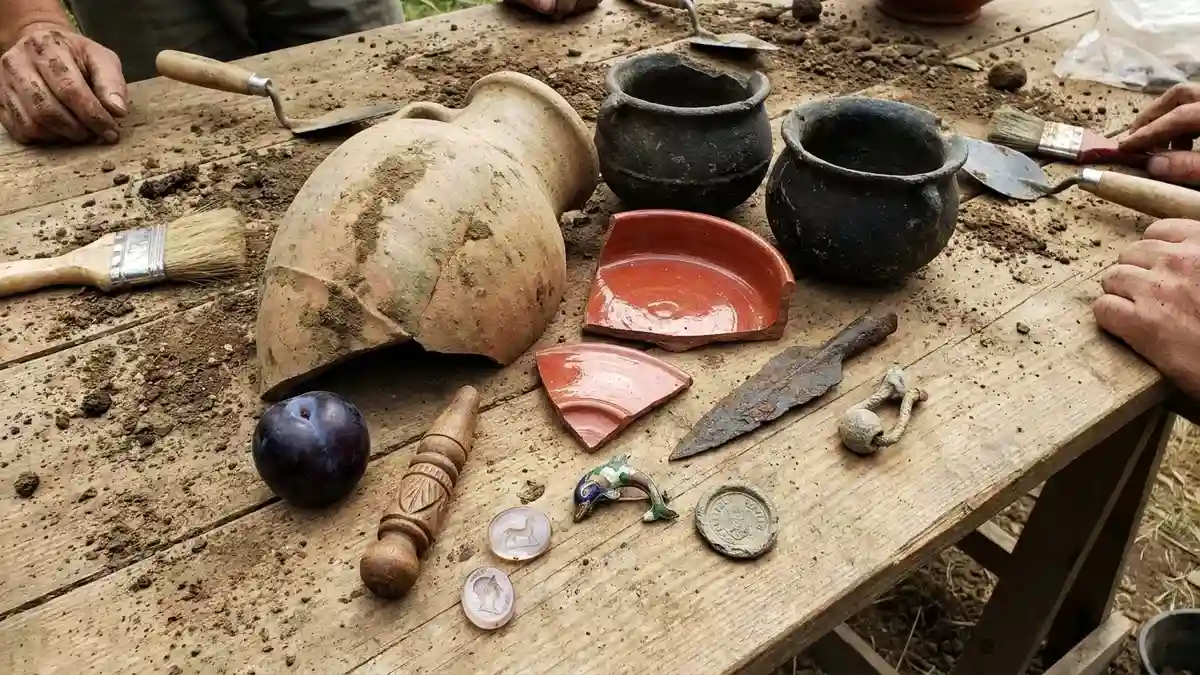
Among the most significant ceramic finds was a large fragment of a classic Spanish amphora. These thick-walled clay shipping containers were the cargo vessels of antiquity, specifically utilized to transport bulk liquid goods across the Mediterranean. Its presence at Bremenium proves that Roman officers stationed in the freezing climate of northern Britain were regularly enjoying high-quality olive oil imported from sunny southern Spain.
Weapons of War and Intimate Human Touches
The artifact catalog from the latest season beautifully balances the brutal realities of frontier military life with the deeply personal stories of the individuals who lived inside the stone barracks.
The Toolkit of the Roman Soldier
As a front-line garrison, Bremenium was constantly stocked with specialized weaponry. The excavation team recovered a perfectly formed iron spearhead alongside a piece of molded lead sling shot. This type of ammunition was incredibly lethal in the hands of trained auxiliary slingers, capable of cracking armor and bone from significant distances.
Luxury, Fashion, and Official Bureaucracy
Beyond the weaponry, the soil yielded an exquisite collection of personal items that showcase the wealth and cultural expressions of the fort’s inhabitants:

The Intaglios: Two finely engraved gemstone intaglios were uncovered. These tiny, carved stones were traditionally set into signet rings, featuring reversed miniature artwork used to stamp official wax seals.
The Enameled Brooches: Several clothing clasps were found in pristine condition, including “dolphin-style” brooches that still retain vibrant remnants of their original decorative enamel paste.
The Lead Seal: An authentic lead document seal was extracted, pointing to the presence of high-level military administration and official imperial correspondence moving through the fort.
Miraculous Organic Preservation in Waterlogged Soil
While standard, dry archaeological trenches are great for preserving pottery and metal, they are highly destructive to organic materials like wood, leather, and food, which quickly rot away when exposed to oxygen. However, the lower trenches of the Bremenium site featured perpetual, waterlogged conditions that completely sealed out air.
This anaerobic environment created a natural time capsule. Excavators were stunned to pull a carved wooden object from the mud alongside an astonishingly well-preserved piece of ancient fruit—believed by botanical experts to be a whole plum. Finding the physical remnants of a soft fruit that was dropped or discarded nearly 2,000 years ago provides an incredibly rare, sensory connection to the ordinary lunch breaks of the fort’s ancient residents.
Architectural Evolution: A Fort That Refused to Fall
The structural remains exposed across the busy trench layout tell a story of extreme resilience and prolonged geographic occupation. By mapping out a series of intersecting stone foundations and patches of ancient burning, researchers determined that one of the primary internal buildings had been systematically demolished and rebuilt at least three distinct times.
                    CHRONOLOGICAL STRATA OF OCCUPATION

  [ Layer 1: Earliest Fort ] ===> Destroyed / Dismantled over years of border war.
  [ Layer 2: Second Empire ] ===> Rebuilt with modified stone layouts & drainage.
  [ Layer 3: Late Antiquity] ===> Repurposed with domestic additions like bread kilns.
This constant architectural adaptation proves that Bremenium was not a short-lived temporary camp. It was a permanent, evolving fixture of the northern landscape that underwent continuous modification over centuries to meet shifting strategic demands and environmental conditions.
Conclusion
The latest excavation season at Bremenium Fort stands as a spectacular triumph for community-driven archaeology. By successfully rescuing delicate organic fruit, pristine enameled jewelry, and heavy military weaponry, the joint team of volunteers and university students has permanently enriched our understanding of Roman Britain. With deeper occupational layers still waiting to be explored beneath the Northumberland turf, this historic frontier outpost will undoubtedly continue to yield its ancient secrets for years to come.
Frequently Asked Questions
What was the strategic purpose of Bremenium Fort?
Bremenium Fort was built as a key northern frontier outpost along an important Roman road system in modern-day Northumberland. Its primary military purpose was to guard vital trade routes, monitor native tribal movements beyond the empire’s formal borders, and serve as a heavily fortified launching pad for campaigns into Caledonia (modern Scotland).
Why did a piece of fruit survive in the ground for nearly 2,000 years?
The plum survived due to rare “waterlogged” conditions in the lower excavation trenches. Because the soil was completely saturated with water, it blocked out oxygen and anaerobic bacteria that cause organic matter to rot, effectively pickling and preserving the fragile fruit since the Roman era.
What is Samian Ware and why is it significant?
Samian Ware is a highly distinctive, glossy bright-red Roman pottery that was mass-produced in specialized workshops in Gaul (modern France). Finding it as far north as Bremenium indicates that even soldiers living on the cold, dangerous edges of the empire had access to fine, imported continental luxury tableware.
How did the team safely excavate the fragile artifacts?
The team combined traditional hand-digging tools with advanced field methodology. Delicate items were stabilized inline, and waterlogged organic materials were immediately placed into sealed, moisture-controlled containers to prevent them from drying out and crumbling before they could reach a specialized conservation lab.
Can the public visit the Bremenium Fort excavation site?
Yes, the site at High Rochester is located within Northumberland National Park and regularly welcomes local groups, schools, and walking tours. Through initiatives like “Healthy Parks, Healthy People,” the project actively hosts open days to share its latest discoveries directly with the public.