
Table of Contents
- 1. The Ice Citadel: Busosanseong Fortress and the Sabi Era
- 2. Anatomy of an Ancient Refrigerator: Engineering the Bingo
- 2.1. Mastering Subterranean Thermodynamics
- 3. Sacrifices to the Soil: The Discovery of the Jijingu
- 3.1. The Imperial Chinese Connection
- 4. Ice as the Ultimate Instrument of Absolute Royal Power
- 5. Reconstructing the Lost Baekje Palace Complex
- 6. Conclusion
- 7. Frequently Asked Questions
- 7.1. Why is the discovery of the Busosanseong ice storage considered historic?
- 7.2. How did the drainage pit help keep the ice from melting?
- 7.3. What is a jijingu and why was it buried with Chinese coins?
- 7.4. Who was allowed to use the ice stored inside the fortress?
- 7.5. Did Busosanseong Fortress continue to be used after the fall of the Baekje Kingdom?
1,400-Year-Old Royal Ice House Discovered in South Korea
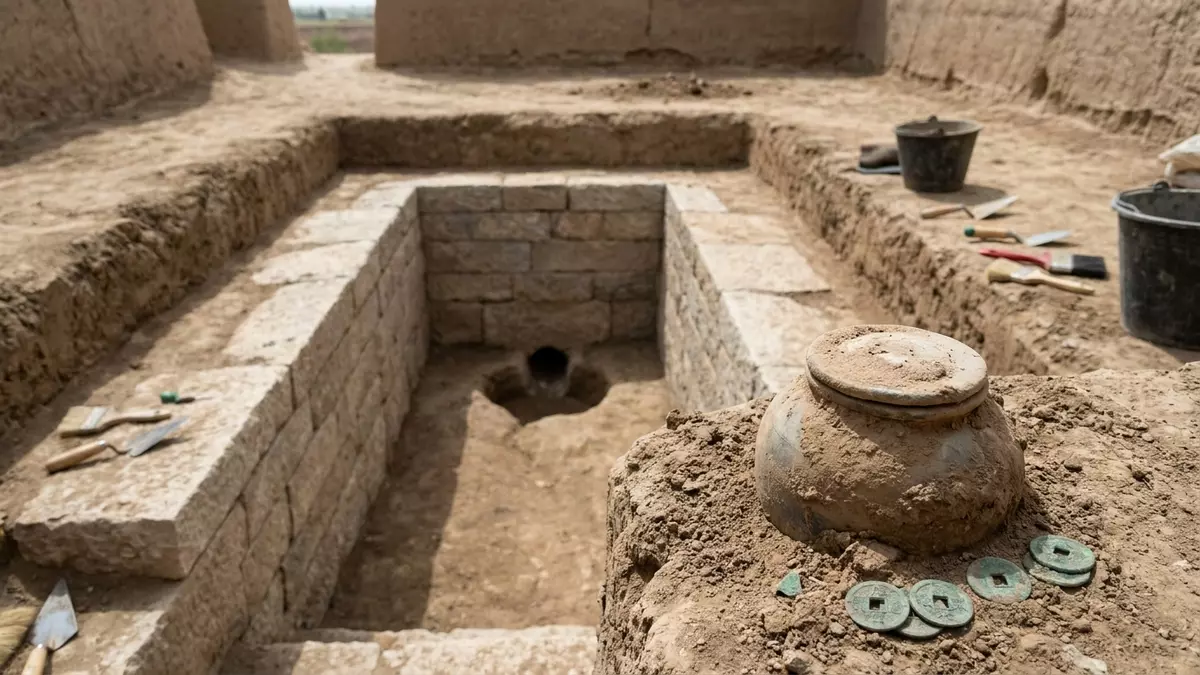
Deep beneath the historic earthen walls of an ancient citadel, South Korean archaeologists have made a chilling discovery that completely reshapes our understanding of early East Asian technology and royal luxury. For the first time in history, researchers have uncovered an advanced, 1,400-year-old subterranean ice storage facility dating to the legendary Sabi period (538–660 CE) of the Baekje Kingdom.
Unearthed at the famous Busosanseong Fortress—a heavily protected UNESCO World Heritage site located in Buyeo, South Chungcheong Province—this remarkable engineering marvel reveals how ancient monarchs successfully defied the changing seasons. Far from being a simple hole in the dirt, this highly sophisticated palace refrigerator provides undeniable proof of the advanced thermodynamics, ritual life, and absolute administrative authority wielded by one of Korea’s most influential early dynasties.
1,400-Year-Old Royal Ice House Discovered in South Korea
The Ice Citadel: Busosanseong Fortress and the Sabi Era
To appreciate the immense value of this discovery, one must look to the history of the ground where it lay buried. Busosanseong Fortress sits strategically atop Busosan Mountain, a 106-meter-tall forested hill overlooking modern Buyeo-eup. In 538 CE, King Seong of Baekje made the bold geopolitical decision to relocate his empire’s capital to Sabi (modern-day Buyeo). The mountain fortress was constructed immediately to serve a vital dual purpose: acting as both an impregnable defensive fallback citadel and the sacred center of royal administrative power during the kingdom’s final, glittering century.
+------------------------+----------------------------------------------------+
| Fortress Attribute     | Historical and Geographic Details                  |
+------------------------+----------------------------------------------------+
| Geographic Setting     | Busosan Mountain (106 meters tall), Buyeo          |
| Initial Construction   | Established in 538 CE during the capital relocation|
| Historical Horizon     | Baekje Sabi Period (538–660 CE)                    |
| Protection Status      | Designated UNESCO World Heritage Site              |
+------------------------+----------------------------------------------------+
The breakthrough came during the landmark 17th systematic excavation campaign targeting the fortress interior. For years, teams from the National Research Institute of Cultural Heritage in Buyeo had unburied sweeping residential terraces, sprawling post-constructed meeting halls, and highly decorated tiled roof structures. However, it was the discovery of this subterranean facility—locally referred to as a bingo (ice storage)—that provided an intimate look into the extreme luxuries enjoyed exclusively by the Baekje royal court.
Anatomy of an Ancient Refrigerator: Engineering the Bingo
In a world long before the invention of mechanical compression or artificial electricity, harvesting winter ice from frozen rivers and keeping it solid through the blistering heat of a humid Korean summer was an incredibly difficult logistical feat. The builders of the Busosanseong bingo solved this problem through a brilliant combination of architectural geometric design and geological insulation.
                    METRIC PROFILE OF THE ROYAL BINGO

            [ Northern Wall ] <--------- 8 Meters --------->
     ^      +-----------------------------------------------+
     |      |                                               |
     |      |                                               |
  7 Meters  |          [ Central Drainage Pit ]             |
     |      |          (Lined with Stone Slabs)             |
     |      |                                               |
     v      +-----------------------------------------------+
            <------------- Cut 2.5 Meters Deep ------------->
The ancient engineers began construction by carving a nearly square chamber directly into the solid mountain bedrock, measuring approximately 7 meters from east to west, 8 meters from north to south, and dropping to a depth of 2.5 meters. The interior walls were carved into a smooth U-shaped profile to optimize air circulation.
To maximize the structural integrity of the facility and fine-tune its thermal capacity, workers meticulously stacked heavy stone blocks along the southern wall, which faced the brunt of the sun’s natural geothermal heat.
Mastering Subterranean Thermodynamics
The true genius of the facility lies directly at the center of its floor. There, archaeologists exposed an expertly constructed drainage pit lined with flat stone slabs. This simple pit fulfilled a critical thermodynamic function:
Humidity Management: As the stored river ice slowly melted over time, the stone channel instantly gathered and pulled the water away from the main ice blocks.
Preventing Meltdown: Standing water transfers heat significantly faster than air. By keeping the floor completely dry, the Baekje builders prevented a catastrophic chain reaction that would have rapidly melted the remaining ice cache during the peak of summer.

This intentional design showcases a flawless, intuitive grasp of temperature control, humidity control, and environmental fluid dynamics long before the advent of modern thermodynamics.
Sacrifices to the Soil: The Discovery of the Jijingu
In ancient Korean architectural traditions, erecting a building of monumental importance was a high-stakes spiritual event. Before construction workers could lay the first stone foundations, the royal family had to ensure that the territorial spirits of the earth were properly appeased.
Right next to the bingo structure, archaeologists uncovered a stunning ritual deposit that bridges the gap between ancient engineering and spiritual life. Buried inside the earth was a beautifully preserved ceramic storage jar identified as a jijingu—a sacred offering vessel buried deliberately before structural construction to honor local land deities, ward off evil spirits, and protect the building from collapse.
                     ANATOMICAL LAYOUT OF THE JIJINGU

   [ Bead-Shaped Handle ] ===> [ Domed Round Lid ] ===> [ Short, Narrow Neck ]
                                                                ||
   [ Five Han Dynasty Coins ] <==== Contained Inside <==== [ Main Jar Body ]
The discovered vessel was found in pristine condition, featuring a short, elegant neck and a perfectly fitting round clay lid topped with a bead-shaped handle. While jijingu deposits have been documented across other high-status Baekje residential and administrative buildings, this discovery marks the first time in history that a ritual foundation deposit has been uncovered next to an ancient ice house.
The Imperial Chinese Connection
When conservators carefully peered inside the sealed jar, they made another historic discovery: five authentic Chinese Wu Zhu coins minted during the Han Dynasty (118 BCE–620 CE).
The presence of these foreign copper coins inside the foundational jar serves a dual scientific purpose. Culturally, it proves that the Baekje elite viewed these imported international currencies as items of immense spiritual value and status, making them the ultimate offering for the land gods. Chronologically, because Wu Zhu coins circulated widely across East Asian trade networks for centuries, their placement helps firmly lock the bingo’s operational timeline directly within the final golden century of the independent Baekje state.
Ice as the Ultimate Instrument of Absolute Royal Power
To the modern consumer, ice is a mundane, everyday commodity. To the citizens of seventh-century Korea, however, a massive block of solid ice in July was the ultimate statement of absolute royal power and structural inequality.
                       USES OF ICE IN THE BAEKJE COURT

  [ Food Preservation ] ===> Keeping royal delicacies fresh during summer heat.
  [ Ancient Medicine ]  ===> Lowering severe fevers and soothing inflammation.
  [ Court Liturgies ]   ===> Lowering temperatures during long, hot outdoor ceremonies.
  [ Elite Status ]      ===> Gifted by the King to secure the loyalty of top nobles.
The immense labor required to cut ice from frozen waterways in winter, transport it up the steep slopes of Busosan Mountain, and maintain it underground through the summer meant that the bingo was strictly an elite facility. Controlled directly under royal authority, the harvested ice was used to preserve delicate seasonal foods, chill medicinal mixtures for the royal family, and provide physical comfort during exhausting, multi-day outdoor court ceremonies.
By controlling the local climate inside this stone-lined chamber, the Baekje monarchs were demonstrating their capacity to conquer nature itself. Gifting a precious block of river ice to a trusted general or top official during the dog days of summer was a potent political tool, reinforcing social hierarchies and securing internal administrative loyalty across the kingdom.
Reconstructing the Lost Baekje Palace Complex
The uncovering of the royal ice house is far from the end of the story for the team at Buyeo. Armed with the invaluable layout data gathered during the 17th dig, the Buyeo National Research Institute of Cultural Heritage has immediately launched its 18th excavation campaign.
The newest sector of exploration centers on the western perimeter of a known, later Joseon-era military granary site. Archaeologists are highly confident that this fresh trench will uncover structural links extending from the bingo site, allowing scientists to systematically map out the complete, original footprint of the lost seventh-century Baekje royal palace complex.
Conclusion
The 1,400-year-old ice storage facility at Busosanseong Fortress stands as a glittering monument to the sheer ingenuity of the Baekje Kingdom. By beautifully combining advanced thermodynamic structural design with profound spiritual rituals, these ancient builders created a functional masterpiece that survived the rise and fall of multiple subsequent dynasties. As researchers continue to dig into the mountain soil of Buyeo, the stones of this royal ice house will continue to shine a light on the complex, highly organized, and technologically brilliant societies that shaped the dawn of civilization in East Asia.
Frequently Asked Questions
Why is the discovery of the Busosanseong ice storage considered historic?
While later ice houses from subsequent dynasties have been found across Korea, this is the first time an authentic ice storage facility (bingo) has ever been recovered from the independent Baekje Sabi period (538–660 CE). It provides the earliest physical evidence of large-scale temperature control technology in the region.
How did the drainage pit help keep the ice from melting?
The central drainage pit was lined with flat stone slabs to quickly channel away any meltwater. Because liquid water transfers ambient heat much faster than air, keeping the floor bone-dry drastically lowered the humidity inside the chamber, slowing down the melting process of the remaining ice blocks.
What is a jijingu and why was it buried with Chinese coins?
A jijingu is a specialized ritual offering jar buried beneath or right next to an important structure before building began. It was designed to appease local land deities and ensure the safety of the building. The five Chinese Han Dynasty Wu Zhu coins placed inside were rare, high-status international luxury items, making them an appropriate gift for the spiritual world.
Who was allowed to use the ice stored inside the fortress?
The ice house was an elite, royal facility run under the direct command of the Baekje king. Because ice was an incredibly rare and costly resource to harvest and preserve, its use was strictly reserved for the immediate royal family, top-tier administrative officials, and vital state religious ceremonies.
Did Busosanseong Fortress continue to be used after the fall of the Baekje Kingdom?
Yes. Long after the collapse of the Baekje state in 660 CE, the strategic mountain fortress continued to be occupied, modified, and utilized by subsequent Korean historical eras, including the Unified Silla, Goryeo, and Joseon dynasties, right up into the modern era.