
Table of Contents
- 1. Echoes of the Bible: The Geopolitical Context
- 2. Forensic Archaeology: How the Artifact Was Found
- 3. Proving the Origin: Petrographic and Chemical Testing
- 4. Decoding the Fragmentary Message
- 5. Conclusion
- 6. Frequently Asked Questions
- 6.1. Why is this specific inscription considered a historic first for Jerusalem?
- 6.2. What was the purpose of a “chariot officer” in the Assyrian Empire?
- 6.3. How did the artifact end up inside a Second Temple drainage canal?
- 6.4. What is the “month of Av” mentioned in the text?
- 6.5. How do scientists know the artifact didn’t come from local Israelite clay?
Ancient Assyrian Royal Inscription Uncovered in Jerusalem
A groundbreaking archaeological discovery in the heart of Jerusalem has provided the first tangible, physical evidence of direct written communication between the mighty Neo-Assyrian Empire and the biblical Kingdom of Judah. For the first time in the history of excavations within the ancient city, researchers have unearthed an official royal Assyrian inscription dating back to the First Temple period.
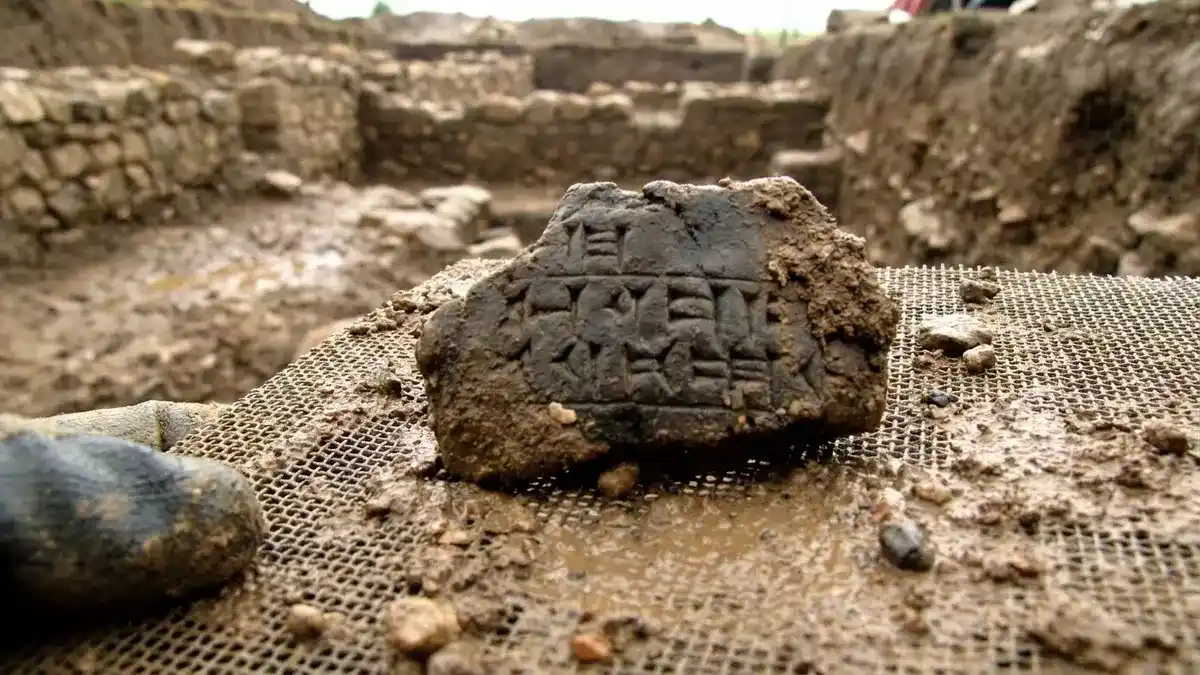
The discovery consists of a minuscule clay pottery fragment, measuring just 2.5 centimeters in diameter. Despite its tiny size, the artifact bears distinct, deeply incised wedges of Akkadian cuneiform—the diplomatic and administrative script of the ancient Near East. Found near the Western Wall of the Temple Mount, this rare sealing acts as an ancient diplomatic passport, throwing open a window into a turbulent era of imperial dominance, missed tribute payments, and geopolitical rebellion.
Ancient Assyrian Royal Inscription Uncovered in Jerusalem
Echoes of the Bible: The Geopolitical Context
Dating back approximately 2,700 years, the tiny artifact traces its origins to the late eighth or early seventh century BCE. This particular window of Near Eastern history was defined by the aggressive, westward expansion of the Assyrian Empire, which reduced local Levant nations—including the Kingdom of Judah—into heavily taxed vassal states.

+----------------------+-------------------------------------------------------+
| Artifact Attribute   | Archaeological & Historical Details                   |
+----------------------+-------------------------------------------------------+
| Material Composition | Foreign clay (Tigris River Basin)                     |
| Script & Language    | Akkadian Cuneiform                                    |
| Chronological Age    | Approximately 2,700 years old (First Temple Period)   |
| Functional Purpose   | Fragmentary royal seal impression from an official dispatch|
| Discovery Location   | Davidson Archaeological Park, near the Western Wall   |
+----------------------+-------------------------------------------------------+
According to epigraphers and historians, the inscription was part of a bulla—a clay seal impression stamped onto a tied cord to lock and verify an official document. This specific dispatch traveled directly from the Assyrian royal court to Jerusalem.
The timing of the letter heavily aligns with the dramatic events detailed in the biblical text of the Second Book of Kings. During this period, King Hezekiah of Judah attempted to break free from foreign subjugation, withholding mandatory financial tribute from the Assyrian emperor, Sennacherib. Scholars believe this newly discovered text may explicitly reference a dangerous delay or shortfall in Judah’s mandatory payments, capturing the exact moment geopolitical tensions boiled over into a full-scale imperial invasion.
Forensic Archaeology: How the Artifact Was Found
The discovery was made during joint excavations conducted by the Israel Antiquities Authority (IAA) and the City of David Foundation at the Davidson Archaeological Park. Finding an object that measures less than an inch across inside tons of subterranean dirt requires specialized recovery techniques.
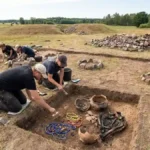
To ensure nothing was missed, the excavation team utilized an advanced recovery process known as wet sifting. Rather than simply running dry dirt through a wire mesh—which can easily clog or scrape fragile artifacts—the excavated soil is gently washed with water over fine screens. This method cleans away encrusted mud, allowing small, dark clay objects like coins, beads, and cuneiform sealings to stand out clearly to the human eye.
The soil layer holding the tiny artifact was recovered from a complex archaeological zone: a massive ancient drainage canal dating to the Second Temple period. However, careful stratigraphical analysis revealed that this specific deposit originated from the structural collapse of a much older First Temple building that once stood directly west of the Temple Mount. When that ancient administrative building crumbled, its ruins and buried records slid into the lower channels, preserving this royal letter for nearly three millennia.

Proving the Origin: Petrographic and Chemical Testing
To confirm that this piece was an authentic piece of international correspondence and not a local forgery, scientists subjected the clay to rigorous petrographic analysis. This technique involves examining the mineral composition of the pottery under a microscope to pinpoint the exact geographical source of the clay and temper used by the scribe.
The scientific results were definitive: the clay is completely non-local to the southern Levant. Instead, the mineral profile matches the unique geological signatures of the Tigris River Basin—the imperial heartland of ancient Assyria, home to its great capital cities of Nineveh, Ashur, and Nimrud (Kalḫu).
                 THE PATH OF THE ANCIENT DISPATCH

  [ Assyrian Royal Center ] ===========================> [ Kingdom of Judah ]
  (Nineveh / Nimrud / Ashur)     ~1,000 Kilometer Path    (Jerusalem Temple Mount)
  * Scriptorium creates seal                             * Delivered to palace
  * Made with local Tigris clay                          * Lost in building collapse
This structural analysis proves beyond a shadow of a doubt that the document was stamped inside an official imperial scriptorium in Mesopotamia and carried across hundreds of miles of desert by an elite messenger to its final destination in Jerusalem. To refine these findings further, the Geological Survey of Israel is currently conducting an advanced chemical study to identify the exact city where the clay was pressed.
Decoding the Fragmentary Message
Although the clay fragment is broken and the full message is lost to time, the surviving Akkadian characters provide highly specific clues about how the Assyrian Empire maintained control over its vassals.
The brief text preserves a clear administrative date: “the first of the month of Av.” In the ancient world, precise dating was essential for financial records and legal ultimatums.
Furthermore, the inscription explicitly mentions a “chariot officer.” In the Neo-Assyrian military and administrative hierarchy, a chariot officer was not just a battlefield soldier; they were high-ranking royal couriers who enjoyed the personal trust of the king. These officials were tasked with delivering sensitive imperial decrees, collecting massive tribute shipments, and enforcing the absolute will of the empire in distant border zones.
Conclusion
The uncovering of the Assyrian cuneiform sealing forever changes our understanding of ancient Jerusalem’s place on the global stage. Rather than an isolated, mountain kingdom, First Temple Jerusalem was deeply plugged into a highly sophisticated international system of taxation, diplomacy, and imperial communication. This tiny piece of imported Tigris clay stands as a glittering monument to the literacy, political complexity, and dramatic history of a city caught in the crosshairs of the ancient world’s most powerful empire.
Frequently Asked Questions
Why is this specific inscription considered a historic first for Jerusalem?
While thousands of ancient Hebrew seals and inscriptions have been recovered over the decades, this is the first time an authentic, official administrative document written in Assyrian Akkadian cuneiform has ever been found within the city of Jerusalem. It provides the first direct physical proof of written communication between the Assyrian court and the kings of Judah.
What was the purpose of a “chariot officer” in the Assyrian Empire?
An Assyrian chariot officer was an elite royal official. Beyond driving military chariots in times of war, these high-ranking individuals served as trusted imperial messengers, state diplomats, and tax collectors. Their job was to personally transport top-secret royal decrees and enforce tribute compliance across vassal states.
How did the artifact end up inside a Second Temple drainage canal?
The sealing was found within soil layers that washed into the ancient drainage system during antiquity. Archaeologists determined that the soil came from the structural collapse of an older, First Temple administrative building located just west of the Temple Mount. When that building fell, its ancient contents were swept into the lower canal deposits.
What is the “month of Av” mentioned in the text?
The month of Av is a specific month on the ancient Babylonian and Hebrew lunisolar calendars, roughly corresponding to the modern summer months of July or August. Its inclusion on the sealing shows that the Assyrian royal administration kept meticulous, time-stamped records of their diplomatic dispatches.
How do scientists know the artifact didn’t come from local Israelite clay?
Archaeologists utilized petrographic analysis, which looks at the mineral components embedded within the clay under high magnification. The specific combination of minerals inside this artifact does not exist anywhere in Israel; instead, it perfectly matches the distinct geological makeup of the Tigris River Basin in modern-day Iraq, confirming its foreign origin.